





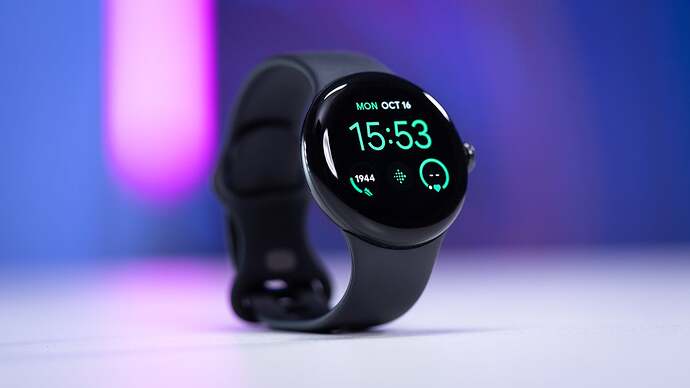
The SpO2 and skin temperature tracking on the Pixel Watch have disappeared for many users after a recent Fitbit update. Google confirms it is working on a fix, at a particularly inconvenient time.
A bug at the worst possible time
Some schedules are just bad. On May 7, 2026, Google officially unveiled the Fitbit Air, its new screenless band priced at $99.99, designed to appeal to a new audience with the promise of comprehensive and reliable health tracking. The next day, owners of Pixel Watch en masse reported the disappearance of two key features from their watch: the tracking of blood oxygen saturation (SpO2) and skin temperature tracking. The cause: a recent update to the Fitbit app.
The issue was initially raised on the r/PixelWatch subreddit, where a Pixel Watch 3 owner reported that a Fitbit update had reset the permissions related to these two health features. More frustratingly, the permission management page indicated that no app was requesting them, making manual re-activation impossible.
Several generations affected
The malfunction does not affect a single hardware generation. A separate thread on r/fitbit reveals that owners of Pixel Watch 4 have been experiencing the same problem for over a week: the SpO2 and skin temperature sensors have simply stopped appearing in the Pixel Watch and Fitbit apps. This identical pattern across two different generations clearly points to a common software cause, independent of the hardware.
The extent of the malfunction remains difficult to measure. Some users have restored normal functionality after a simple watch restart. Others have obtained no results with this method, nor by clearing the app cache on the phone and watch. The only radical solution confirmed within the community is a complete reset of the Pixel Watch, which few users are willing to perform given the procedure involves a total reconfiguration of the device.
Google officially acknowledges the problem
The two official brand accounts have responded to the relevant threads. The PixelCommunity account wrote on r/PixelWatch: "We regret the disruption to your health tracking experience caused by these permission resets," adding that "work is underway to restore access to SpO2 and skin temperature tracking features." (We apologize for the disruption to your health tracking experience caused by these permission resets. Work is underway to restore access to SpO2 and skin temperature tracking features.)
The FitbitHelpCommunity account posted a nearly identical message on r/fitbit, confirming that the problem is linked to the same firmware update. It is therefore not a series of isolated hardware failures, but an officially recognized software bug, the exact scope of which remains to be determined.
A precedent that undermines trust
This is not the first time Google has had to deal with this type of incident on its smartwatches. In March 2026, an update had already caused the disappearance of readings SpO2 and skin temperature across several generations of Pixel Watch. The PixelCommunity account then indicated on Reddit that the team was "aware of the issue and working on a fix." A patch was eventually deployed, but the incident left a mark.
The repetition of a similar bug two months later raises questions about the robustness of Google's software validation process before each deployment. These measurements are not secondary functions. Nightly SpO2 tracking and skin temperature variations can detect early signs of health deterioration, such as the onset of an infection. Some users have specified in Reddit threads that they rely on this data for medical reasons, which underscores the seriousness of the malfunction.
The contrast with the launch of the Fitbit Air is striking. According to the official technical sheet published by Google on its blog, the Fitbit Air features precisely red and infrared sensors for SpO2 tracking, as well as a skin temperature sensor. Presenting a new device as a benchmark in connected health, at the very moment when existing models are suffering from a bug on these very functions, creates a situation that is difficult to ignore from a communication standpoint.
What to do while waiting for the fix?
In the absence of a timeline announced by Google, options remain limited. Restarting the Pixel Watch is the first recourse, effective for some users. Clearing the cache of the Fitbit app on the associated phone is a second, less invasive attempt. A complete reset of the watch, although it has resolved the problem for several people in the community, involves the total reconfiguration of the device and the loss of unsynchronized data.
Google has every interest in accelerating this fix. The Fitbit Air opens its pre-orders and ships on May 26, 2026. The Pixel Watch 5 should follow in the coming months. The credibility of a connected health ecosystem is built on the continuity and reliability of daily data, not solely on product launches. A sensor that disappears after a software update is a commercial argument that collapses long before reaching the customer.

No comments! Be the first one.