




The End-to-end encrypted RCS between Android and iPhone becomes a reality with iOS 26.5. Apple integrated this feature into the release candidate published on May 4, 2026, ending years of waiting for secure exchanges between the two dominant mobile ecosystems.
A security gap finally closed
Since Apple's adoption of RCS with iOS 18 in 2024, a major limitation persisted: messages exchanged between an iPhone and an Android phone were not end-to-end encrypted. Google Messages did apply the Signal protocol for conversations between Android devices, but this mechanism did not extend to iPhone users. Cross-platform discussions therefore remained less protected than purely intra-Android or intra-iOS exchanges.
This situation placed RCS in a delicate position compared to Signal or WhatsApp, which have long offered robust encryption across all their communications, regardless of the sender's or recipient's platform. The comparison with iMessage, natively secured since 2011, was equally unfavorable as soon as an Android contact entered the conversation.
What the release candidate of iOS 26.5 confirms
On May 4, 2026, Apple made the first release candidate of iOS 26.5 available to developers and public testers. Apple's official release notes state: "End-to-end encrypted RCS messaging (beta) in Messages is available with supported carriers and will roll out over time." The beta wording indicates that the deployment will be gradual, conditional on carrier compatibility. iOS 26.5 is expected to be publicly available in the coming days, likely around the week of May 11, 2026.
According to Apple's official update notes, this is one of the three major improvements in this version, alongside a new Pride Luminance wallpaper and a redesign of the "Suggested Locations" section in Maps. The priority given to RCS encryption in this changelog reflects the importance both companies attach to this advancement.
The MLS protocol at the heart of the system
This encryption relies on the GSMA RCS Universal Profile 3.0 specification, published in March 2025. This version introduces end-to-end encryption in the RCS standard for the first time, by leveraging the MLS (Messaging Layer Security) protocol, standardized by the IETF (Internet Engineering Task Force). Tom Van Pelt, Technical Director at the GSMA, wrote in a blog post on the organization's official website that these procedures "ensure that messages and other content such as files remain confidential and secure as they travel between clients." (These procedures ensure that messages and other content such as files remain confidential and secure as they travel between clients.)
The importance of this technical choice is considerable: the MLS protocol is designed to work interoperably between different client implementations. According to the GSMA, RCS thus becomes the first large-scale messaging service to offer interoperable end-to-end encryption between distinct providers. It is precisely this challenge, coordinating encryption between Apple's Messages app and Google Messages on Android, that the two companies have jointly resolved, in collaboration with the GSMA.
The user experience
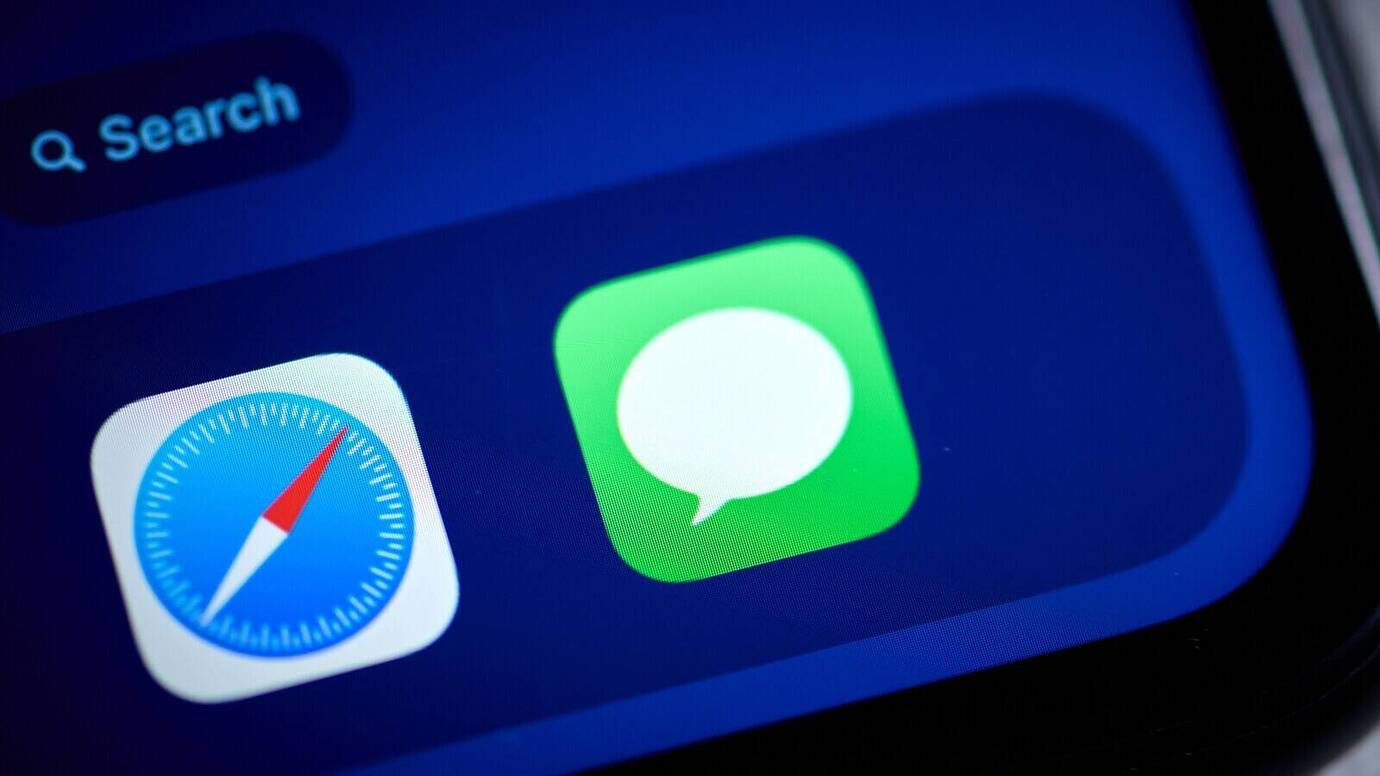
On the iPhone side, the Messages app will now display the mention "Text Message · RCS | [lock icon] Encrypted" in the center of conversations with Android contacts. The indication is visible directly in the chat thread. On Google Messages, the same padlock icon already familiar to Android users will appear, identical to that of exchanges between two Android devices.
The feature is enabled by default on iOS 26.5. To check or configure it manually, here's how:
Open Settings on iPhone.
Go to Messages.
Select RCS Messaging.
Verify that "End-to-end encryption (Beta)" is indeed enabled.
On the Android side, the user must ensure that Google Messages is updated to its latest available version. No further action is required.
A deployment after a long process
Apple's adoption of RCS in iOS 18, in late 2024, was hailed as a major step forward for interoperability between iPhone and Android. It brought message reactions, typing indicators, read receipts, and high-resolution media sharing in cross-platform exchanges. However, the absence of end-to-end encryption was a difficult limitation to ignore for privacy-conscious users.
Tests between Google Messages and iPhone began in February 2026, confirming that both companies were actively working on this integration. The release candidate of May 4 represents the final step before the public release. It should be noted that the GSMA published a version 4.0 of its Universal Profile in March 2026, which notably introduces native video calls within message threads. Apple has not yet communicated on the adoption of this more recent version, and the deployment of UP 4.0 on Android itself will largely depend on the operators' schedule.
The arrival of RCS encryption between iOS and Android represents a structuring step for mainstream mobile messaging. It concretely reduces the advantage that third-party applications like WhatsApp or Signal have held until now in terms of cross-platform security. For the millions of users who communicate daily between iPhone and Android without a dedicated app, the update to iOS 26.5, expected next week, will change the level of protection for their exchanges without any specific action on their part.

No comments! Be the first one.