






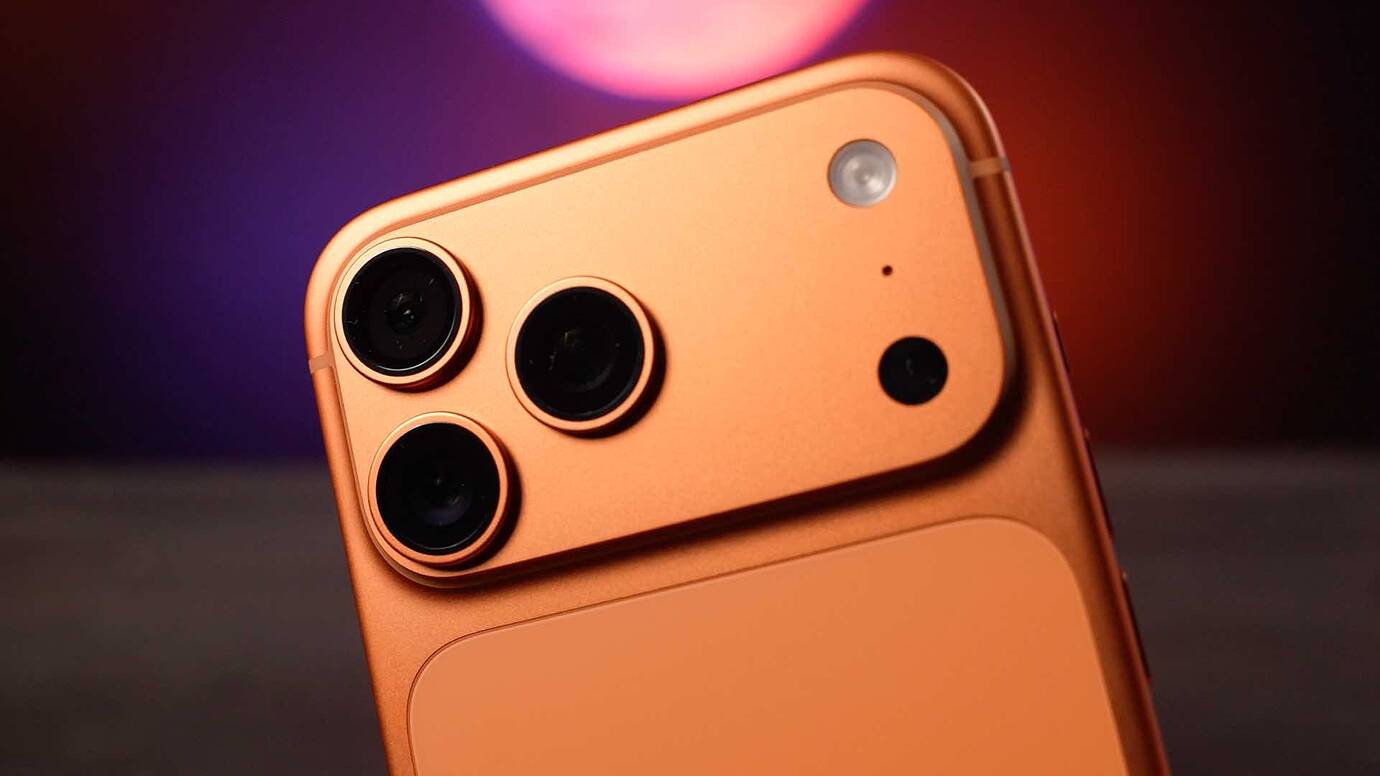
Apple released on April 30, 2026 its fiscal second quarter 2026 results, reporting record revenue of $111.2 billion, up 17% year-over-year. This historic performance is nevertheless overshadowed by a serious warning: a global shortage of memory chips that could weigh on iPhone margins and prices in the coming months.
An unprecedented quarter for Apple
The fiscal second quarter of 2026, which covers the period up to March 28, 2026, is Apple's best March quarter ever recorded. "Today Apple is proud to report its best March quarter ever, with revenue of $111.2 billion and double-digit growth in every geographic segment," said Tim Cook during the earnings call on April 29. ("Today Apple is proud to report our best March quarter ever, with revenue of $111.2 billion and double-digit growth across every geographic segment.")
The quarterly net profit reached $29.6 billion, or $2.01 per diluted share, compared to $1.65 a year earlier, representing a 22% increase. Apple thus exceeded Wall Street's consensus forecasts, with analysts expecting an average of $1.95 per share and $109.66 billion in revenue.
iPhone and Services, drivers of growth
The iPhone generated $56.99 billion in revenue, a record for a March quarter, driven by strong demand for the iPhone 17 lineup. Tim Cook specified that "the iPhone achieved a March quarter revenue record, fueled by extraordinary demand for the iPhone 17 lineup," he stated during the earnings call. ("iPhone achieved a March quarter revenue record, fueled by such extraordinary demand for the iPhone 17 lineup.")
Services, on the other hand, reached a new all-time high of 30.9 billion dollars, compared to $26.6 billion in the same quarter a year earlier. Mac, iPad, and Wearables also grew, reaching $8.4 billion, $6.9 billion, and $7.9 billion respectively, confirming the strength of the entire portfolio. Apple also announced the approval of an additional $100 billion share buyback.
The threat of "RAMageddon"
Behind these flattering figures lies a structural disruption. The artificial intelligence sector is now consuming colossal volumes of high-density memory chips, to the point where experts have dubbed the phenomenon "RAMageddon". According to an analysis published in early 2026, data centers are expected to absorb 70% of global memory chip production during that year, depriving consumer product manufacturers of sufficient access to components.
The consequences are already measurable. RAM costs have quadrupled for some components, and supply lead times have lengthened. Micron Technology experts have described the supply chain blockage as "unprecedented". According to data from Nature, some forms of RAM have tripled in price over the course of 2025, a trend that is accelerating in 2026.
Cook warns of "significantly higher" costs in June
Tim Cook did not downplay the problem during the earnings call. Apple spent more on memory chips in the March quarter than in previous quarters, but was able to offset some of the impact by selling off previously built-up inventory. Nevertheless, the executive warned that the coming months would be more difficult, with memory costs "significantly higher" starting in June, likely to "have an increasing impact" on the company's results.
He also admitted to Reuters that "flexibility in the supply chain is a bit less right now for getting more parts." ("There’s just a little less flexibility in the supply chain at the moment for getting more parts.") A price increase for the iPhone for upcoming models is among the scenarios being considered, although no official decision has been announced at this stage.
John Ternus inherits a mixed situation
This context gives particular prominence to the leadership transition announced on April 20, 2026. Apple confirmed in an official press release that Tim Cook would become executive chairman of the board, while John Ternus, previously senior vice president of hardware engineering, would take the reins of the company as CEO starting September 1, 2026.
Aged 51, Ternus joined Apple in 2001 and has overseen the development of many flagship products, including Apple Silicon chips. Present at the earnings call on April 30, he paid tribute to his predecessor. "In my view, Tim is one of the greatest business leaders of all time. Stepping into the role of CEO is an incredible honor, and it means a great deal to me to have Tim's trust," said John Ternus during the conference call. ("In my view, Tim is one of the greatest business leaders of all time. Stepping into the role of CEO is an incredible honor, and it means a great deal to me to have Tim’s trust and confidence.")
The transition, unanimously approved by the board of directors, results from a long-term planned succession process, according to Apple's official press release published on April 20, 2026. Cook will remain operational until the handover in September, leveraging his recognized expertise in the supply chain, precisely where Ternus will immediately need to demonstrate his ability to manage the chip crisis.
Managing the transition under industrial pressure
The stakes are considerable. According to industry projections, memory manufacturers' ramp-up in production to meet AI demand could take 18 months or more, according to Tom Coughlin, a consultant specializing in storage technologies. For Apple, the world's leading seller of premium smartphones, each quarter without a solution to this shortage translates into increased pressure on production costs.
John Ternus's trajectory at the helm of Apple will therefore be scrutinized from his first decisions regarding procurement and pricing policy. With 25 years spent designing Apple's hardware, he takes the lead of a company that has just broken its own records but must now navigate an industrial environment profoundly reconfigured by AI. The results for the third fiscal quarter of 2026, expected in July, will provide the first real signal of the extent of the RAMageddon's impact on the group's finances.




No comments! Be the first one.