





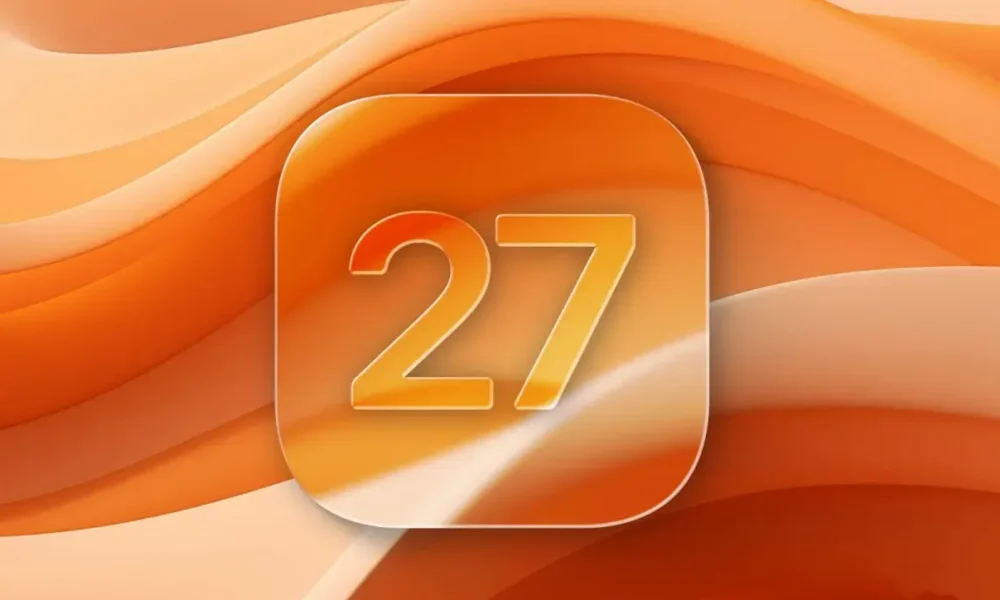
Apple presented iOS 27 and Siri AI at WWDC 2026 on June 8th at Apple Park. Transformed performance, a revamped voice assistant, and unprecedented parental controls: here's everything Apple announced.
It was in an unprecedented context that WWDC 2026 opened this Monday, June 8th: Tim Cook, Apple's CEO since 2011, gave his last opening keynote before handing over the reins to John Ternus, Senior Vice President of Hardware Engineering, on September 1st. A departure announced in April, but symbolic, coinciding with what is arguably the most ambitious software update of the decade for the Cupertino company. At the close of the keynote, Cook declared his conviction that "the best is yet to come" and that Apple "creates the best products in the world to enrich users' lives." (I truly believe that the best is still ahead, and Apple is creating the best products in the world to deliver experiences that enrich people’s lives.)
Siri AI: The Overhaul Users Have Been Waiting For
Since the timid introduction of Apple Intelligence in 2024, criticism had mounted: Siri lagged behind ChatGPT, Gemini, and Claude. WWDC 2026 marks the official break. Apple presented Siri AI, described in the official press release of June 8th as "an entirely new version of Siri, profoundly more intelligent, knowledgeable, and capable."
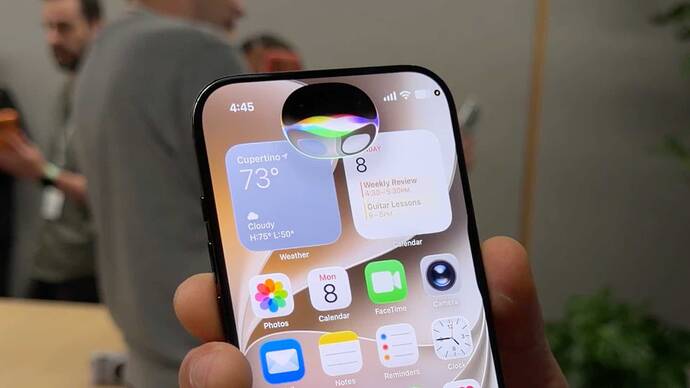
Specifically, Siri AI adopts a chatbot-like architecture. A dedicated application now allows users to engage in continuous conversations, synchronized across all their devices via iCloud. The assistant can view on-screen content, query messages, emails, or photos stored on the device, and access the web to provide up-to-date answers. The concept of personal context is at the heart of the system: Siri can, for example, find a friend's address in an old conversation or suggest an action based on a calendar event.
Craig Federighi, Senior Vice President of Software Engineering, thus articulated the ambition in an official press release: "We are introducing Siri AI, a profoundly more intelligent, knowledgeable, and capable Siri, that redefines privacy in AI." (We’re delivering the next generation of Apple Intelligence across our platforms; introducing Siri AI, a profoundly more intelligent, knowledgeable, and capable Siri.) During the conference, he also stated that "privacy in AI is non-negotiable" (privacy in AI is non-negotiable) and that user data is only used to process the current request.
On a technical level, Siri AI relies on Apple's proprietary models combined with Google's Gemini engine, according to information reported by TechCrunch following the keynote. Beta availability is scheduled for late 2026, initially in English.
iOS 27 and macOS Golden Gate: Performance First
Beyond Siri, Apple has made fluidity and responsiveness the guiding principle of this generation. iOS 27 will be available on all devices compatible with iOS 26, namely the iPhone 11 and later models. Apple states in its official press release of June 8 that this version will be "available to more users than any other iOS update in history."
The figures announced by Apple are substantial: apps launch up to 30% faster, photos appear up to 70% faster after being taken, and AirDrop transfers are up to 80% faster. Apple specifies that it has reworked the processor manager so that older models, including the iPhone 11, will experience a perceptible daily improvement. The transition between Wi-Fi and cellular connection is also made smoother, according to the same press release.
On the desktop, macOS Golden Gate (macOS 27) returns to several identifying markers of the system: a unified toolbar between applications, a sidebar extending to the edges of the screen, and colored icons in the side panels. The Liquid Glass design, introduced with iOS 26 in 2025 and which had met with mixed reactions, is retained but enhanced with a slider allowing the user to freely adjust the transparency level. The redesign also affects search across the entire ecosystem: Spotlight, Photos, and Mail have undergone a deep reconstruction to improve stability and speed up indexing. In Mail, a new sorting system prioritizes the most relevant results.
Apple Intelligence also extends to new application features. Photos integrates a Spatial Reframing option to recompose a shot after it's taken. Safari gains a "Notify Me" feature to track changes on a web page, such as restocks or price changes. In Messages, one-tap contextual suggestions make it easy to create reminders or notes directly from a conversation.
Child Safety: An Issue That Has Become Political
As governments tighten their requirements for digital platforms regarding the protection of minors, Apple has dedicated a substantial part of its keynote to this subject. The new version of Screen Time offers child accounts configurable from the parents' device, with age-appropriate protections activated from the moment the account is created.
The "Ask to Browse" feature requires children to ask for parental permission before accessing a new website, uniformly across iPhone, iPad, and Mac in Safari. "Ask to Buy," already existing for app purchases, will be enabled by default for children under 13. Communication Safety, which already blurred sexually explicit content in Messages and FaceTime, now extends its coverage to violent images or those depicting injuries.
Time limits per category of applications, entertainment, games, and social networks can be configured manually. Apple indicates that duration suggestions are based on recommendations from child development specialists. The company has also launched a dedicated website for child safety to centralize resources for families.
Europe Excluded from Siri AI on iPhone and iPad
The most notable point of friction in this presentation directly concerns European users. Apple confirmed in its official press release that Siri AI will not be available in the European Union at the launch of iOS 27 and iPadOS 27. The company cites constraints imposed by the Digital Markets Act. The measure is partial: Siri AI will remain accessible in the EU on macOS 27, watchOS 27, and visionOS 27 from launch.
This is not the first time Apple has invoked European regulations to restrict the deployment of features on iPhone and iPad. The situation mirrors the treatment of several Apple Intelligence features during the launch of iOS 26. No catch-up schedule for mobile devices in Europe has been communicated at this stage.
watchOS, AirPods, Vision Pro: Other Announcements to Note
The rest of the ecosystem is not left behind. watchOS 27 introduces a dynamic app grid offering five suggestions generated by Siri, a new unified Find My app consolidating device, item, and person tracking, as well as a press gesture on the Smart Stack to open a widget directly from the watch face. AirPods Pro 3 gain a customizable equalizer and GymKit compatibility to synchronize heart rate during workouts on compatible devices. The Health app now integrates tracking for perimenopause and menopause in the Cycle Tracking module, with notifications for cycle variations. On the Apple Vision Pro side, panoramas can be converted into personalized spatial environments, and Wi-Fi connection is up to three times faster according to Apple.
All these updates will be accessible in developer beta starting today, June 9, 2026, and will be publicly rolled out this fall for compatible devices. The question of the real value of Siri AI compared to its rivals will only be settled upon public release, but Apple has clearly chosen to bet its credibility on artificial intelligence. For Tim Cook, this is the last gamble before the handover; for John Ternus, it will be the first challenge to manage.


No comments! Be the first one.