






TheApple Siri $250 Million Settlement has just received its preliminary approval. Eligible iPhone owners can now claim up to $95 per device.
What users can concretely claim
The base amount provided for by the settlement is $25 per eligible device. This figure can, however, increase to $95 if the number of compensation claims submitted remains low. Conversely, massive user participation would mechanically lower the individual payout, within the limit of the overall $250 million fund, from which lawyer fees and administrative costs related to the procedure will also be deducted.
To be eligible, you must have purchased one of the following devices in the United States between June 10, 2024, and March 29, 2025:
iPhone 15 Pro
iPhone 15 Pro Max
iPhone 16
iPhone 16e
iPhone 16 Plus
iPhone 16 Pro
iPhone 16 Pro Max
To submit a claim, users will need to provide proof of purchase, the device's serial number, their phone number, and information related to their Apple account. With the agreement having received preliminary approval on May 5, 2026, Apple has 45 days to send notifications to the affected individuals.
A commercial promise that reality did not follow
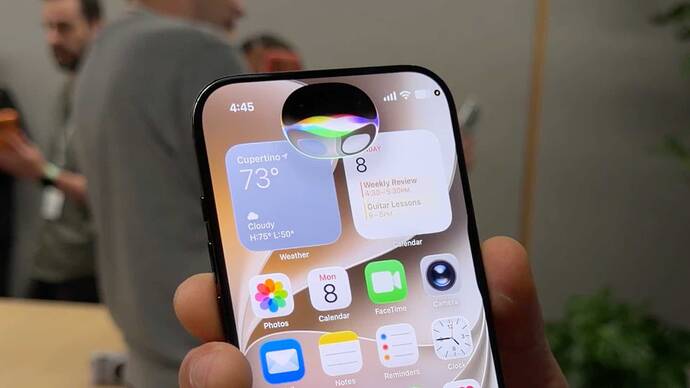
To understand the origin of this procedure, we must go back to June 2024. At WWDC 2024, Apple presented a deeply revamped version of Siri, integrated into its new suite Apple Intelligence. The promise is ambitious: an assistant capable of understanding the user's personal context, acting within third-party applications, and interacting with tools like ChatGPT. These features were then highlighted in advertising campaigns broadcast during the launch of the iPhone 16 in September 2024.
In March 2025, Apple acknowledged that these advanced Siri features would not be available within the announced timeframe. The lawsuit filed shortly after accused the company of having "promoted artificial intelligence capabilities that did not exist at the time of the announcements, that still do not exist, and will not exist for two years or more." The plaintiffs argued that Apple had "saturated the internet, television, and media airwaves to create in the minds of consumers a clear and reasonable expectation that these revolutionary features would be available upon the release of the iPhone."
Apple's response: commitment without admission
Apple agreed to settle the case in December 2025, but without admitting any wrongdoing. The company stated that it had "acted in good faith, in a manner it believed to be in compliance with all applicable rules, regulations, and laws."
In a statement provided to several media outlets, an Apple spokesperson said: "Since the launch of Apple Intelligence, we have introduced dozens of features across many languages that are integrated across Apple’s platforms, relevant to what users do every day, and built with privacy protections at every step. These include Visual Intelligence, Live Translation, writing tools, Genmoji, Clean Up, and many more. Apple has reached a settlement to resolve claims related to the availability of two additional features. We resolved this matter to stay focused on doing what we do best, delivering the most innovative products and services to our users." ( "Since the launch of Apple Intelligence, we have introduced dozens of features across many languages that are integrated across Apple’s platforms, relevant to what users do every day, and built with privacy protections at every step. [...] Apple has reached a settlement to resolve claims related to the availability of two additional features. We resolved this matter to stay focused on doing what we do best, delivering the most innovative products and services to our users." )
This stance is typical in large-scale litigation: settling to avoid judicial entanglement, without any court ruling formally establishing liability.
A case that remains open at other levels
This settlement does not entirely close the judicial sequence surrounding Siri and Apple Intelligence. According to AppleInsider, a separate procedure is being conducted by the National Pension Fund of South Korea, which accuses Apple of causing stock losses related to the delays in its AI features. In February 2026, Apple requested the dismissal of this lawsuit, arguing that it was "notorious that Apple faced challenges and experienced ups and downs in 2025, like many large companies." The outcome of this second case remains uncertain.
On a technical level, the Siri features at the heart of the dispute are still not accessible to end-users as of today, May 6, 2026. They are expected as part of iOS 27, the presentation of which is scheduled for WWDC 2026 on June 8. The $250 million settlement therefore comes just weeks before what could be the long-awaited demonstration of promises made nearly two years ago.
For the affected iPhone owners, the immediate priority is to monitor Apple's communications over the next 45 days to avoid missing the window for submitting their compensation claim. The final deadline will be specified in the notices sent by the company.


No comments! Be the first one.