





watchOS 27 promises better measurement of heart rate on Apple Watch, but the artificial intelligence health coach will not be available at launch.
Project Mulberry: A Delayed Launch in the iOS 27 Cycle
For nearly a year, rumors have been accumulating around Project Mulberry, the internal codename for the AI-powered health coach that Apple is developing in parallel with its software updates. In February 2026, initial reports indicated a slowdown in the project. The latest revelations from Mark Gurman, published on May 24, 2026, in his Power On newsletter for Bloomberg, confirm that these features are indeed coming within the orbit of iOS 27, but not from day one.
According to Gurman, the project was recently scaled back after Eddy Cue took over Apple's health group. In his newsletter, he writes: "One internal project, an ambitious AI health coaching service known as Mulberry, was recently scaled back after Cue took over Apple’s health group. I don’t expect features from that endeavor to launch until later in the iOS 27 update cycle." (One internal project, an ambitious AI health coaching service known as Mulberry, was recently scaled back after Cue took over Apple’s health group. I don’t expect features from that endeavor to launch until later in the iOS 27 update cycle.)
This delay is primarily due to a strategic decision. Apple reportedly estimated that its offering was not competitive enough compared to other health subscriptions already on the market, and decided to take more time to refine the product. The possible launch window now extends from the iOS 27.1 update next October to iOS 27.4 in spring 2027. The redesigned Health app could nevertheless appear with iOS 27, even if the AI coach and the Apple Health+ subscription seem to be pushed back to a later phase of the cycle.
A Concrete Improvement in Heart Rate Tracking
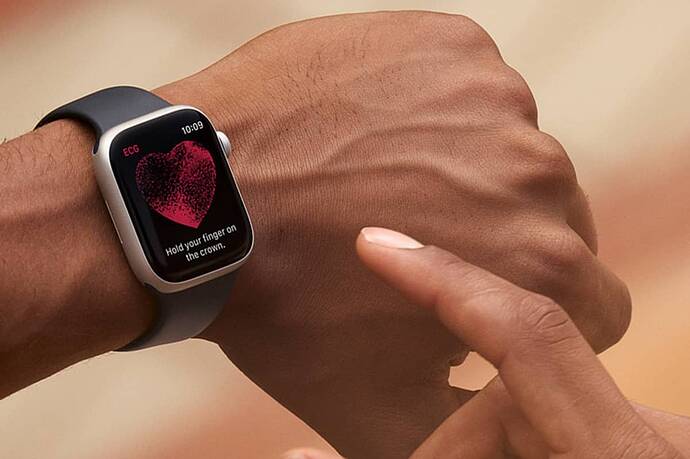
If Project Mulberry has to wait, watchOS 27 at least brings a tangible advancement for Apple Watch users: improved heart rate tracking accuracy. Mark Gurman explicitly states this in his Power On newsletter of May 24, 2026, while acknowledging that technical details remain scarce at this stage: "This year’s watchOS 27 update will focus largely on stability, performance and smaller refinements, rather than introducing major new capabilities. Still, improvements to heart rate tracking are indeed planned." (This year’s watchOS 27 update will focus largely on stability, performance and smaller refinements, rather than introducing major new capabilities. Still, improvements to heart-rate tracking are coming.)
The issue is far from cosmetic. Heart rate is the foundation for almost all health metrics offered by the Apple Watch: workouts, recovery, sleep trends, and medical alerts all depend on it. Better sampling consistency, for example, more regular data updates, would significantly enhance the value of the information displayed in the Health app. This is precisely where competitors like WHOOP have gained an advantage in recent years, offering near-continuous tracking known for its reliability.
Behind-the-Scenes Changes Before WWDC 2026
Beyond its features, Apple is undergoing a quiet but significant transition period at the helm of its health organization. Stan Ng, vice president of product marketing for Apple Watch and health, retired last April. His successor, Kaiann Drance, who comes from iPhone product marketing, is seen by some observers as a future global marketing lead for the company.
Furthermore, the highly anticipated non-invasive glucose monitoring project is also changing leadership. Apple has entrusted its supervision to Zongjian Chen, technical director responsible for modems and the advanced technologies group, replacing Tim Millet, head of platform architecture. Some analysts see this as a sign that Apple is making real progress on this subject and is considering a medium-term commercialization, even if projections suggest 2027 at the earliest.
WWDC 2026 will be held from June 8 to 12, and the opening keynote should mark the official unveiling of watchOS 27 and iOS 27. The first developer beta version will be available immediately after the conference, and the public rollout for all compatible Apple Watch models is expected in September, coinciding with the new iPhone and Apple Watch lineup.
The overall picture emerging for this edition of watchOS is one of a consolidation update rather than a breakthrough. Apple is choosing to strengthen existing foundations, with heart rate at the forefront, before deploying broader ambitions like AI-driven health coaching. For users who have long awaited more reliable daily heart rate monitoring, watchOS 27 could already represent a real gain, even if the promise of an intelligent health assistant will have to wait a few more months.

No comments! Be the first one.