





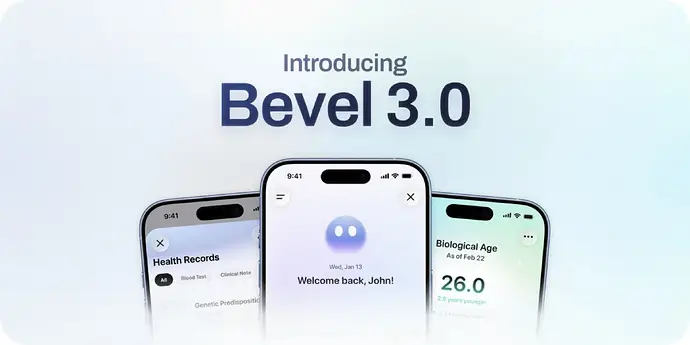
Bevel 3.0 has been available since April 28, 2026. This major update introduces a completely revamped AI coach, calculation ofbiological age and the integration of blood analyses into a single iOS app.
Apple Health collects. It categorizes. It displays. But it explains nothing. This observation has been shared by thousands of Apple Watch users for years: charts everywhere, data without context, and no link between your Monday sleep and your poor recovery on Wednesday. Bevel has always aimed to fill this void. With version 3.0, the app from Finerpoint, Inc. takes a decisive step and finally offers a coherent answer to this structural problem.
Biological Age: A Metric That Compares You to Your Best Potential
The most visible novelty of this update is the calculation of a biological age. This figure, recalculated every Monday from a rolling average of the past month, does not aim to position you relative to an average individual in your age group. Bevel confirms a different approach: the goal is to measure your fitness level against an optimal health profile, making the indicator much more demanding and useful.
To achieve this result, the app analyzes three categories of data. The first concerns sleep, including the actual duration of your nights, their regularity, and the quality of the different phases. The second focuses on physical activity, examining the time spent in each heart rate zone, from rest to high intensity, as well as strength training sessions. The third groups pure fitness markers: VO2 Max, resting heart rate, lean mass, to which lifestyle data such as nutrition, alcohol, or tobacco consumption are added.
Each factor becomes a biological age marker, classified into one of the five categories displayed in the app: Sleep, Activity, Fitness, Lifestyle, and Blood Biomarkers. A reliability indicator also specifies the freshness and completeness of the available data, which prevents displaying a misleading score if your readings are incomplete.
Bevel Intelligence V2: A Coach That Thinks, Stores, and Anticipates
The other pillar of this version 3.0 is the complete overhaul of the artificial intelligence engine. Bevel Intelligence V2 is not a simple improvement of the existing chatbot. Finerpoint has rebuilt the entire system from the ground up, with a stated goal: to make the coach more personal, more precise, and capable of acting proactively without waiting for a user's question.
The most structural change is the abandonment of the old volatile memory in favor of a persistent file system. The app now stores your preferences, goals, training plans, and general data as artifacts. In concrete terms, if you ask Bevel to build a preparation plan for a half-marathon, this plan will be stored, updated based on your results, and automatically reorganized if your schedule changes.
Four personalities, proactive check-ins, and custom charts
Bevel Intelligence V2 also introduces a choice of personality systems: Data Nerd, Guardian, Friend, or Commander. Each profile corresponds to a different communication register, from the most analytical to the most direct, allowing the coach's tone to be adapted to your own preferences rather than imposing a single style.
represent check-ins represent another concrete advancement. AI can now send proactive notifications on a configurable schedule: daily summaries, personalized reminders, alerts based on your data. It is also capable of generating personalized charts built directly from your health data, which Bevel calls Artifacts. Nutritional tracking also benefits from this conversational logic: simply describe what you have eaten in natural language for the application to automatically record and adjust calorie tracking.
Blood Tests Enter the Equation
The third major innovation of Bevel 3.0 is called Health Records. The application now allows direct import of blood tests, clinical notes, imaging reports, and other medical documents. From these files, Bevel automatically extracts biomarkers and integrates them into the Biology tab, alongside data from the Apple Watch.
This feature profoundly changes the nature of the application. A blood test used to end up in a forgotten PDF in a folder. With Bevel, these results become an additional data layer that AI can cross-reference with sleep, recovery, training, and nutrition. Players like Ultrahuman already offered a similar approach with Blood Vision. Bevel now integrates it directly into its iOS ecosystem, without additional hardware.
A Freemium Model at €99.99 Per Year in a Tense Market
Regarding pricing, Bevel remains free to download. Access to advanced features, particularly Bevel Intelligence V2, requires upgrading to Bevel Pro. The subscription is set at 99.99 euros per year, according to the application's official App Store listing.
| Level | Price | Included features |
|---|---|---|
| Free | 0 € | Sleep tracking, recovery, activity, nutrition, scores |
| Bevel Pro | 99.99 €/year or $14.99/month | Bevel Intelligence V2, Biological Age, Health Records, Artifacts |
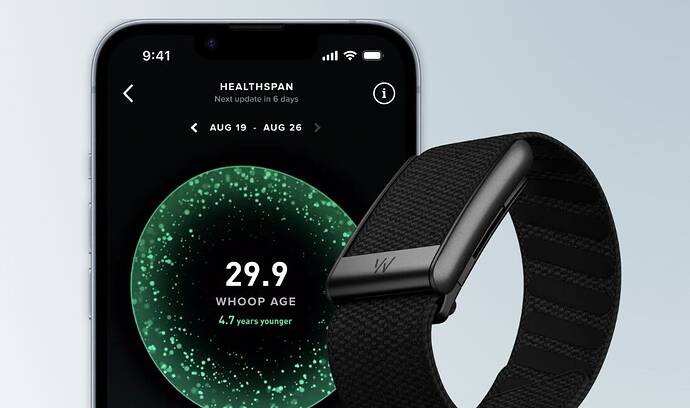
This pricing positions Bevel in direct competition with Whoop, which charges for its wristband and subscription separately. The rivalry between the two players is no longer just about features: Whoop has initiated legal proceedings against Bevel, according to an article published by WatchGeneration on April 28, 2026, although the details of the lawsuit have not been made public at this stage. This information has not yet been officially confirmed by either company.
Bevel 3.0 undoubtedly represents the most coherent update to the application since its launch. Biological age, medical records, and the redesigned coach form a logical whole that is moving in the right direction. The real question now is about long-term reliability: a health AI is judged not on its initial responses, but on the relevance of its recommendations after several weeks of use. For Apple Watch users looking to go beyond Apple Health's native charts, Bevel 3.0 is currently the most complete option available on iOS.

No Comment! Be the first one.