






The Pixel Watch 5 is revealed in a new technical leak. Google would bet on 3 GB of RAM, without deeply renewing its processor.
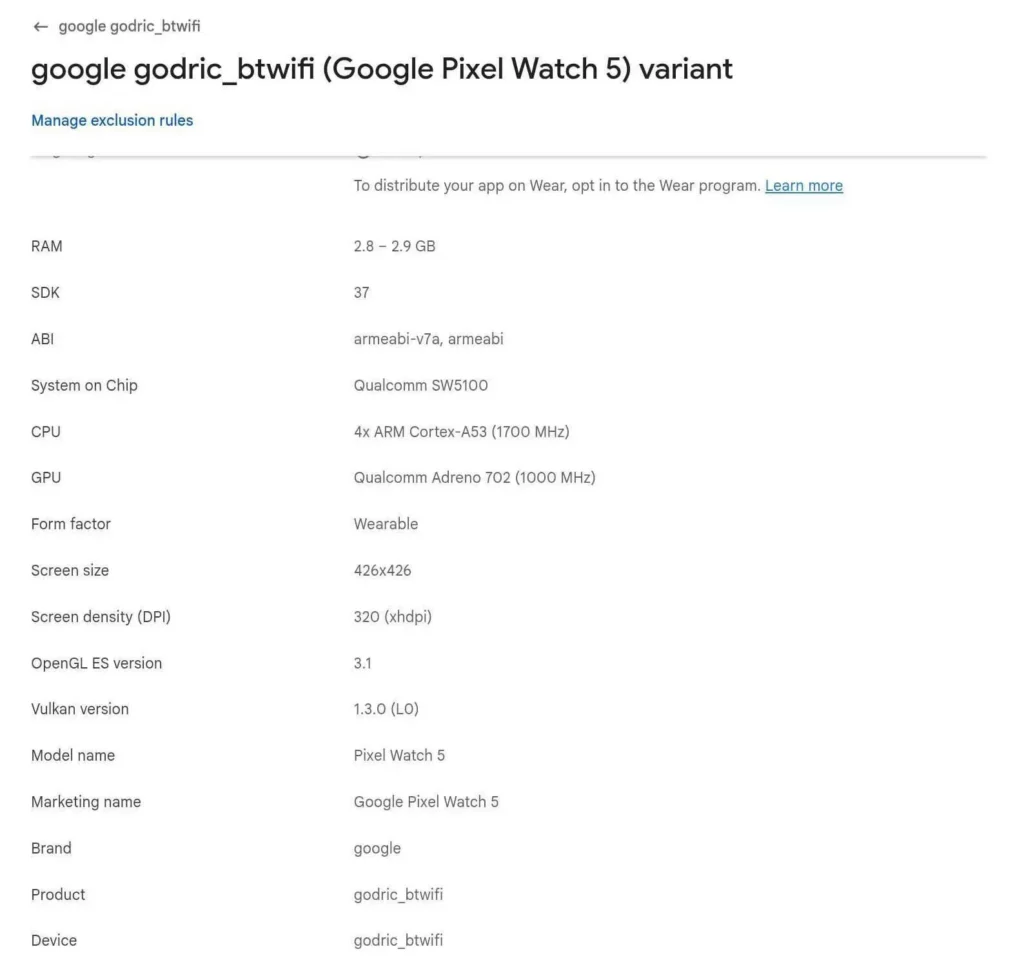
An entry attributed to the future watch appeared in the Google Play Console on July 22, 2026. Spotted by 9to5Google, it describes a device codenamed "godric" equipped with 3 GB of RAM and a Qualcomm SW5100 platform, but Google has not yet confirmed any of these specifications.
Pixel Watch 5 Features Revealed by Leak
The sheet consulted by 9to5Google associates the codename "godric" with a configuration based on four ARM Cortex-A53 cores clocked at 1.7 GHz and an Adreno 702 GPU at 1 GHz. It also indicates 3 GB of RAM, compared to 2 GB on the current generation.
This information comes from a Google Play Console entry and not from a commercial announcement. It offers a solid clue about the hardware being tested by Google, but the configuration of an unreleased product may still evolve before its release.
| Feature | Pixel Watch 5 according to leak | Pixel Watch 4 official |
|---|---|---|
| Base platform | Qualcomm SW5100 | Snapdragon W5 Gen 2 |
| Main processor | 4 Cortex-A53 at 1.7 GHz | Not detailed by Google |
| Graphics processor | Adreno 702 at 1 GHz | Not detailed by Google |
| RAM | 3 GB | 2 GB |
| Coprocessor | Not specified | Cortex-M55 |
| Storage | Not specified | 32 GB eMMC |
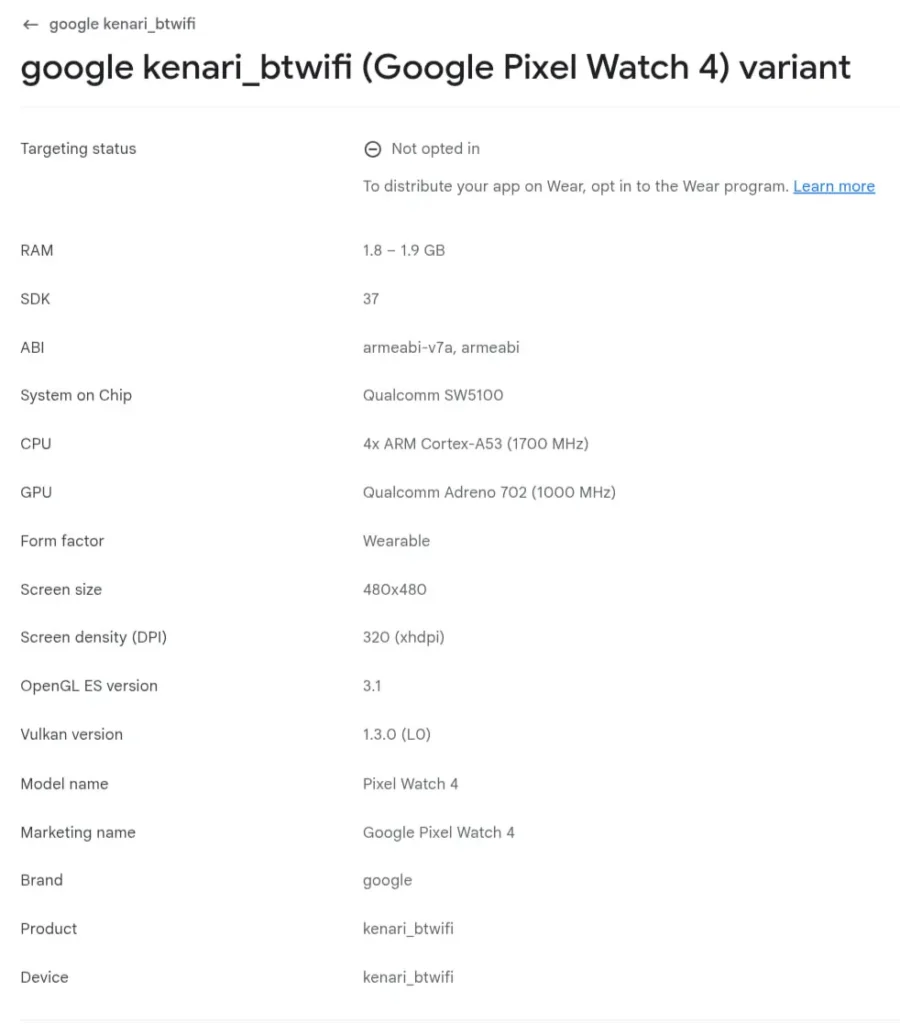
The specifications of the Pixel Watch 4 used in this comparison are on the official Google technical sheet. This page also confirms that the 41 and 45 mm models share the Snapdragon W5 Gen 2, the Cortex-M55 coprocessor, 2 GB of RAM, and 32 GB of storage.
Pixel Watch 5: Same Chip as Pixel Watch 4?
The presence of the SW5100 designation suggests that Google would retain the same Qualcomm base as on its latest watches. This reference is already associated with the architecture used since the Pixel Watch 2, with four Cortex-A53 cores and an Adreno 702 GPU.
However, we must avoid jumping to conclusions. The identified entry does not mention the low-power coprocessor, even though it plays an important role in continuous sensor tracking, machine learning processing, and battery management. Google could therefore evolve this part of the platform without modifying the main CPU.
The Pixel Watch 4 already illustrates this strategy. Google has kept a familiar general architecture while switching to the Snapdragon W5 Gen 2 and a Cortex-M55 coprocessor. During its presentation in August 2025, the company stated that this new coprocessor was 25% faster while consuming half the energy of its predecessor, according to the official press release dedicated to the Pixel Watch 4.
This generation also introduced emergency satellite communications on the LTE version. Therefore, maintaining an SW5100 base on the Pixel Watch 5 would not necessarily mean the absence of innovation, but it would reduce the chances of a major leap in overall performance.
3GB of RAM Could Prepare Gemini Intelligence
The increase from 2 to 3 GB would be the first RAM increase since the launch of the Pixel Watch line in 2022. On a smartwatch, this additional gigabyte is unlikely to transform raw performance. It could primarily allow more services to remain active, limit application reloads, and support more demanding artificial intelligence functions.
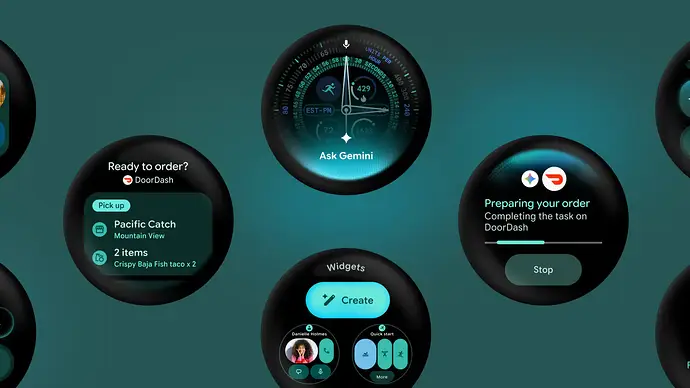
Google announced that certain devices running Wear OS 7 would receive Gemini Intelligence during the year 2026. This evolution should notably allow the creation of personalized widgets in natural language, the automation of multi-step actions, and the utilization of context provided by Google applications, according to the official presentation of Wear OS 7.
The 3 GB of RAM therefore reinforce the hypothesis of a Pixel Watch 5 designed for this new AI layer. However, they are not enough to confirm its compatibility. Google only speaks of availability on a selection of devices and has not yet published the list of models concerned.
This direction extends the changes already detailed in our article dedicated to Wear OS 7 and Gemini Intelligence. The main challenge would no longer be solely to display a voice assistant on the watch, but to enable it to act across multiple applications and to build an interface adapted to each user's needs.
A Prudent Choice That Could Limit Performance Gains
Keeping the same Cortex-A53 cores would allow Google to reduce industrial risks and focus its efforts on battery life, sensors, and software. The Pixel Watch 4 officially offers up to 30 hours of use with the always-on display in 41mm and up to 40 hours in 45mm. Its batteries reach 325 and 455 mAh respectively, according to Google's technical sheet published in 2025.
Wear OS 7 should simultaneously bring up to 10% more battery life to average users upgrading from Wear OS 6, according to Google in June 2026. A Pixel Watch 5 could therefore progress without radically changing its CPU, thanks to system optimization, a potential evolution of the coprocessor, or a different battery. None of these three elements, however, appear in the current leak.
The downside would be less visible progress compared to watches adopting newer cores and dedicated AI accelerators. The Cortex-A53s are an old architecture, even if their power consumption and maturity remain suitable for a wearable device. For the user, the difference will be mainly measured in the fluidity of the interface, the speed of application opening, and the ability to use Gemini features without compromising battery life.
A Leak Consistent with Previous Clues
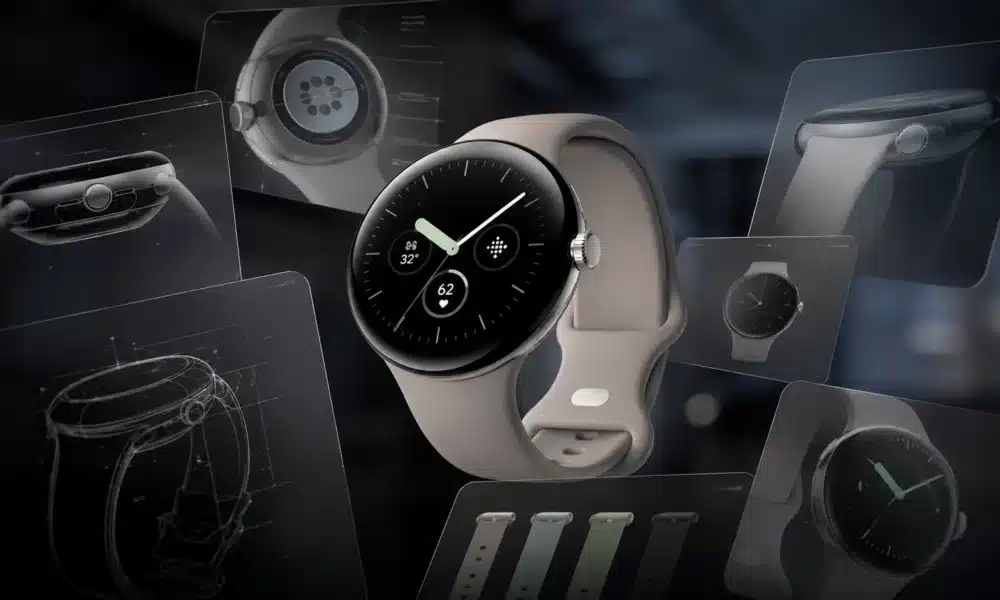
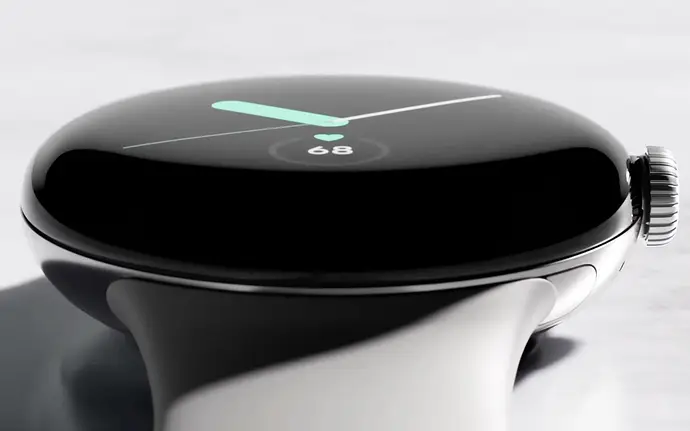
The photograph associated with the Google Play Console entry corresponds to the renders that appeared in July 2026. It shows a round watch similar to the Pixel Watch 4, accompanied by a new analog watch face inspired by Gemini's Neural Expressive visual language. This connection reinforces the coherence of the leak, without constituting official validation.
The existence of the product had already been suggested in a much more unusual way at the end of May. A prototype bearing the inscription Pixel Watch 5 was found underwater near Saint-Martin, as we reported during the discovery of the watch in the ocean . The photographs notably revealed mentions related to SpO2, electrodermal activity, skin temperature, and heart rate sensors, as well as UWB and IP68 certification.
These elements outline a generation based on continuity. The design would remain very close to that of the Pixel Watch 4, while the clearest hardware improvement for now would be the move to 3GB of RAM. Essential details, particularly batteries, the coprocessor, definitive sensors, sizes, price, and availability, remain unknown or unconfirmed.
The Pixel Watch 5 could thus favor software intelligence over a performance race. The 3GB of RAM would be a useful evolution for Wear OS 7 and Gemini, but we will have to wait for Google's presentation to know if the coprocessor, battery life, and health features truly justify the upgrade to this new generation.

No comments yet — start the discussion!