



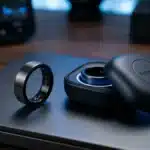


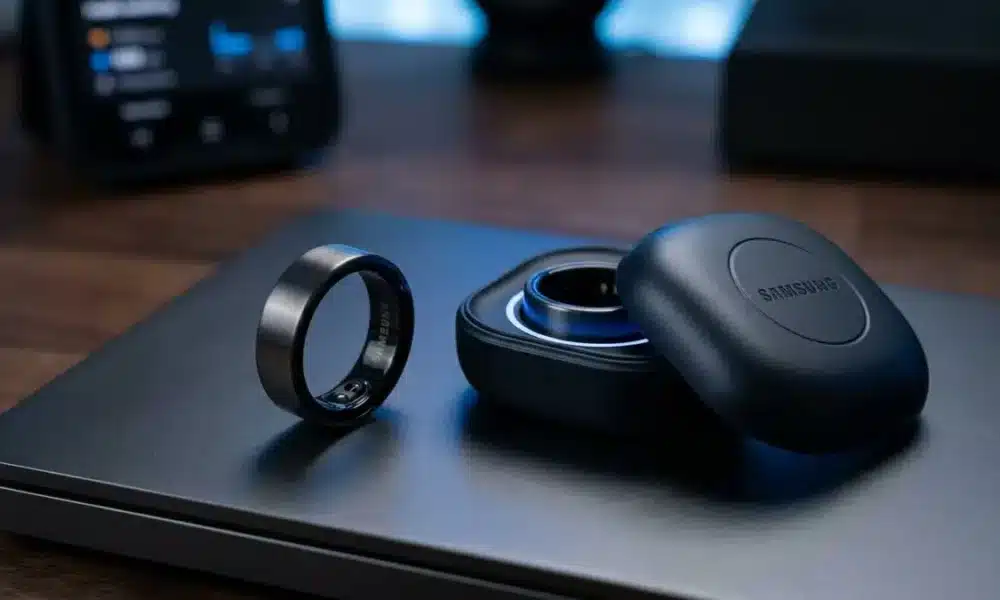
During the Galaxy Unpacked event in London, Samsung confirmed that the Galaxy Ring will integrate sleep apnea risk detection this fall.sleep apnea approved by the FDA. The ring will thus join the Galaxy Watch 9, which receives the same functionality starting this summer.
An announcement slipped in during the presentation of the watches
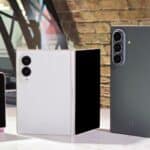
The event on July 22, 2026, held in London, was primarily dedicated to the new foldable phones Galaxy Z Fold8, Z Fold8 Ultra, and Z Flip8, as well as the Galaxy Watch 9 and Galaxy Watch Ultra 2. It was precisely during the presentation of the latter that Samsung mentioned the Galaxy Ring, without dedicating a specific segment to it.
Sharanya Desai, Head of Digital Health at Samsung, stated during the July 2026 Galaxy Unpacked event that "the Galaxy Ring will be the first and only over-the-counter ring to have FDA clearance for sleep apnea risk detection" ("Galaxy Ring will be the first and only FDA-cleared over-the-counter ring device for sleep apnea risk detection"), a statement relayed from the event stage. According to Samsung, the feature will arrive on the Galaxy Ring in Fall 2026, following a summer rollout reserved for watches.
How detection will work on the ring
Samsung has not yet released a dedicated press release detailing the exact functioning of the feature on the Galaxy Ring, unlike what it did for the Galaxy Watch 9 and Galaxy Watch Ultra 2. However, we can rely on the mechanism already confirmed for the watches, which the ring is expected to inherit in broad strokes.
On the Galaxy Watch 9 and Galaxy Watch Ultra 2, the Sleep Apnea feature analyzes the number of respiratory disturbances per hour using an AI algorithm and classifies them into three severity levels. It requires a Galaxy smartphone running Android 12 or a later version and relies on two nights of measurements recorded over a ten-day period. This mechanism refines a detection capability that earned Samsung, in February 2024, the very first De Novo FDA clearance for this type of feature on a wearable device.
No smart ring or watch makes a diagnosis. The device simply detects signals, such as nocturnal drops in blood oxygen levels, that may indicate a risk of obstructive sleep apnea. In case of a concerning result, the user receives a recommendation for medical consultation rather than a clinical diagnosis.
FDA clearance, but not yet a full dossier for the ring
Two levels of confirmation should be distinguished in this announcement. On one hand, the FDA clearance for Samsung Health's Sleep Apnea function has indeed existed since 2024 and has since been extended to many markets, including Europe via CE marking obtained in 2025. On the other hand, the specific extension of this clearance to the Galaxy Ring for Fall 2026 is, at this stage, based solely on Samsung's public statement during Unpacked, without an official press release detailing the clinical protocol specific to the ring.
This nuance does not call into question the credibility of the announcement, as Samsung usually keeps its calendar commitments for this feature. It simply suggests waiting for more formal communication before autumn to know the exact specifications, particularly software compatibility and the measurement protocol chosen for a ring sensor, which is more compact than that of a watch.
Facing Oura and RingConn: a battle for medical credibility
Samsung's marketing argument hinges on a specific point: the word FDA. Other smart rings already offer functions related to nocturnal breathing, but without this specific regulatory authorization.
- Oura monitors oxygen levels and other signals to detect "respiratory disturbances," an approach strengthened since May 2026 by a partnership with ResMed integrated into its Oura Ring 5, which offers longer-term nocturnal respiratory analyses without, however, claiming FDA approval for sleep apnea.
- RingConn offers on its Gen 2 a manually activated sleep apnea test function, also lacking this clearance.
- Samsung, for its part, claims explicit FDA authorization for the detection of sleep apnea risk on a finger-worn device.
This regulatory distinction matters more for commercial discourse than for daily user experience, as all three approaches remain tracking tools rather than diagnostic devices. Nevertheless, it illustrates a fundamental trend in the sector, where ring manufacturers are increasingly seeking formal medical recognition rather than a simple wellness claim.
Sleep apnea affects a significant portion of the adult population and remains largely underdiagnosed due to the lack of simple access to laboratory testing. Detection accessible via an object already worn daily, whether a watch or a ring, could encourage more at-risk individuals to consult a specialist, provided the false positive rate remains controlled.
Until autumn, Galaxy Ring owners will therefore have to wait to learn the exact details of the update. Those who are concerned about a potential sleep disorder, with or without a smart ring, would be well-advised to discuss it with a doctor now rather than wait for the feature to arrive.

No comments yet — start the discussion!