





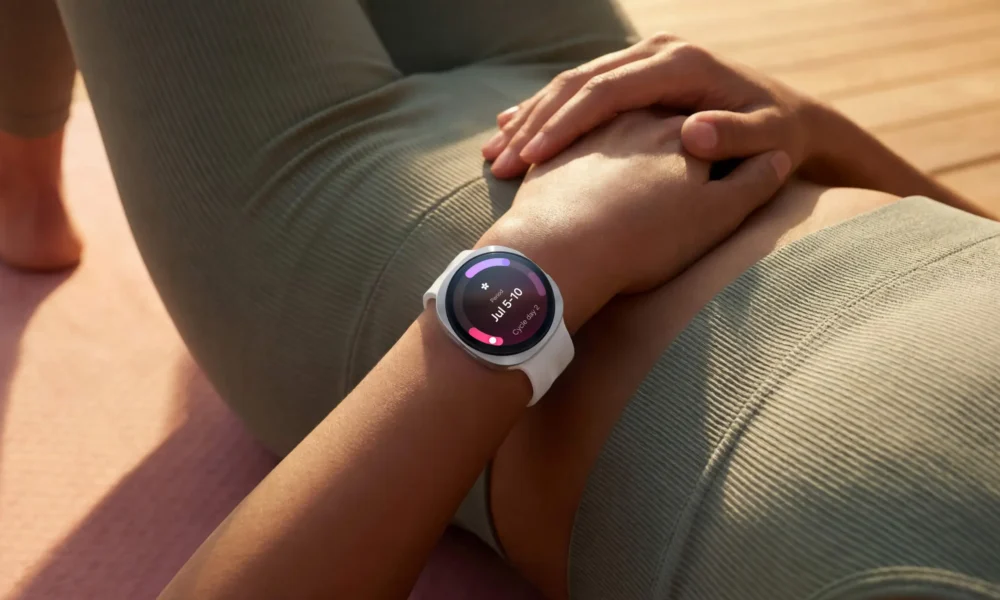
The Galaxy Watch 9 software support would move to five major updates, with patches until 2031. Samsung would thus strengthen the lifespan of its new watches.
Galaxy Watch 9 software support would gain a year
Unveiled on July 22, 2026, during the Galaxy Unpacked event in London, the Galaxy Watch 9 and Galaxy Watch Ultra 2 are expected to benefit from five major operating system updates and five years of security patches. This information was published by SamMobile, and then reported by Android Authority on July 23, 2026.
The two watches will launch with Wear OS 7 and the One UI 9 Watch interface. Following this new schedule, they could receive five new generations of Wear OS and One UI Watch, with a final major upgrade expected in 2031.
This policy would add one year of software tracking compared to previous generations. Since the Galaxy Watch 4, Samsung has officially promised up to four generations of One UI Watch and Wear OS. This rule was announced by the manufacturer in February 2022 and also applied to future Galaxy Watches sold after the Watch 4.
The change would therefore not concern the duration of security patches, already set at five years, but the number of functional updates. Buyers would retain longer access to new interfaces, compatible health features, and Wear OS ecosystem evolutions.
Credible information, but still incompletely documented
Caution is still needed. As of July 23, 2026, the official press release dedicated to the Galaxy Watch 9 and Galaxy Watch Ultra 2 confirms Wear OS 7 and One UI 9 Watch, but does not explicitly mention five generations of updates.
Samsung's public page dedicated to security patches does not yet include the two models. It only indicates that compatible watches receive patches related to Wear OS and Samsung-developed components. The Galaxy Watch 8, Watch 8 Classic, Watch Ultra, and earlier models still appear in the list of devices tracked quarterly.
SamMobile nevertheless claims that Samsung announced this new policy at launch and that the 2026 models will receive five major upgrades. Android Authority takes a more cautious approach, stating that the manufacturer "should" apply this commitment.
The extension therefore seems probable, but Samsung still needs to formalize it on a support page, in the terms and conditions, or in a dedicated press release. Pending this publication, it would be premature to present each future version of Wear OS as definitively guaranteed in all countries.
Five major updates do not mean five identical years
The number of system versions and the calendar duration of support are two different elements. A Galaxy Watch can receive a major update each year while continuing to get security patches after its last functional evolution. Conversely, a delay in Wear OS development can shift the schedule without necessarily extending the guaranteed period.
Samsung also specifies that the availability and date of updates may vary depending on the model, country, and Wear OS constraints. Some features may be absent from an older watch even when it receives the latest system version.
This distinction will be particularly important with features relying on artificial intelligence. A Galaxy Watch 9 could receive the same software base as a later generation without benefiting from all its tools, especially if they require more memory, a different sensor, or more powerful local processing.
Support until 2031 therefore primarily guarantees a maintained platform. It does not mean the watch will automatically have all the new features developed by Samsung and Google over the next five years.
The Snapdragon Wear Elite could facilitate this extended support
The new policy arrives at a time when Samsung is profoundly changing the hardware platform of its watches. As we detailed during the announcement of the Galaxy Watch 9's switch to Snapdragon, the brand is abandoning its Exynos chips in favor of Qualcomm's Snapdragon Wear Elite.
This 3nm processor has five cores and powers both the Galaxy Watch 9 and the Galaxy Watch Ultra 2. Samsung pairs this platform with improvements in speed, energy efficiency, and GPS accuracy, although independent tests are still needed to measure the actual progress.
The move to a common and recent architecture could facilitate maintenance over several years. However, Qualcomm must continue to provide the necessary software components and patches. Samsung also points out that certain hardware-specific vulnerabilities depend directly on updates transmitted by chip manufacturers.
This evolution could also explain why older Galaxy Watches would not automatically be covered by the new rule. The Galaxy Watch 8, Watch 8 Classic, and the first Watch Ultra use Exynos processors. Adapting five future generations of Wear OS to two different platforms would require more resources and could limit certain functions.
The Galaxy Watch 8 and Watch Ultra remain on the old policy
Samsung has not announced retroactive updates for watches already on the market. The Galaxy Watch 8, Galaxy Watch 8 Classic, and the first Galaxy Watch Ultra will therefore remain associated with the previous policy of four major software updates for now.
Owners of these models will continue to receive the updates their devices are eligible for, as well as scheduled security patches. However, there is no indication that a fifth update will be added later.
This difference does not immediately render older models obsolete. Several features from One UI 9 Watch, including Cardio Fitness and Fitness Level, are expected to remain accessible on the Galaxy Watch 7 and later compatible generations. This allows Samsung to distribute some of its new features without reserving all its software development for devices launched in 2026.
For a new buyer, the duration of support nevertheless becomes an additional argument in favor of the Galaxy Watch 9. A watch kept for four or five years is more likely to remain compatible with apps, Samsung Health services, and new Android versions.
Samsung gains an advantage over Google, but not necessarily over Apple
Within the Wear OS ecosystem, Samsung would offer one of the strongest commitments. Google currently guarantees three years of updates for its Pixel Watch, which would place the Galaxy Watch 9 two years ahead of its main Android competitor.
This difference is all the more noticeable as both brands rely on the same Wear OS base. Samsung would thus offer longer support than the company that directly develops the system, a difficult situation for Google to justify for its future Pixel Watches.
The comparison with Apple requires more nuance. Apple does not always announce a fixed duration for each Apple Watch in advance. However, the brand maintains relatively long actual support. In May 2026, watchOS 26 remained compatible with the Apple Watch Series 6 launched in 2020, nearly six years after its release.
Samsung could therefore offer the best written and predictable commitment, without necessarily surpassing all Apple Watches in actual duration. The main advantage lies primarily in the visibility offered to the buyer, who can know the number of expected upgrades from launch.
This new policy could become one of the most significant evolutions of the Galaxy Watch 9. If Samsung publicly confirms five major updates, the watch will remain supported until 2031 and set a new benchmark for Wear OS. It will now be necessary to monitor the official documentation and verify if older Galaxy Watches will also benefit from an extension.

No comments yet — start the discussion!