








TheApple Watch menopause sleep : Harvard analyzed 94,000 nights of data to measure, for the first time on this scale, the impact of perimenopause on the quality of nighttime rest.
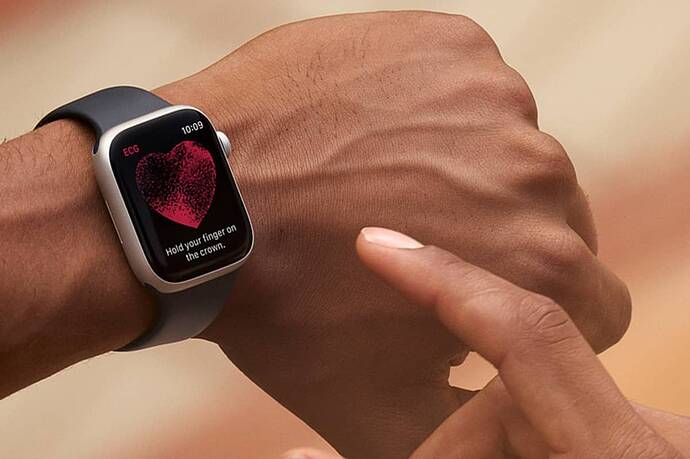
Millions of women go through perimenopause each year without precise monitoring of what this transition really does to their sleep. This is the scientific gap that the Harvard T.H. Chan School of Public Health has just filled, thanks to an unexpected tool: Apple's smartwatch, worn on the wrist night after night by hundreds of volunteer participants.
A database without equivalent in women's health research
The study, published on May 28, 2026 and titled A Transition of Seasons: Sleep Patterns and Changes in Perimenopause, is part of theApple Women's Health Study. This program is the result of a partnership between the Harvard T.H. Chan School of Public Health, Apple, and the National Institute of Environmental Health Sciences (NIEHS), with the ambition to better understand how certain demographic and behavioral factors influence menstrual cycles and gynecological conditions, including menopause. Launched in 2019 via the Apple Research app, it also involves Brigham and Women's Hospital and the University of Michigan.
Apple indicated in February 2025 that these programs now bring together over 350,000 participants in the United States. This volume allows for statistical power that is impossible to achieve in traditional clinical trials, which are often limited to a few dozen subjects.
94,000 nights scrutinized
Harvard's School of Public Health analyzed over 94,000 nights of data sleep tracking recorded by the Apple Watch to quantify, for the first time on this scale, the impact of perimenopause on sleep quality. This data was collected from 338 participants in the Apple Women's Health Study aged 25 to 59, with a majority in the 45-59 age group.
The analysis window chosen by the researchers extends over 24 months around a specific event: the last recorded menstrual period. According to the data, in the 12 months before and after this date, many participants spent more time awake during the night. The central indicator measured is the WASO (wake after sleep onset), which is the time spent awake after falling asleep. This parameter is one of the most reliable markers of actual sleep quality, as it captures nighttime awakenings that are not always remembered in the morning.
What the data reveals about the progressive deterioration of sleep
The quantitative results are clear. In the 18 months preceding menopause, 60% of women with sleep tracking data showed an increase in WASO compared to the previous 6 months, with an average increase of 7%. Researchers also noted that in the 12 months before and after the last recorded menstrual period, participants spent about 0.8% more of their sleep time awake after menopause than before.
What these figures mean concretely: sleep begins to deteriorate long before menopause is officially declared. The perimenopause, often described as a simple hormonal transition period, actually acts as a gradual disruptor of nighttime rest, detectable by sensors months in advance.
A deeply individual experience
One of the most important contributions of this study lies in its warning against generalization. Researchers emphasized that the results varied widely from one participant to another, reminding us that each person experiences perimenopause and menopause differently. Some participants experienced much larger increases in their nighttime wakefulness after menopause, while others noticed no significant changes.
This variability is not a study bias: it reflects the biological reality of a hormonal transition whose intensity, duration, and manifestations differ profoundly among women. It is precisely for this reason that continuous and personalized monitoring, made possible by a device like the Apple Watch, presents a potential medical interest that occasional consultations cannot offer.
The clinical picture beyond sleep
Participants journaled their symptoms alongside sleep tracking, thus providing a complete clinical picture. Hot flashes affected 82.3% of them, followed by irritability (68.1%), mental exhaustion (65.7%), and sexual symptoms (65.6%).
For participants who reported more severe menopausal symptoms, the symptoms most closely linked to disturbed sleep were urinary symptoms, joint pain, heart discomfort, and depressive symptoms. These correlations open an interesting clinical avenue: better understanding which symptoms most strongly predict severe sleep disturbance would allow for better targeting of treatments and preventive interventions.
Practical recommendations from data
Following the analysis, Harvard researchers formulated several recommendations to improve sleep quality during perimenopause. Maintaining a cool temperature in the sleep environment, adhering to regular bedtime and wake-up times, and promoting relaxation or mindfulness techniques in the evening routine are among the identified approaches.
These tips are not new in sleep hygiene, but their validation based on a corpus of 94,000 real nights gives them unprecedented epidemiological weight. What this study fundamentally demonstrates is the capacity of an everyday object to become a large-scale public health tool. For women going through perimenopause, wearing an Apple Watch might tomorrow no longer be about simple connected well-being, but about longitudinal medical monitoring. A question that will interest clinicians and health regulators alike in the coming years.



No comments yet — start the discussion!