




The application Google Health replaced the Fitbit app on May 19, 2026. A survey of 1,500 users reveals that a majority find it less practical than before, despite a refreshed design.
An imposed redesign, an assessment that raises questions
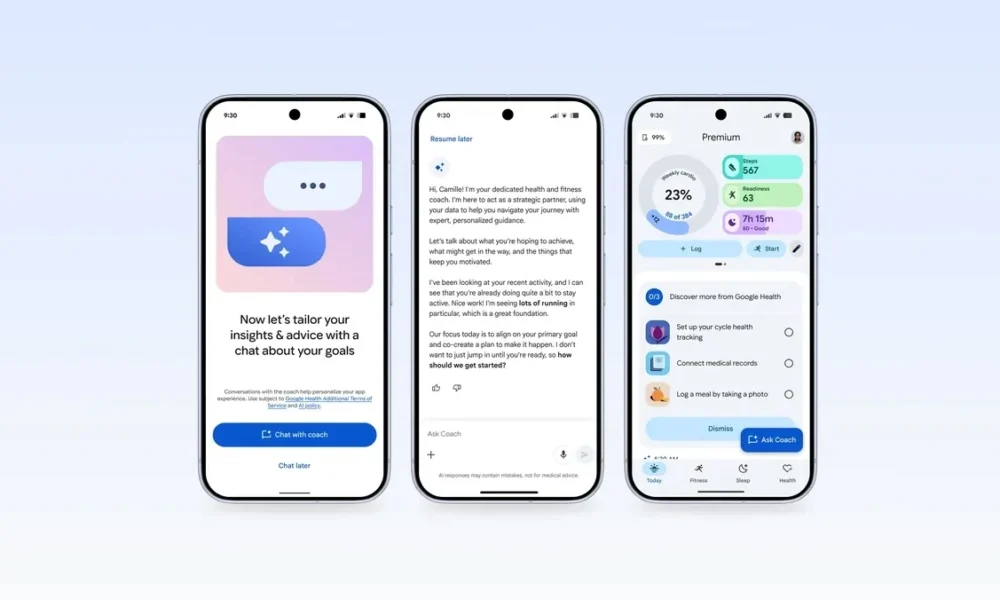
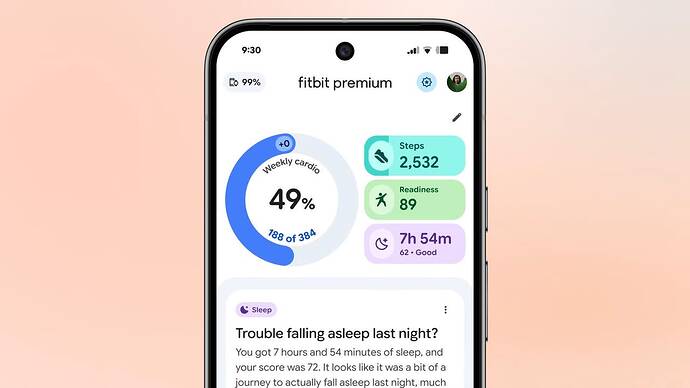
On May 7, 2026, Google announced on its official blog the end of the Fitbit app in favor of a unified platform called Google Health. The switch occurred automatically for all existing users between May 19 and May 26, requiring no action on their part. The stated goal is ambitious: to consolidate Fitbit, Google Fit, Health Connect data, and medical records into a single interface, powered by artificial intelligence integrated into Gemini.
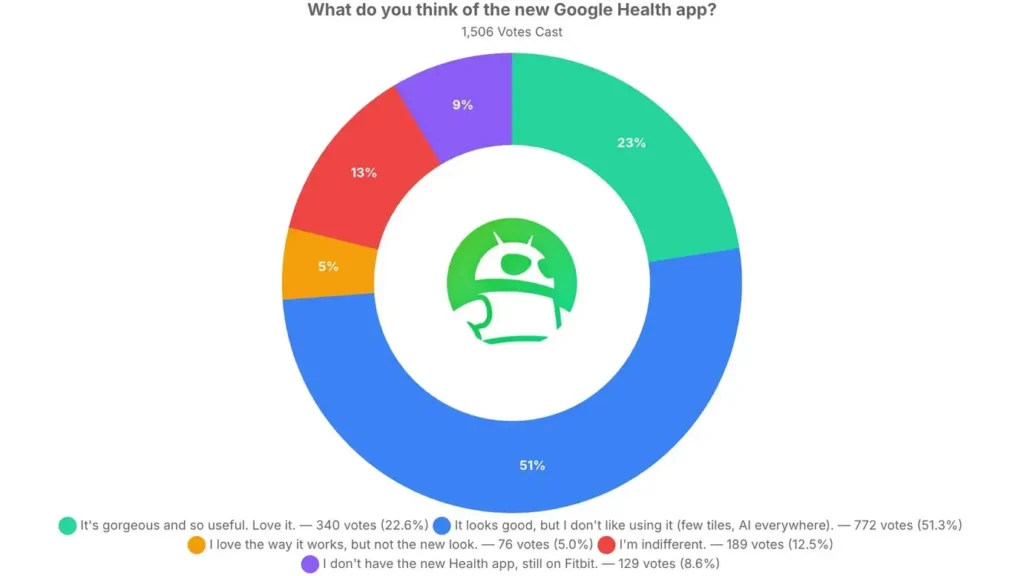
On paper, the proposal is consistent with Google's strategy to centralize its health offerings. But after a week of use for early adopters, the feedback is proving much more nuanced than the launch promises. Android Authority surveyed over 1,500 of its readers about their overall experience. Result: only 23% of respondents believe the app is both well-designed and pleasant to use daily, less than a quarter of the sample.
The distribution of other responses is equally revealing. 51% acknowledge that the design is improved but find the user experience significantly inferior to that of the old Fitbit app. Barely 5% appreciate the functionality but not the aesthetics. The remaining 22% are split between indifferent (13%) and users who have not yet received the update (9%). These figures paint a clear verdict: Google has prioritized appearance over ergonomics.
The AI coach, innovation or intrusion?
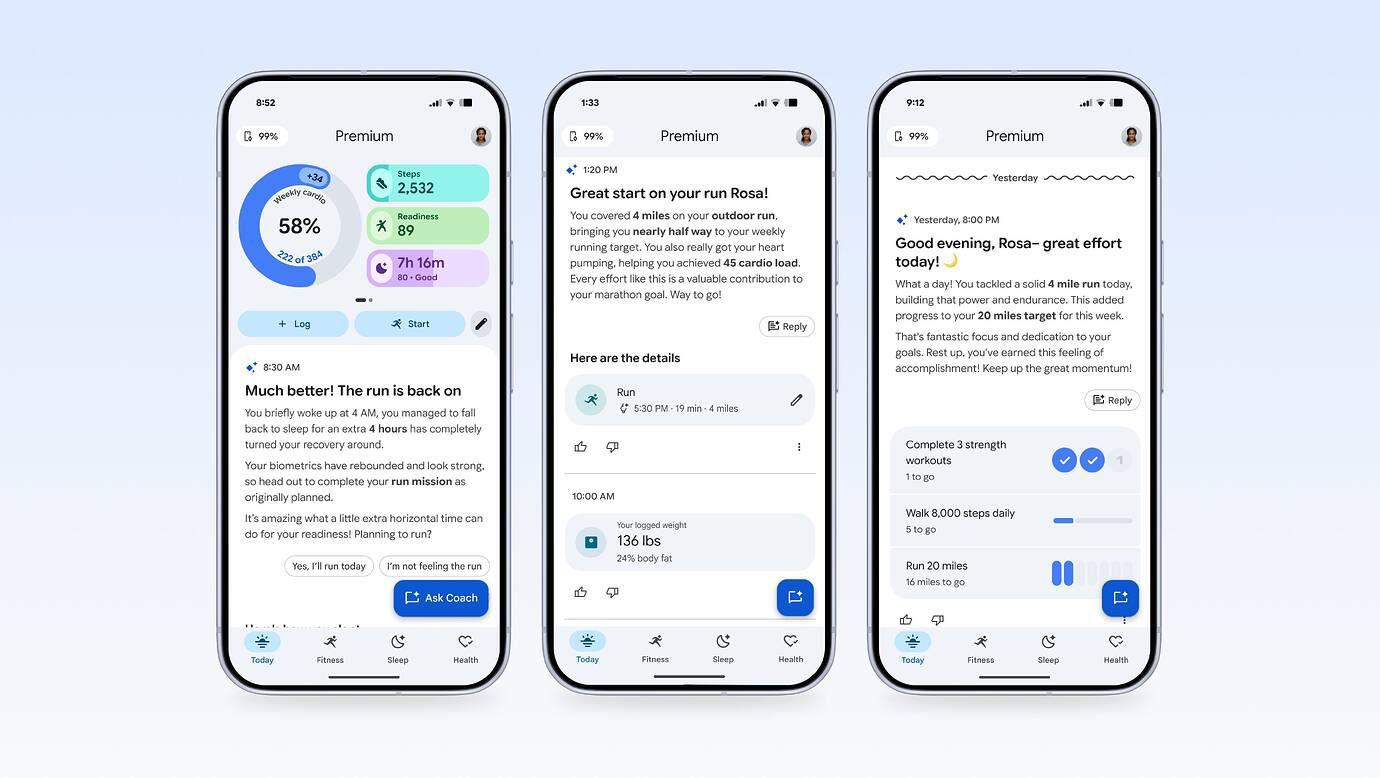
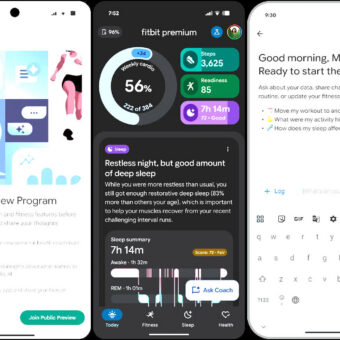
The most visible novelty of this redesign is the Google Health Coach, an AI assistant powered by Gemini that generates personalized textual analyses on sleep, fitness, or workout preparation. According to Google's official press release published on May 7, 2026, this tool aims to provide continuous adaptive coaching, visible directly from the app's main tab.
For some users, the intention is commendable, but the implementation misses the mark. A reader who participated in the public preview program, identified by the pseudonym craigalanfowler, expressed his frustration in online comments: "I don't think anyone at Google is really listening. I use AI a lot in many areas of my life, but for my daily health, I just want to see the data and charts. The AI-generated texts are generally unhelpful and repetitive, and make the app difficult to use." (I don’t think anyone at Google is listening. Look, I use AI a lot in many areas of my life, but for my daily health I really want just to see the data and charts. The rambling AI text is generally unhelpful and repetitive and just makes the app hard to use.)
On Reddit, in the r/fitbit thread dedicated to this transition, a user summarized the dominant sentiment with a sharp phrase, lamenting that the coach dispenses its "smarmy, obsequious, condescending platitudes" daily. (smarmy, obsequious, condescending platitudes). This thread now exceeds 600 comments, testifying to the extent of the unease.
Positive voices do exist, however. A reader identifying as fangz2001 shared a different experience in the comments: "I love the AI coach. It’s helped me plan and focus a lot more, and subconsciously pushes me to achieve the goals it sets." (I love the AI coach. It’s made me plan and focus a lot more as well as subconsciously try and go the targets it sets.) The debate between proponents of raw data and adherents of automated coaching therefore remains open.
Historical Fitbit features removed or degraded
Beyond the debate about the coach, the assessment of the migration also concerns what has simply disappeared. According to Google's official support page, the transition has led to the removal or degradation of several iconic features of the Fitbit ecosystem: minute-by-minute skin temperature data is no longer available, badges will no longer be generated, and existing histories will be permanently deleted. Google specifies that data related to removed features will only be downloadable until July 15, 2026, after which date their erasure is planned.
Criticisms also focus on very concrete daily irritations. Hourly step graphs have disappeared, it's impossible to rearrange interface tiles according to preferences, hourly movement reminders are gone, and manually adding a workout after the fact does not integrate any data. Meal logging is also singled out, deemed more complex and more geared towards a subscription Fitbit Premium to access the most useful features.
A reader identified by the pseudonym stuartgiles expressed this regression concretely in the comments: "Finding the most basic metrics has become an almost impossible quest. I'm still looking for how to see the number of steps taken the previous day." (Finding most basic metrics in the Health App has become a near impossible quest. I’m still trying to find how I might discover the most basic information previously easily available such as how many steps I might have taken on previous day.) Another user, omrose.farmer, went further: a Fitbit bracelet owner for over six years, she is now considering switching to an Apple Watch.
Google acknowledges issues and releases a roadmap
Faced with this massive feedback, Google responded by publishing a roadmap listing the expected fixes and improvements. According to information available as of May 27, 2026, workout tracking, food logging, sleep views, coach messages, and dashboard customization are among the items being processed. Some fixes began to be deployed in the days following the publication of this document.
This timeline can be interpreted as an indirect admission of the launch's shortcomings. The public preview program, intended to allow for the integration of testers' feedback before general deployment, clearly did not suffice to avoid the main pitfalls. The comparison with the Sonos affair, whose application redesign had triggered a similar wave of discontent, is now regularly circulating in specialized discussions.
Community pressure therefore seems to be producing its first effects. It remains to be seen whether the fixes will arrive quickly enough to prevent a significant migration to competitors like Garmin, which is establishing itself as the main alternative destination cited on forums, or Apple, whose Watch benefits from a Health app perceived as more stable and readable. For the millions of Fitbit users affected by this forced transition, the question is not so much whether Google Health will become a good product, but whether it will become one quickly enough.

No comments! Be the first one.