






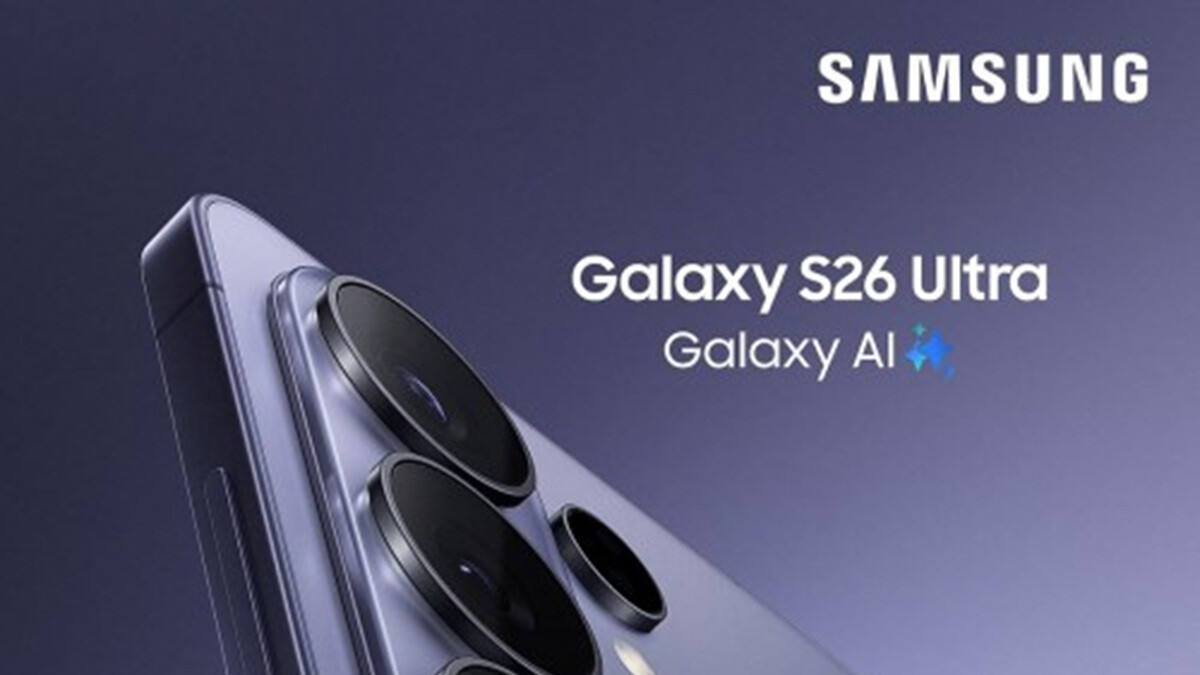
The suspense is over, and the conclusion is stark: the Galaxy S26 series won't try to reinvent the design wheel, but is taking a risky technical gamble under the hood. Here's our complete analysis of a spec sheet that's already dividing opinion.
If you were expecting a visual revolution for the 2026 model, look elsewhere. The massive leak revealed by WinFuture and reported this morning confirms what analysts feared: Samsung is consolidating its gains. But make no mistake, the real interest lies elsewhere. For the first time, we are witnessing a true foundry war within the range itself, with the introduction of the first mobile processor manufactured on 2nm by Samsung Foundry.
Here's what you need to know (and what the spec sheet doesn't tell you).
The Silicon Schism: 10 Cores or Nothing?
This is the major point of friction for this generation. Samsung is sticking to its two-speed strategy, but changing the technical game.
The Galaxy S26 Ultra will get the Qualcomm Snapdragon 8 Elite Gen 5. A chip manufactured on 3nm (likely by TSMC) using Oryon V3 "Phoenix" cores. This is the safe bet, the brute force powerhouse for gaming and local generative AI.
The Galaxy S26 and S26+, on the other hand, will inherit theExynos 2600. And this is where it gets interesting. Unlike previous years where Exynos seemed to be a "discount" version, this 2600 model introduces a new architecture Deca-Core (10 cores) and especially a manufacturing process 2nm GAA (Gate-All-Around).
Our analysis: On paper, the move to 2nm should offer the Exynos superior energy efficiency to the Snapdragon (3nm). However, the 10-core architecture (1x3.9GHz + 3x3.25GHz + 6x2.75GHz) is a risky bet on thermal management. Samsung is trying to muddy the waters with the number of cores to compensate for a historical lag in IPC (Instructions Per Cycle). If you are a power user, the Ultra remains the only safe choice.
Photography: The Ultra Wide-Angle finally emerges from the shadows
The stagnation of the 200 MP main sensor (likely a minor iteration of the ISOCELL HP2/HP9) should not overshadow the real novelty: the standardization of secondary sensors.
The Galaxy S26 Ultra finally adopts a 50 Megapixel Ultra Wide-Angle (f/1.9), abandoning the aging 12 MP sensor.
Why is it important? This finally allows for 8K or smooth 4K/60fps recording with all the rear sensors, and offers a significantly sharper 'Macro Mode'.
The x3 telephoto lens unfortunately remains at 10 MP, the poor relation of this setup, while Chinese competitors (Oppo, Xiaomi) have moved to “all 50 MP” for two years.
Battery Life: The 45W barrier finally broken
We had to wait until 2026. Samsung finally deigns to surpass the 45W charging that had been holding back its flagships since the S20 Ultra.
The S26 Ultra goes up to 60W wired. It's still not the 120W of Xiaomi or Realme, but it should be enough to recharge the 5000 mAh in less than 40 minutes, compared to an hour previously. Note the arrival of the standard Qi 2.2 for wireless charging, which stabilizes heating at 25W.
Should you buy it?
| Criteria | Galaxy S26 / S26+ | Galaxy S26 Ultra |
|---|---|---|
| Target Audience | General public, seeking compactness | Creators, Gamers, Power Users |
| Risk | High (Exynos 2600 chip to be confirmed) | Low (Snapdragon 8 Elite Gen 5) |
| Display | 6.3" / 6.7" (LTPO 120Hz) | 6.9" (LTPO 120Hz + S Pen) |
| Price | From €999 | From €1469 |
The preliminary verdict: If you own an S24 or S25, keep it. The gains are marginal. On the other hand, for owners of the S22 or S23, the leap forward in battery life (battery + 2nm etching) and the photo versatility of the Ultra justify the investment. A major unknown remains: will Samsung's AI (Galaxy AI) be able to justify the purchase on its own, as the absence of a hardware “killer feature” suggests?

No comments! Be the first one.