






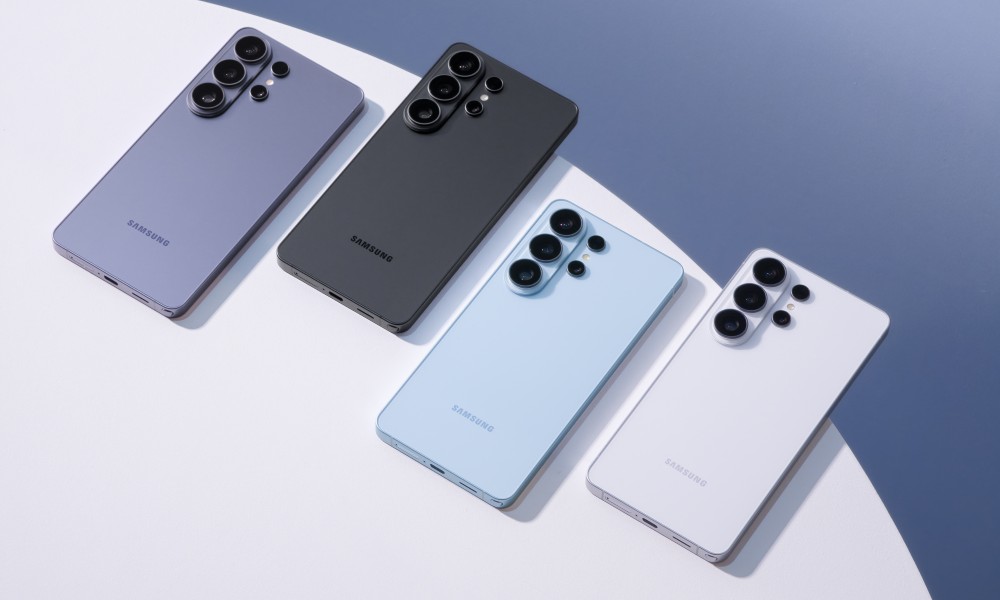
The Galaxy S26 recorded sales 13% higher than the Galaxy S25 in its first six weeks, according to Counterpoint Research. But the dynamic reversed from the sixth week onwards.
A solid start driven by three key markets
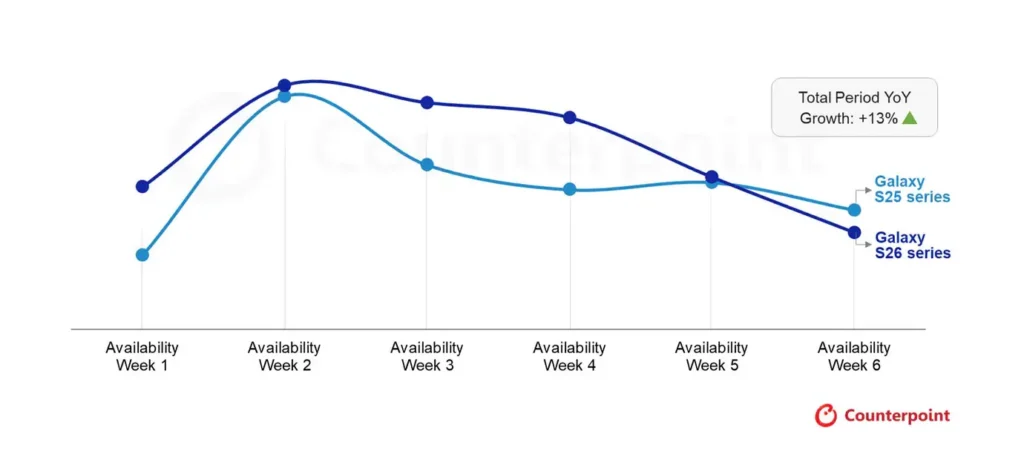
The data published on May 15, 2026, by the analysis firm Counterpoint Research offers an initial assessment of the commercial performance of the range Galaxy S26 since its launch about three months ago. In the first six weeks, cumulative sales of the series increased by 13% compared to the Galaxy S25 during the same period in 2025. Beyond the flagship range itself, overall Samsung smartphone sales also increased by 5% compared to the Galaxy S25 launch period, indicating that the new device had a positive effect on the entire portfolio of the Korean brand.
The United States and South Korea were the two main drivers of this launch, with double-digit growth in both countries. These markets represent historical strongholds for Samsung, where brand loyalty and operator trade-in programs facilitate generational upgrades. South Korea, Samsung's domestic market, remains particularly sensitive to new S-series releases, partly explaining this initial outperformance.
Europe: an unexpected engine of commercial success
The European market was one of the pleasant surprises of this launch. Jan Stryjak, Associate Director at Counterpoint Research, attributes this positive dynamic to three combined factors: the positioning of the Galaxy S26 Ultra, the introduction of the new Privacy Display feature, and, above all, the absence of a price increase compared to the previous generation. In a context where purchasing power remains under pressure in many European countries, this price stability clearly worked in Samsung's favor against competitors who did not hesitate to raise the prices of their flagships.
The Privacy Display, which allows the user to make their screen unreadable to people nearby, responds to a growing demand for privacy in public spaces. This commercial argument has clearly resonated well in Europe, where concerns about digital privacy are particularly pronounced. Samsung has succeeded in transforming a technical feature into an accessible selling point, which is far from systematic in the high-end segment.
China and Japan: two markets resisting the trend
Not all territories followed the same momentum. China and Japan showed disappointing performance for the Galaxy S26, without Counterpoint Research's study detailing the precise causes of this underperformance in these regions.
In China, Samsung's structural situation is not new. Competition from local manufacturers, particularly Huawei, Xiaomi, and Honor, has significantly strengthened in the high-end segment in recent years. Huawei, in particular, has managed to regain a significant share of this market with its Mate and Pura series, relegating Samsung to a challenger role in its own price category. In Japan, the market operates under different logic: local operators play a decisive role in smartphone sales, and the models marketed there are often specific versions, which can limit the reach of global launches.
The sixth week: the first warning sign
The overall figure of 13% growth over six weeks masks a less favorable reality. From the sixth week after launch, positions reversed: during the equivalent reference period in 2025, the Galaxy S25 recorded higher sales than the Galaxy S26 at the same stage. This reversal is a signal that the novelty effect has dissipated faster than expected.
Sujeong Lim, an analyst at Counterpoint Research, directly questions the Galaxy S26 series' ability to sustain its initial momentum in the coming weeks. This question is not trivial. It highlights a well-known phenomenon in the high-end smartphone market: initial demand is largely made up of early adopters, often users already loyal to the brand who upgrade as soon as the product is released. Once this wave is absorbed, maintaining a high sales level requires differentiating factors capable of convincing a broader and more hesitant audience.
What this assessment reveals about the health of the flagship market
The case of the Galaxy S26 illustrates a fundamental trend affecting the entire premium segment. Renewal cycles are lengthening, users are keeping their devices longer, and innovations must be sufficiently noticeable to justify an investment of over 1,000 euros. Samsung's decision not to increase prices between the Galaxy S25 and the Galaxy S26 has clearly helped to maintain, or even accelerate, early-cycle migrations. But this pricing advantage is not enough indefinitely.
Samsung will have to rely on its traditional distribution channels, trade-in offers, and operator partnerships to support long-term sales. The Counterpoint Research data published on May 15, 2026, provides an encouraging initial snapshot, but the coming months will determine whether this increased start marks the beginning of sustainable success or if it remains a launch peak without a future.



No comments! Be the first one.