



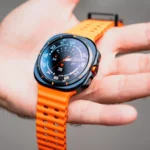


Samsung Health receives a major update starting June 8, 2026, with four new AI-powered features. These tools transform the Galaxy Watch into a true proactive health companion.
On June 4, 2026, Samsung Electronics released an official statement announcing a significant overhaul of its application. The rollout will begin on June 8, ahead of the launch of the next generation of Galaxy Watch. This update is not limited to adding metrics: it marks a turning point in the platform's philosophy, shifting from simple biometric data recording to active, personalized daily guidance.
From passive collection to proactive health intelligence
Until now, Samsung Health primarily functioned as a data aggregator. The application collected information produced by the Galaxy Watch without always facilitating concrete interpretation. The new update breaks with this approach.
"Samsung Health is evolving to connect health data measured by Galaxy Watch with AI-based insights, enabling users to understand their physical and mental condition more easily and intuitively," said Hon Pak, Senior Vice President and Head of the Digital Health team at Samsung Electronics' Mobile eXperience (MX) division, in an official statement. (Samsung Health is evolving to connect health data measured by Galaxy Watch with AI-based insights, enabling users to understand their physical and mental condition more easily and intuitively.)
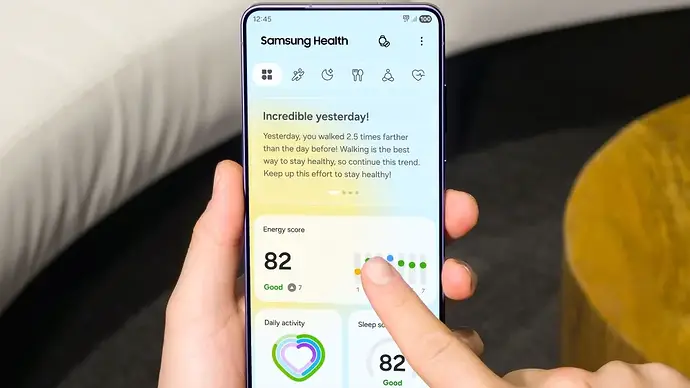
To support this change in philosophy, Samsung has completely redesigned its application's interface. The new layout is organized around five fundamental pillars: Sleep, Activity, Nutrition, Mindfulness, and Vitals. TheEnergy Score AI-generated daily wellness tips now appear directly on the home screen, offering an immediate overview of the user's overall health status without needing to navigate through multiple sections.
Four new AI features to read your body differently

Vitals: an intelligent alert upon waking
The function Vitals analyzes five key biological signals measured during sleep each night: heart rate, heart rate variability (HRV), respiratory rate, skin temperature, and blood oxygen level. These values are systematically compared to the user's personal baseline, which is gradually established over time.
The application sends a notification only when it detects a significant deviation from this individual benchmark. According to Samsung, this approach helps identify signs of fatigue, emerging illness, or the need for recovery, without causing the saturation of alerts that often discourages sustained engagement with health apps. Compared to what Apple Watch offered with its Vitals feature launched on watchOS 11, Samsung brings a similar logic but integrated into its own Galaxy ecosystem.
Heart Health Score: the heir to Vascular Load
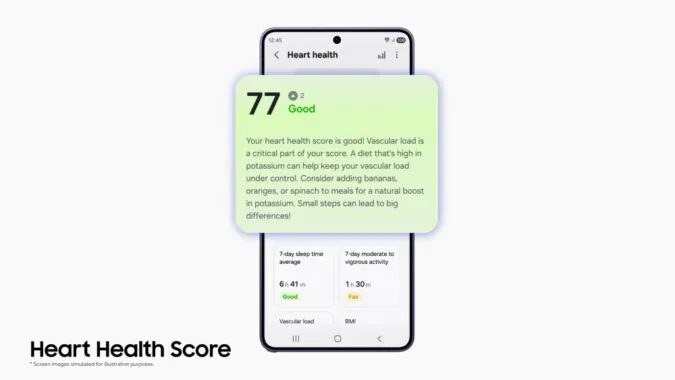
Samsung replaces its metric Vascular Load, introduced in 2025, by the Heart Health Score. This unique daily score aggregates sleep, stress, physical activity, and body composition data into a single, at-a-glance indicator. The stated goal is to give users a clear view of their long-term cardiovascular health without having to cross-reference multiple dashboards.
The Heart Health Score represents a logical evolution of the work started with Vascular Load, by integrating body composition into the equation. Samsung thus consolidates data previously scattered across the app into a single actionable figure, simplifying daily comprehension.
Daily Cardio Load: adapt effort to real capacity
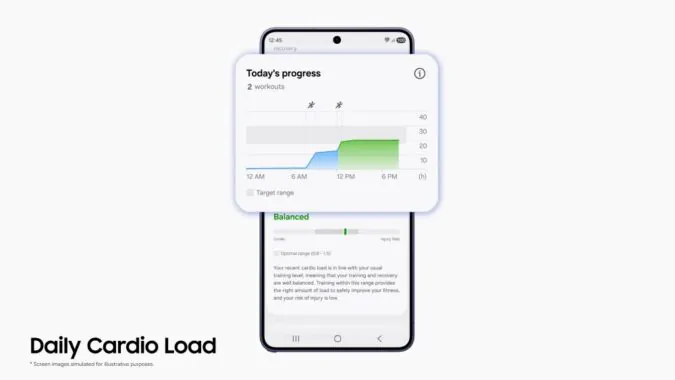
The Daily Cardio Load measures the cardiovascular load accumulated over aerobic training sessions. By calculating daily load and the user's own maximum training capacity, the function recommends optimal intensity targets and adapted recovery periods. Samsung indicates that this tool aims to prevent overtraining while allowing continuous progress towards fitness goals, a central issue for amateur athletes who often lack objective benchmarks for their effort tolerance.
Fitness Index: position yourself to progress
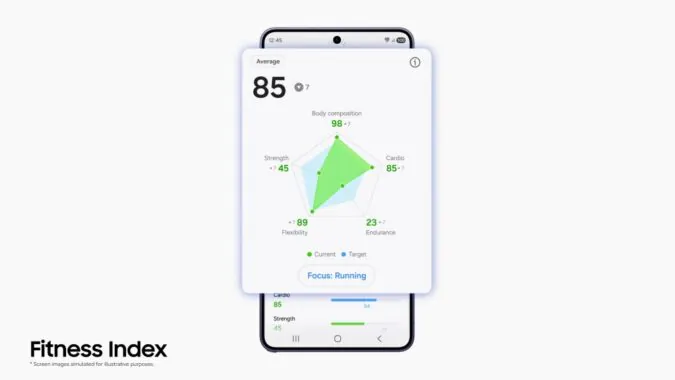
The Fitness Index analyzes three core metrics: heart rate, VO2 max, and daily step count, then compares these results to those of users with similar profiles. This comparison helps identify each user's strengths and areas for improvement. Based on this, the app offers personalized content and adapted goals to support targeted progress over time.
Subtle but significant improvements
Beyond the four new flagship features, Samsung is enhancing several existing tools. The Antioxidant Index now benefits from trend graphs and a daily history, allowing users to concretely visualize the link between dietary choices and the physiological responses recorded on the watch.
The AGEs index, which assesses the accumulation of advanced glycation end products in the body, is moving to automatic nocturnal mode. The app now collects these measurements in the background during sleep, without user intervention, to gradually build a faithful picture of the long-term effects of lifestyle habits.
Samsung is also introducing a new feature Hearing Health, integrated into the entire Galaxy ecosystem. By measuring ambient noise via the Galaxy Watch, it generates personalized analyses to help users protect their hearing, whether on public transport or during a gym workout.
A taste of the next generation of Galaxy Watch
Samsung explicitly states in its press release that these new features will be available primarily on the next generation of Galaxy Watch. The update on June 8th therefore prepares the app and the ecosystem before the expected launch of new models. According to Android Authority, Samsung plans to unveil the Galaxy Watch 9, Galaxy Watch 9 Classic, and Galaxy Watch Ultra 2 at an Unpacked event in London on July 22nd.
It is important to note that Samsung specifies in its press release that all these new functions are designed for well-being and do not constitute medical diagnostic or treatment tools in any way. On the technical side, the app requires an Android 10 phone or higher, and Samsung Health version 7.0 or higher, with a Samsung account connection. Some features also require a data accumulation period to personalize results.
The Samsung Health update announced on June 4, 2026, clearly outlines Samsung's health roadmap for the coming months. By transforming raw biometric data into readable daily recommendations, the platform aims to establish itself as a benchmark in the health wearable sector, competing with the Apple Watch, which remains the market standard. For existing Galaxy Watch users, initial impressions of these four new features will be available as early as June 8th, well before the next generation of smartwatches completes the experience announced today.

No comments! Be the first one.