







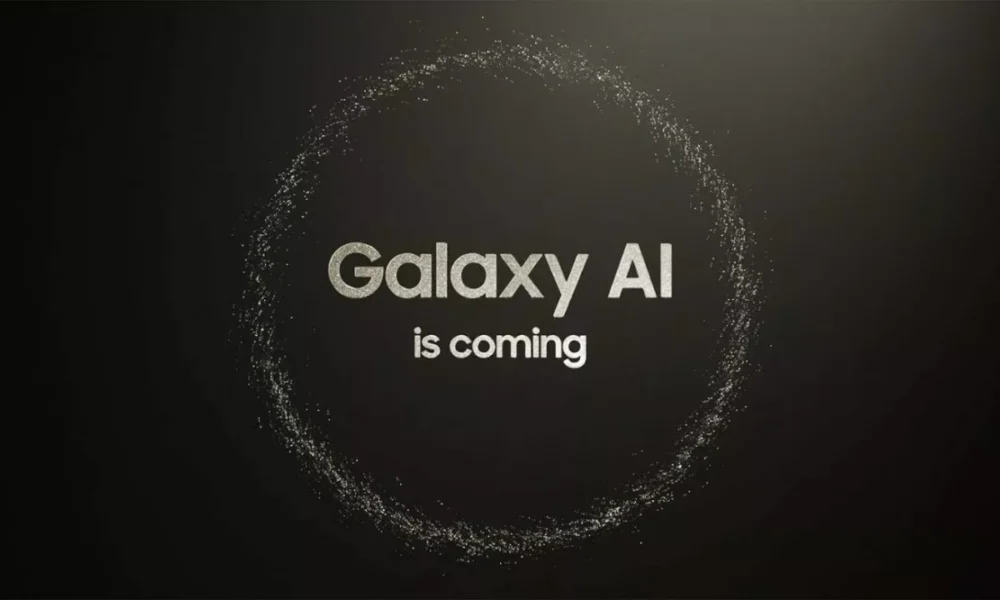
Samsung is exploring vibe coding on its phones Galaxy : creating apps from simple descriptions, without writing a line of code. In early March 2026, this announcement reignites the debate on the future of Galaxy AI and the profound transformation of our daily mobile usage.
The announcement came from an interview granted to TechRadar by Won-Joon Choi, head of Samsung's Mobile Experience division. It's not in the form of an official roadmap, but rather a stated strategic direction. For a manufacturer that now designates its devices as "AI phones" rather than "smartphones," the idea of letting users generate their own applications fits into a coherent logic.
What Samsung is concretely considering
Won-Joon Choi's statement is precise. "For now, we are limited to predefined tools, but thanks to vibe coding, users could adapt their favorite applications or create something customized to their needs. Vibe coding is therefore very interesting, and it's something we are exploring," he stated in an interview with TechRadar. ("Right now we’re limited to premade tools, but with vibe coding, users could adjust their favourite apps or make something customized to their needs. So vibe coding is very interesting, and something we’re looking into.")
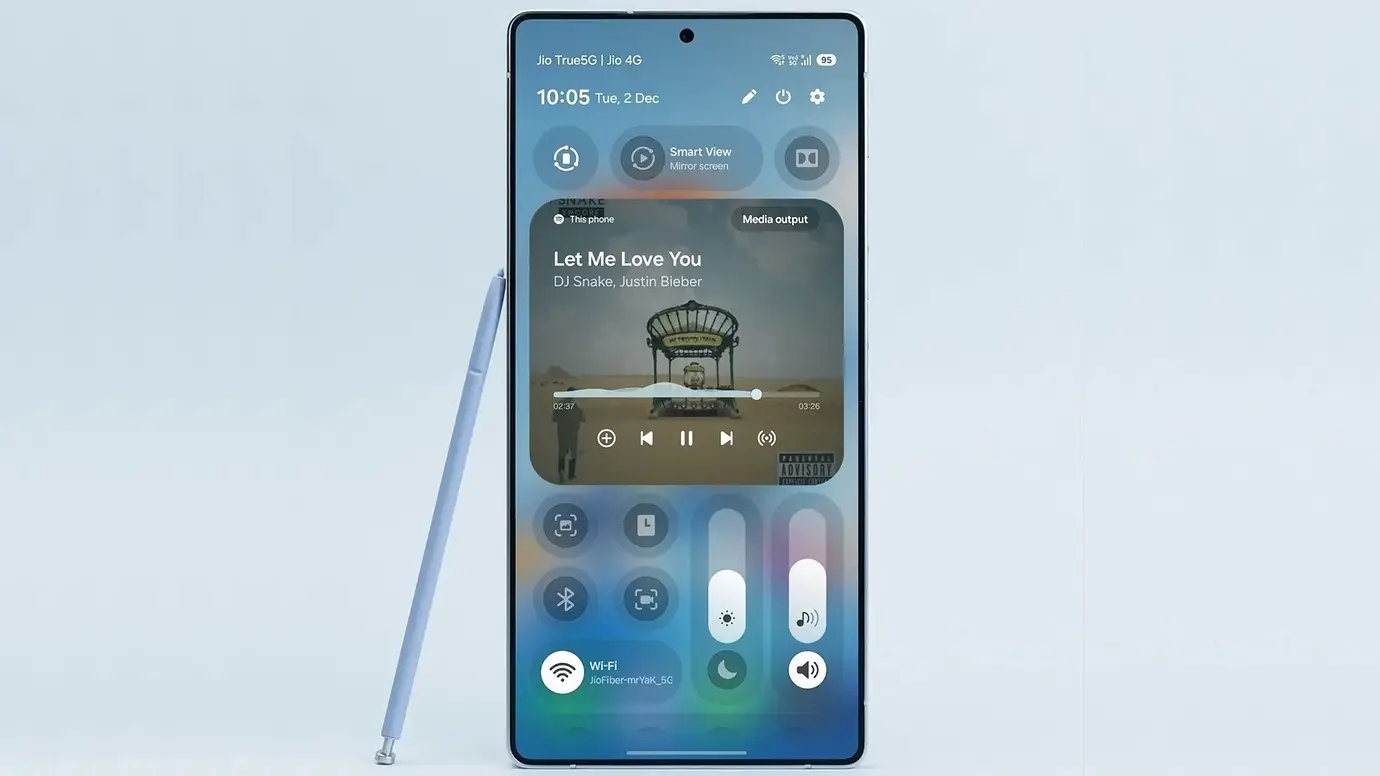
The ambition described goes beyond the simple framework of application creation. Choi mentions the possibility of opening up "new ways to personalize the smartphone experience, not just applications, but also the user interface," still in the same interview granted to TechRadar. In other words, the vibe coding on Galaxy could potentially affect the deepest software layer of One UI, allowing a user to reformat their daily experience without touching a single line of code.
Samsung has not communicated any timeline and has not confirmed the imminent arrival of such a feature on its next devices. The phrase "we are exploring" places this announcement in the category of active research avenues, not commercial commitments.
The coding vibe, a concept taking hold on mobile
The principle of vibe coding is based on a simple mechanism: the user describes in natural language what they want to achieve, and an artificial intelligence generates the corresponding code. No need to master Python, Kotlin, or Swift. Simply write, for example, "create an app that reminds me to drink water every two hours with a personalized notification," and the AI produces the functional tool.
This approach, already popular in the PC development world thanks to tools like Anthropic's Claude or ChatGPT's interfaces, is beginning to migrate to mobile. The openness of Android plays a decisive role here. Unlike Apple's ecosystem, which imposes strict restrictions on the installation of third-party applications, Android natively allows the installation of applications outside the Play Store, a structural advantage that makes the democratization of vibe coding on Galaxy particularly natural, as noted by TechRadar.
If Samsung integrates such a tool into Galaxy AI, the practical implications are considerable. The average user, the one who downloads one or two apps a month without ever having opened a code editor, could suddenly become a creator of their own digital tools.
Nothing has already paved the way
Samsung is not the first manufacturer to explore this direction. In February 2026, Nothing launched the beta version of its tool Essential Apps Builder, initially available on the Nothing Phone (3) via the Playground platform. The principle is identical: the user describes in a few words the widget or mini-application they want, and the AI generates the corresponding interface.
The capabilities of Nothing's tool remain intentionally limited in this beta phase. The generated applications can access location, calendar, and contacts, allowing the creation of localized weather widgets, personalized agenda reminders, or custom counters. Nothing plans to extend these permissions in future updates, particularly towards access to the camera, notifications, and sensor data.
Nothing's approach validates the concept on a technical level, but its scope remains modest. The fleet of Nothing devices is infinitely smaller than that of Samsung, which has several hundred million active Galaxy smartphones worldwide. If the Korean manufacturer adopts a similar approach on a large scale, the mobile vibe coding would quickly change dimension.
Galaxy AI, a fundamental transformation
This exploration of vibe coding is part of a broader transformation at Samsung. Since the launch of Galaxy AI with the Galaxy S24, and the presentation of the Galaxy S26 at MWC 2026 in early March, the manufacturer has gradually abandoned the term 'smartphone' in favor of 'AI phone' to describe its flagships, according to Samsung's official newsroom. A marketing positioning that says a lot about the chosen direction.
Galaxy AI already integrates real-time translation features, automatic document summarization, AI-powered photo editing, and conversational assistance. Vibe coding would represent an additional step, perhaps the most ambitious, as it would no longer just assist the user but would grant them real software creation power.
The challenge for Samsung is clear: to transform Galaxy AI from an assistant into a personalization engine, capable of producing tailor-made applications where the Play Store offers generic solutions. If this vision materializes, the smartphone will no longer be just a screen on which one consumes applications, but a tool with which one creates them. To follow the evolution of this functionality, the page dedicated to Galaxy AI on Samsung's official newsroom is the most direct source.


No comments yet — start the discussion!