





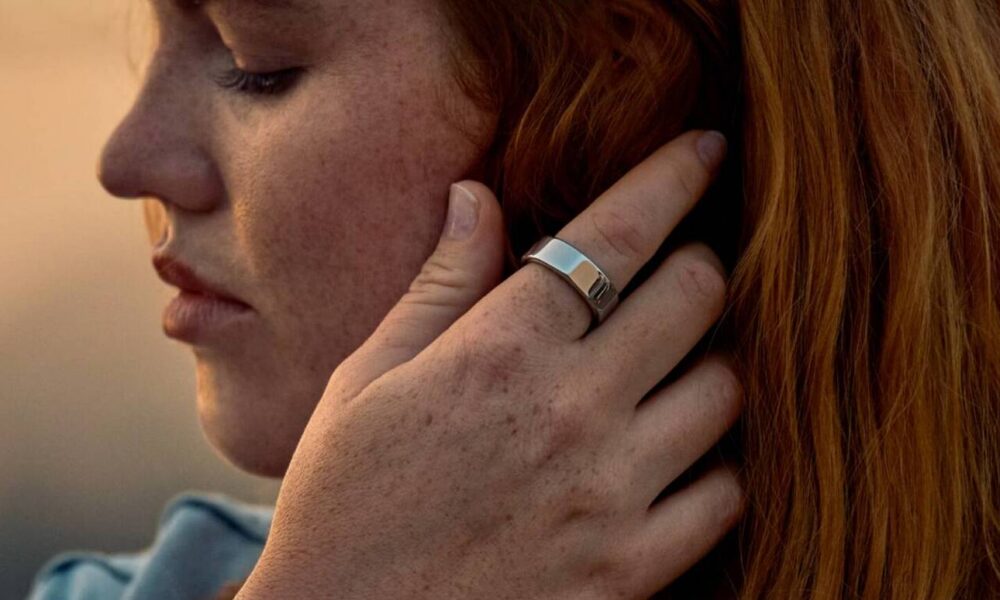
The women's health has become the new conquest territory for health tech. And Oura has just set a major milestone: the Finnish manufacturer of the smart ring announced on February 24, 2026, the launch of its very first proprietary artificial intelligence model, integrated into its Oura Advisor assistant and entirely designed to meet the specific needs of women.
A Strategic Shift Embraced
This launch is not a surprise for those who have been following Oura's evolution for two years. The company's Chief Commercial Officer, Dorothy Kilroy, revealed in October 2025 that the fastest-growing user segment is not intensive athletes, but women in their twenties. This demographic shift reflects a fundamental change: preventive health, driven by smart wearables, is now of interest to a much broader population than just performance enthusiasts.
Oura, valued at $11 billion after its $900 million funding round in 2025, now has the resources to build custom AI models rather than relying on generic market solutions. This choice to internalize AI is not insignificant: it signals an ambition to create a sustainable competitive advantage against competitors like Apple or Samsung, whose smartwatches remain generalist health tools.
What Oura Advisor's AI Model Does
The new model covers the entire spectrum of female reproductive health, from first periods to menopause. When a user asks Oura Advisor a question about their health, the assistant activates this model to cross-reference clinical knowledge bases with the user's personal biometric data: sleep quality, physical activity, cycle and pregnancy data, stress levels.
The model was developed based on recognized medical standards and research sources validated by an internal team of certified physicians specializing in women's health. Dr. Ricky Bloomfield, Oura's Chief Medical Officer, clearly states the challenge: "Women's health is too complex, and too often neglected, to rely on systems designed for everyone." This focus on longitudinal data personalized, accumulated over the long term, constitutes, in his view, Oura's differentiating value compared to generalist health chatbots.
Particular attention has been paid to the model's tone. It is designed to be non-reductive, reassuring, and emotionally attentive, a characteristic intended for health topics often poorly addressed by conventional digital tools.
Oura Labs, the progressive experimentation space
The rollout is done through Oura Labs, the experimental features space accessible within the Oura app. Access is voluntary: users must manually activate this option from the dropdown menu at the top left of the app. This opt-in rollout choice is consistent with the cautious approach the company takes for medically sensitive features.
Oura Labs functions as a large-scale testing lab, allowing the company to gather concrete feedback before a potential wider rollout. This method, already used for previous features like pregnancy tracking, helps refine models with real data while managing user expectations.
Private data and clear medical limits
On the issue of privacy, Oura takes a firm stance: the model is hosted exclusively on infrastructure controlled by the company, and conversations with Oura Advisor are neither shared nor sold to third parties. At a time when sensitivity around reproductive health data is particularly high, especially since the debates on data protection post-Roe v. Wade in the United States, this guarantee is a strong argument.
The company does, however, set an explicit limit: Oura Advisor is not a doctor, and the model is not designed to diagnose or recommend treatment. This precaution, common in the medical wearables sector, aims to position the tool as informational support rather than a medical act.
Femtech, a major focus of innovation in 2026
Oura's launch is part of a major trend already identified at CES 2026: the femtech is establishing itself as a structuring pillar of health innovation. Discussions at the Digital Health Summit in January highlighted the growing importance of tools based on concrete biomarkers, rather than generic metrics, for truly patient-centered solutions. Startups specializing in perimenopause, fertility, and hormonal health have thus attracted massive investor attention at this event.
Oura's positioning is particularly strong in this context. Unlike new entrants starting from scratch, the connected ring already has a history of biometric data accumulated over millions of users over the years. This depth of longitudinal data constitutes the ideal raw material for training high-performing AI models in women's health, a resource few players can claim at this level of granularity.
In summary, Oura is not just launching another feature. The company is laying the foundation for a verticalized health AI platform, of which the female model is likely just the first chapter of a broader expansion.

No Comment! Be the first one.