





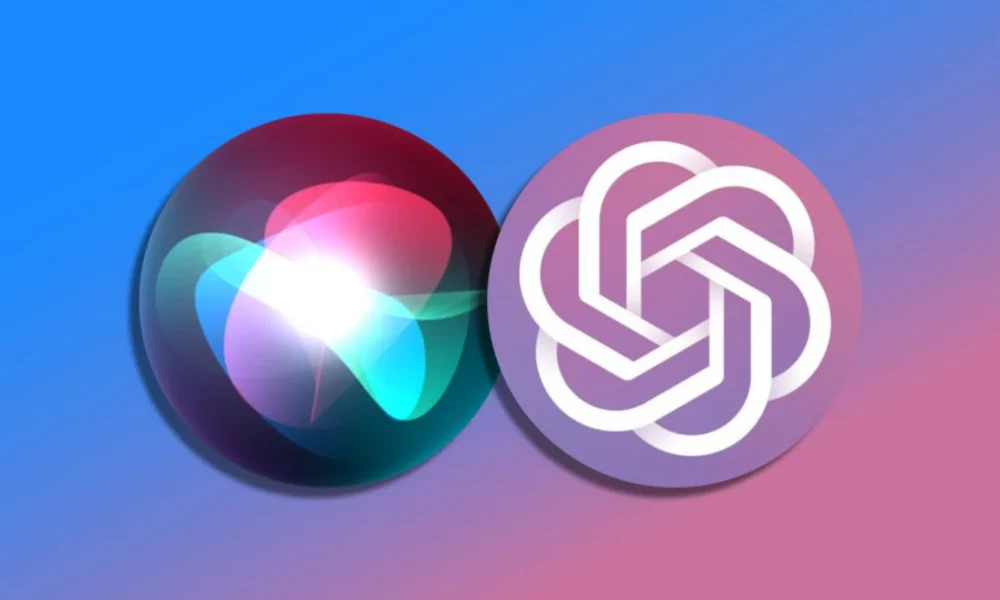
OpenAI threatens Apple with legal action for breach of contract. The partnership established in 2024 for the integration of ChatGPT into the iOS ecosystem has not generated the expected revenue, and tensions between the two companies are reaching a breaking point.
In the summer of 2024, the announcement at WWDC of an agreement between Apple and OpenAI sent shockwaves through the artificial intelligence sector. ChatGPT was to be integrated directly into Siri and several iOS 18 features, promising OpenAI unprecedented distribution to hundreds of millions of iPhone users. Two years later, Bloomberg reveals that OpenAI's lawyers are actively working with an external firm on several legal options, including sending a notice of default for breach of contract to Apple. The information, published on May 14, 2026, sets the tone for a business relationship that has clearly soured.
Revenues far from the billions expected
At the heart of the dispute lies a massive financial disappointment. OpenAI estimated that the ability for iPhone users to subscribe directly to a ChatGPT subscription from iOS settings could generate billions of dollars per year in subscription revenue, a goal that has not been approached. The structure of the agreement clarifies this frustration: neither side structured the partnership around direct payments. Apple was expecting an interim AI solution while developing its own generative systems, while OpenAI was banking on the growth of its subscriber base and revenue from the Apple ecosystem. In other words, OpenAI bears the infrastructure costs without receiving guaranteed compensation in return, and Apple collects a commission on each subscription made through the iPhone.
An OpenAI executive, quoted anonymously by Bloomberg, summarized the situation: "When we heard about this opportunity, it sounded amazing: being able to acquire a giant number of customers and have distribution in such a big mobile ecosystem." (When we heard about this opportunity, it sounded amazing: being able to acquire a giant number of customers and have distribution in such a big mobile ecosystem.) Reality turned out to be very different.
An integration deemed too discreet and poorly highlighted
Beyond the numbers, it is the quality and visibility of the integration itself that is drawing criticism. OpenAI believes that Apple has not sufficiently advertised the integration, which would have limited users' awareness of its existence. According to Bloomberg, OpenAI complains that the integration has been relegated to the background, its features are difficult to find, and the revenue from this partnership is far from projections.
In fact, ChatGPT within Apple's software exposes fewer features than OpenAI's standalone app and operates within much stricter limits. Users often have to explicitly invoke "ChatGPT" in their requests to Siri for requests to be redirected to OpenAI's systems. The company also believes that the implementation chosen by Apple has sown confusion among users, making the features more difficult to use. The same OpenAI executive quoted by Bloomberg stated that the startup had fulfilled all its product obligations, while Apple, according to him, had not done the same, nor even made a sincere effort in this regard.
Two companies now viewing each other as rivals
The tension goes beyond the simple commercial framework. At the time of signing, Apple had refused to specify exactly what form the integration would take, asking OpenAI to trust them. The OpenAI executive quoted by Bloomberg concludes that this gamble ended in failure for the startup. Attempts to renegotiate the agreement have since stalled, with no significant progress.
On Apple's side, the atmosphere is not serene either. The Cupertino firm harbors concerns about OpenAI's privacy standards, as well as the startup's recent expansion into hardware through the recruitment of Jony Ive, Apple's former iconic design chief. Strategically, Apple is testing integrations with Anthropic's Claude and Google Gemini as part of an opening to other AI providers. Google Gemini is expected to power the revamped Siri anticipated this year. This opening to competition does not, according to sources close to the matter cited by Reuters, drive OpenAI's legal action, as the initial partnership was never exclusive.
What WWDC 2026 could change
The timing of this crisis is not insignificant. A revamped version of Siri with expanded capabilities is expected at WWDC 2026, scheduled for June 8, where Apple is expected to reveal more details about its artificial intelligence plans. This conference represents both an opportunity and a deadline for both parties: if Apple presents a more accomplished integration or new commitments, the legal pressure could subside. ChatGPT Otherwise, the situation risks escalating further.
OpenAI wished to settle its disputes with Apple without resorting to legal action, but its lawyers are actively working with an external firm on several options, including notifying a breach of contract without necessarily filing a formal lawsuit immediately. This standoff between two tech giants ultimately illustrates the limits of an agreement made in haste, without a precisely defined scope, and whose obligations each party now interprets in their own way. WWDC will be a first test to see if common ground is still possible.

No comments yet — start the discussion!