







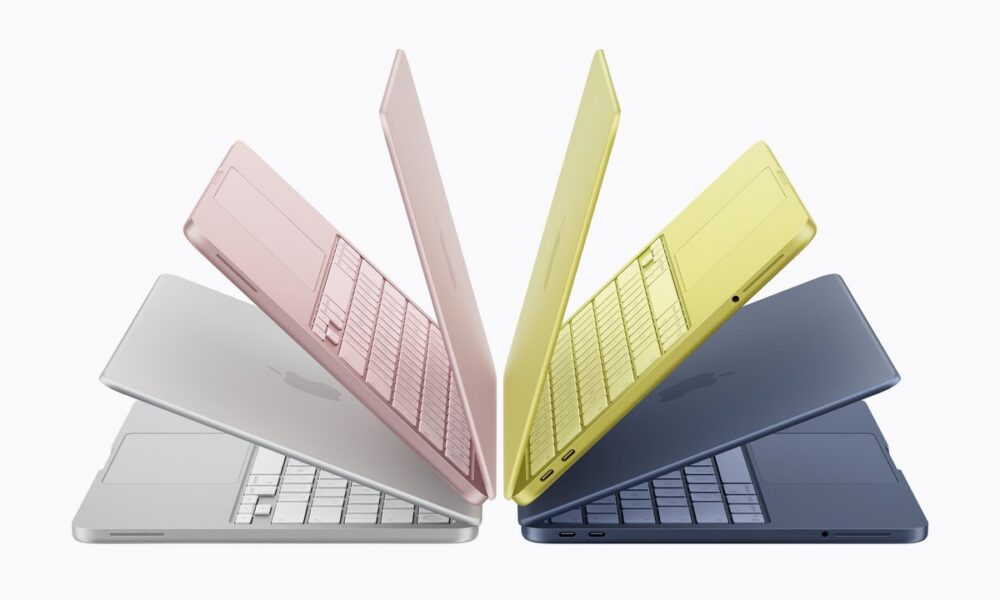
The MacBook Neo touchscreen could become a reality as early as 2027, according to analyst Ming-Chi Kuo. Apple is reportedly preparing a second generation of its entry-level Mac integrating this technology, which is still unprecedented in the Mac ecosystem.
The first generation is not yet available for sale, but its successor is already fueling discussions in the Apple community. In a report published in December 2025, Ming-Chi Kuo had correctly predicted the entry into MacBook Neo mass production mass production of the MacBook Neo in the fourth quarter of 2025. This same report mentioned a second generation expected for 2027, likely to introduce a touchscreen on an entry-level Apple laptop for the first time.
A first-generation MacBook Neo already focused on affordability
Apple announced its MacBook Neo during the first week of March 2026, with a starting price set at $599, and $499 for educational institutions. This pricing positions it as a clear departure from the brand's usual commercial strategy, clearly aimed at direct competition with Chromebooks and entry-level Windows PCs.
Unlike other Macs equipped with Apple Silicon chips, this first model features the A18 Pro chip, from the iPhone 16 Pro. It has a 13-inch Liquid Retina display with uniform bezels inspired by the iPad, 8GB of RAM, two USB-C ports, a 1080p camera, and an announced battery life of 16 hours. The technical specifications are intentionally accessible, designed to appeal to a broader audience than the brand's traditional clientele.
On-cell touch technology at the heart of the project
According to information reported by MacRumors on March 7, 2026, the MacBook Neo 2 would integrate a technology called on-cell touch. The principle consists of placing the touch sensors directly in the upper layer of the panel, without adding a separate dedicated layer. This approach limits the thickness of the screen and thus reduces the extra weight often associated with mainstream touchscreen laptops.
This solution contrasts with the method add-on touch, more common in earlier generations of touch PCs, which required an additional glass layer and added weight to the whole device. For an entry-level product where compactness is one of the selling points, this technical choice is coherent. It also aligns with the practices already adopted by the MacBook Neo's direct competitors: HP, Lenovo, Acer, and ASUS almost all offer touchscreens as standard on their laptops in this price segment.
The OLED MacBook Pro as the first experimentation ground
The MacBook Neo 2 would not be the first Mac to adopt touch capability. According to information reported by Bloomberg in February 2026, Apple would be preparing for the end of 2026 a new MacBook Pro equipped with a OLED touchscreen and a completely redesigned design. This high-end model would feature M6 Pro and M6 Max chips, manufactured using TSMC's new process, and would serve as the first showcase for this unprecedented interface in the Mac universe.
This MacBook Pro should also introduce the Dynamic Island on Mac, replacing the current notch. It would function like on iPhone, displaying notifications and contextual controls around the front camera. If this timeline is confirmed, the MacBook Neo 2 would arrive second, benefiting from the lessons learned from the deployment on the professional segment.
macOS 27, the indispensable software link
The addition of touch on Mac cannot be reduced to a hardware change. It implies a profound adaptation of the operating system. According to information published by Bloomberg in February 2026, Apple would be working on an interface adaptive in macOS 27, capable of distinguishing a finger interaction from a cursor interaction.
The intended functionality is precise: when a user touches the screen with their finger, macOS 27 would display a contextual menu centered around the contact point, with enlarged and repositioned controls to be accessible by finger. When the same area is activated via the trackpad or mouse, the interface remains identical to that of macOS 26. Apple would thus avoid the mistake made by Microsoft with Windows 8, which imposed a universal touch interface and generated massive frustration among users without a touchscreen.
What we know about the MacBook Neo 2 specifications
The definitive characteristics of the future model were still under discussion in September 2025, according to Ming-Chi Kuo. The analyst nevertheless considers the adoption of a chip very likely A19 Pro accompanied by 12 GB of RAM, compared to 8 GB on the current model. This evolution would be consistent with the requirements related to managing a touch interface and with the growing needs of artificial intelligence applications.
It should be recalled that all of this information is based on analyst forecasts, and not on official communication from Apple. The Cupertino firm has made no public statement regarding a MacBook Neo 2 or its characteristics. This data has the status of predictions from sources close to the supply chain, likely to evolve by the supposed launch date.
If Ming-Chi Kuo's roadmap is confirmed, 2027 could mark the first time Apple deploys the touchscreen across its entire MacBook range, from the entry-level model to the high-end. For a manufacturer long attached to the dogma of strict separation between computers and tablets, this would be a considerable change of course. It remains to be seen whether macOS 27, planned for the end of 2026, will be able to convince those who still doubt the usefulness of touch on a laptop.




No comments yet — start the discussion!