







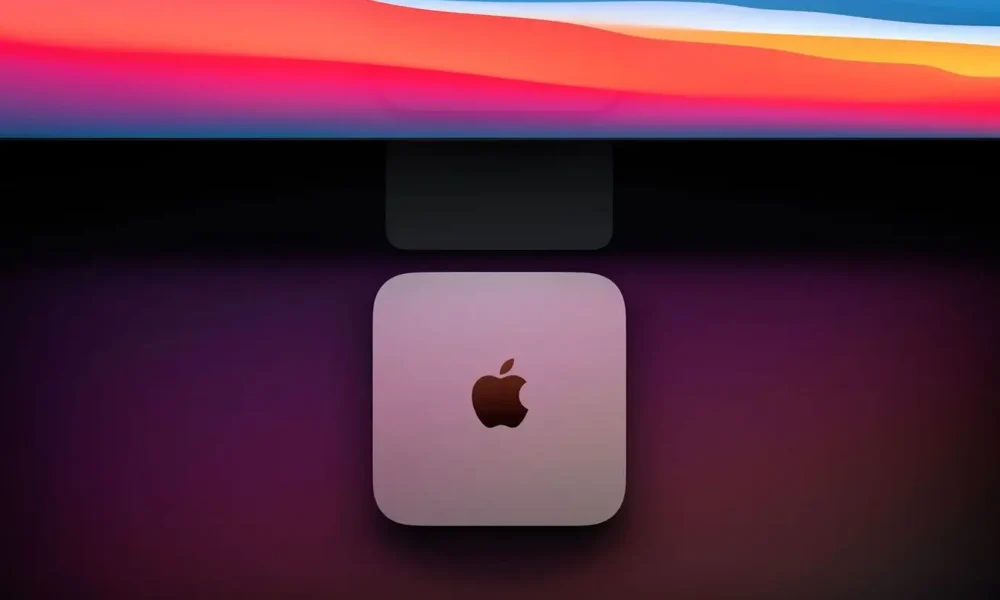
Apple has discreetly removed the entry-level configuration of the Mac mini M4 at $599, raising the starting price to $799 on May 1, 2026. This change, made without an official press release, illustrates the deep tensions that the artificial intelligence gold rush is placing on the entire memory supply chain.
A reduction, not a price increase
Technically, Apple has not increased the price of an existing configuration. The company has simply stopped offering the entry-level model equipped with 256 GB of storage, according to information published by MacRumors on May 1, 2026. The 512 GB configuration, previously sold at $799, now becomes the entry point of the range. The concrete result for the consumer is nevertheless identical: they have to spend $200 more than before to acquire a Mac mini M4.
This maneuver follows a logic that is already observed elsewhere in the Apple range. In March 2026, the company adopted the same approach for the MacBook Air and MacBook Pro M4, doubling the base storage while slightly increasing prices, according to 9to5Mac. The Mac mini now follows this pattern, except that the decision seems more constrained by circumstances than planned as an ordinary commercial strategy.
AI is draining global memory stocks
The shortage affecting the Mac mini stems from a well-documented phenomenon: the massive construction of data centers dedicated to artificial intelligence is generating unprecedented demand for memory chips. This industrial pressure extends all the way to consumer component manufacturers, including Apple.
CEO Tim Cook publicly acknowledged the situation during Apple's earnings call this week. He indicated that the supply of Mac mini and Mac Studio is constrained, and it will take "several months" to rebalance supply and demand, according to reports from MacRumors. He also specified that Apple anticipates "significantly higher memory costs" in the current quarter. Both machines are, according to him, "incredible platforms for AI tools and AI agents," which explains demand exceeding forecasts.
A machine that has become an AI work tool
It is no coincidence that the Mac mini finds itself at the heart of this storm. Its combination of computing power, affordable price, and compact format has made it, over the months, a platform of choice for developers and researchers wishing to run AI models locally. Alternatives to large cloud models, from publishers like Anthropic, OpenAI, or other players, run directly on these machines without requiring a connection to remote servers.
The consequence was visible well before Apple's decision on configurations. At the end of April 2026, the $599 base model was already completely out of stock on Apple's website in the United States, with no option for delivery or in-store pickup, according to Business Insider. On eBay, resellers were offering units with markups exceeding $200 above the recommended price, according to market observations cited by TechCrunch.
The Mac Studio, also affected
The Mac mini is not the only machine affected. In March 2026, Apple had already removed the Mac Studio configuration equipped with 512 GB of RAM, according to MacRumors. This decision is part of the same stock management logic in the face of a component shortage that the company does not directly control.
| Model | Old base configuration | Price | New base configuration | Price |
|---|---|---|---|---|
| Mac mini M4 | M4, 16GB RAM, 256GB SSD | $599 | M4, 16GB RAM, 512GB SSD | $799 |
| Mac Studio | M4 Max, 36 GB RAM, 512 GB RAM | $1,999 | 512 GB RAM configuration removed | N/A |
An opacity that raises questions
What is striking about this sequence is Apple's complete lack of communication. The configuration change appeared directly on the company's online store, without announcement or explanation, according to Macworld. Tim Cook did mention during the call with analysts that he was considering "a range of options" to deal with the situation, without further clarification. This discretion leaves open the question of whether other products, such as the iMac, could undergo a similar treatment in the coming weeks.
The only certainty at this stage: for consumers considering the purchase of a new Mac mini, the floor price is now set at $799. Those looking to understand how the rise of AI is reshaping the consumer hardware market will find in this case a particularly revealing example. The next step to watch remains the potential announcement of a Mac mini M5, expected by some analysts around WWDC 2026.

No comments yet — start the discussion!