






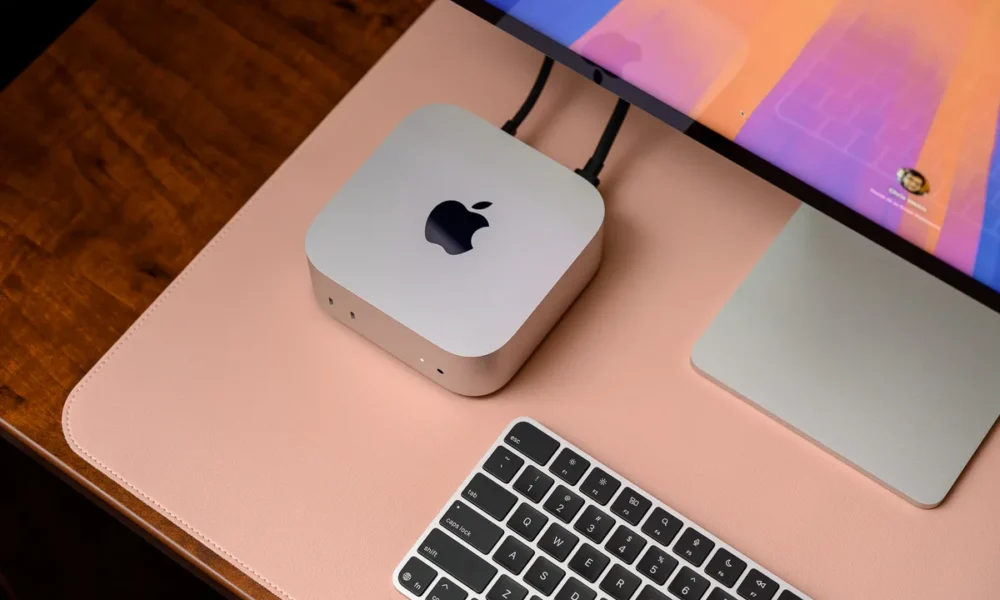
For the first time in its history, Apple will assemble the Mac mini on American soil. The announcement, made on February 24, 2026, from a Foxconn factory in Houston, Texas, marks a concrete turning point in the Californian giant's industrial relocation strategy.
Houston, outpost of a new industrial era
Sabih Khan, Apple's Chief Operating Officer, officially announced the news during a filmed interview with The Wall Street Journal, directly from the Texas factory floor. His statement is clear: Mac mini production will begin in Houston in 2026, in a dedicated building constructed on the existing site.
This site is not new to industrial activity. Apple already produces advanced artificial intelligence servers since 2025, and the company has specified that this production is ahead of schedule. Houston is therefore serving as a well-tested experimental ground before hosting the assembly of an iconic consumer product.
A campus that doubles in size
To accommodate Mac mini production, Apple's Houston campus will literally double in size. A new building will be constructed on the existing site to house the assembly lines, while a Advanced Manufacturing Center will open at the same time. This training center will develop advanced manufacturing skills, as Apple needs qualified technicians to achieve its industrial ambitions.
All these operations in Houston are expected to generate thousands of jobs, according to the company. Tim Cook, Apple's CEO, stated that the company is "deeply committed to the future of American manufacturing." The rhetoric is well-rehearsed, but the figures are beginning to give it concrete substance.
Partial relocation, not a total transfer
It would be misleading to present this decision as a withdrawal from Asia. Apple currently manufactures thousands of Mac minis every week in Asia, and only a fraction of this production will be moved to Houston initially. The stated goal is a regionalization strategy: to produce a sufficient amount in the United States to meet the demand of the North American market, without dismantling the Asian industrial ecosystem which remains the pillar of global production.
Sabih Khan confirmed this to the Wall Street Journal: the move is “incremental rather than global.” Apple does not build factories itself. It “drives” its partners, like Foxconn, to develop capabilities where strategic advantages exist. This model, proven for decades, is now also being applied on American soil.
Tariff pressure as an accelerator
This decision cannot be read without its political context. Since his return to the White House, President Donald Trump has clearly threatened Apple with significant tariffs if the company did not repatriate part of its production to the United States. In May 2025, he brandished the threat of a 25% tax on Apple products manufactured outside the United States. In August 2025, he went even further, announcing tariffs of up to 100% on imported semiconductors, while promising an exemption to companies that commit to producing on American soil.
Apple responded with actions and figures. The company first announced a investment commitment of $500 billion in the United States in February 2025, then increased this figure to $600 billion in a new announcement in August 2025. The production of the Mac mini in Houston is directly part of this framework.
A supply chain being rebuilt brick by brick
Beyond final assembly, Apple is working to rebuild an American supply chain in depth. The company has set a procurement target of 20 billion components manufactured in the United States, which it has already exceeded by sourcing from 24 factories across 12 states. Among the partners involved are TSMC, Broadcom, and Texas Instruments.
In Texas specifically, the company GlobalWafers has launched production in a silicon wafer plant in Sherman, representing a $4 billion investment. These wafers will directly supply Apple's chip manufacturing partners. In parallel, the Corning plant in Kentucky now produces 100% of the cover glass for iPhones and Apple Watches, with an expansion planned for all new devices by the end of the year.
The Mac mini M4, symbol of an ambition
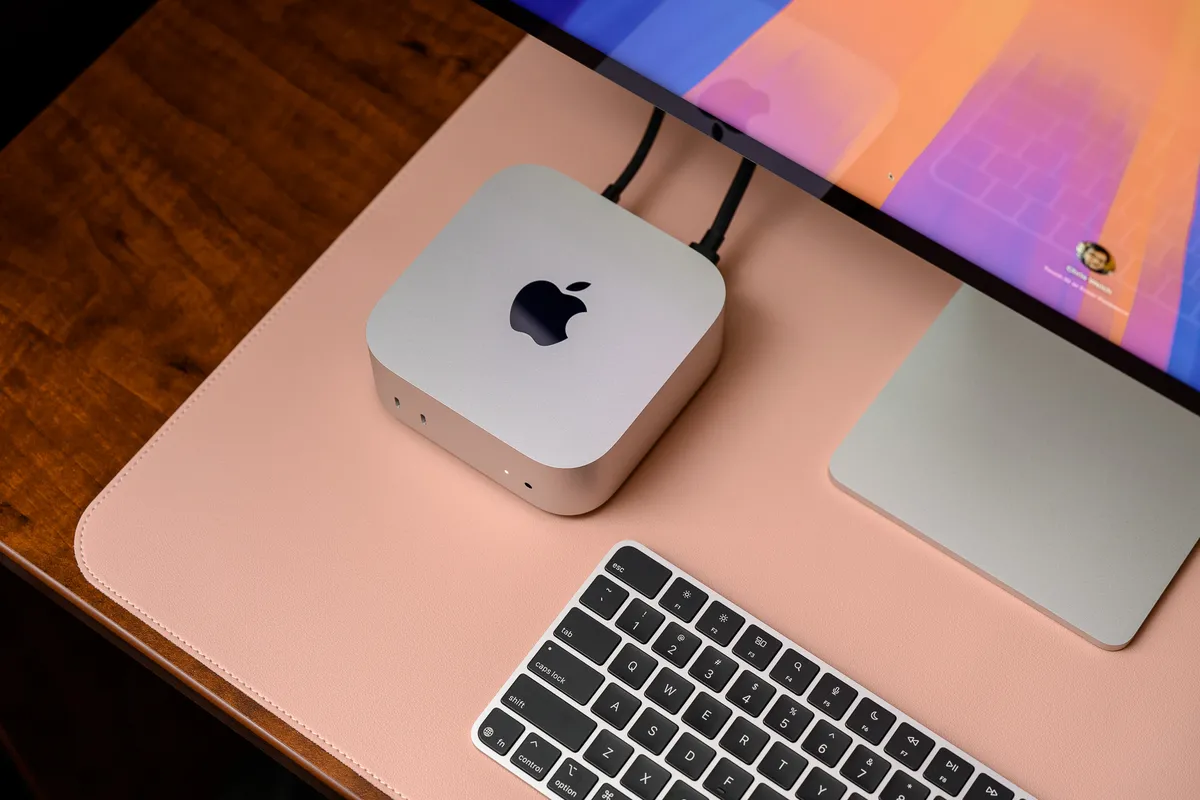
The model concerned by this American production is the Mac mini equipped with M4 and M4 Pro chips, the latest generation launched by Apple and designed to integrate its Apple Intelligence features. This choice is not insignificant. The Mac mini is one of the most popular products in the Mac lineup, appreciated by students, creators, and small businesses for its power concentrated in a compact form factor.
Producing this model in the United States sends a strong signal: it is not about relocating an obsolete or end-of-life product, but rather a current device, in a phase of commercial growth, boosted by the rise of AI. The demonstration is calculated, aimed as much at the financial markets as at the White House.
What this decision reveals about American tech
Apple's initiative in Houston illustrates a fundamental trend in the American tech sector: under the dual pressure of tariffs and strategic rivalry with China, major tech companies are gradually rebuilding a manufacturing industry on American soil. The movement is slow, costly, and structurally limited, but it is real.
For Apple, Houston is just the beginningThe firm has demonstrated that it can meet its production commitments on American soil, at least for AI servers. Extending this know-how to the Mac mini is the next logical step. The question that remains open is that of the iPhone, the flagship product, for which Trump is demanding American manufacturing, which analysts still consider out of reach in the short term.

No Comment! Be the first one.