






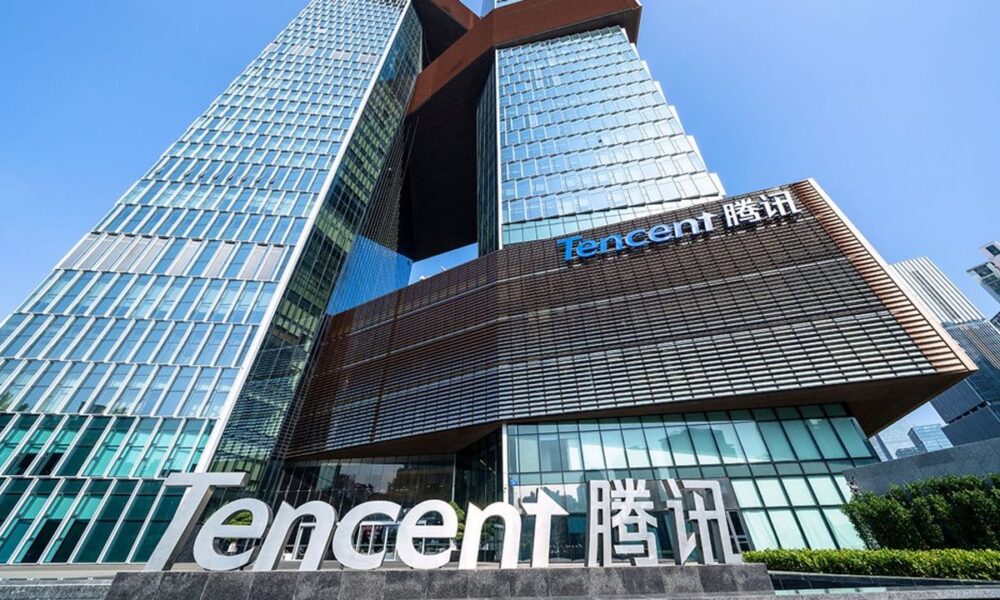
represent Chinese tech giants have entered the most expensive phase of the global race forartificial intelligenceartificial intelligence. Their financial results published in May 2026 provide the numerical proof.
Alibaba: Total vertical integration, whatever the cost
On May 13, 2026, Alibaba published its results for the quarter ending March 31, 2026. The figures from the Cloud Intelligence Group are unambiguous: external revenues from the cloud division grew by 40%, with AI-related products now accounting for 30% of these revenues. This marks the eleventh consecutive quarter of double-digit growth for revenues from artificial intelligence products.
Eddie Wu, CEO of Alibaba Group, stated in the official earnings release: "Alibaba's full-stack AI investments have progressed from incubation to commercialization at scale. This quarter, we achieved accelerated breakthroughs across models, cloud infrastructure, and applications." (Alibaba’s full-stack AI investments have progressed from incubation to commercialization at scale. This quarter, we achieved accelerated breakthroughs across models, cloud infrastructure, and applications.)
Alibaba's strategy is distinguished by its ambition for integration across the entire value chain. The company develops its own chips through T-Head, its foundation models through Qwen, its cloud infrastructure, and consumer applications with transactional agent capabilities. This full-stack positioning comes at an acknowledged cost. CEO Eddie Wu indicated that the company would likely exceed its initial three-year target of 380 billion yuan to fund the construction of AI-dedicated data centers.
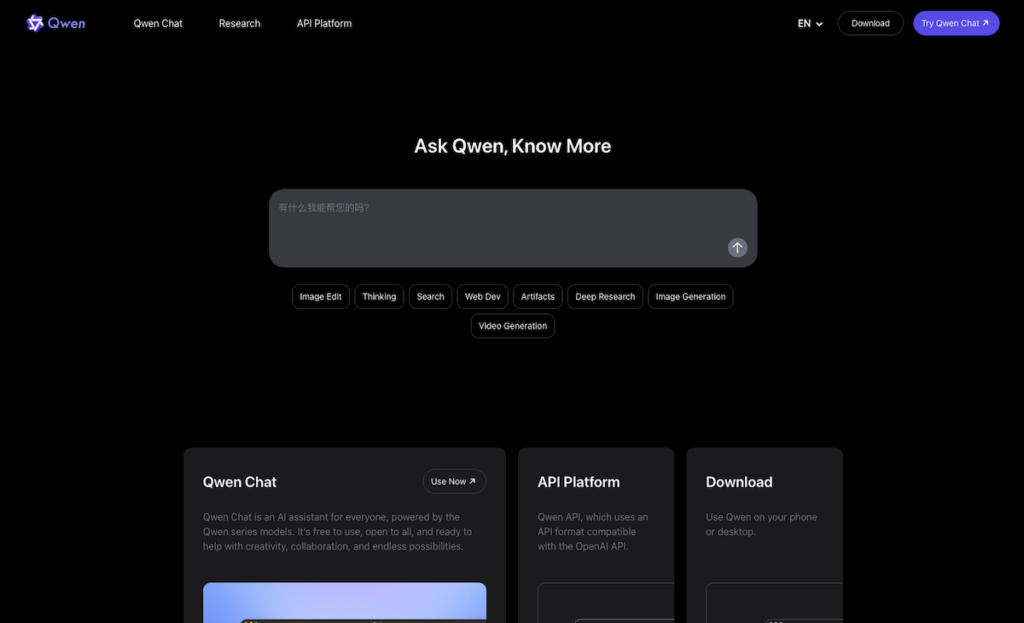
In the realm of models, Qwen is consolidating its global position. The Qwen model surpassed one billion cumulative downloads on Hugging Face as of January 21, 2026. Alibaba claims Qwen is now the most widely used open-source model family globally, based on download data. In parallel, the Qwen application exceeds 300 million monthly active users across all platforms, and approximately 140 million users made their first AI-powered purchase through Qwen's agent functions during February 2026.
Tencent: AI serving existing profits
While Alibaba is building an AI empire from scratch, Tencent has chosen a different path. The group has integrated artificial intelligence into its already profitable products: advertising, video games, cloud services, and the WeChat ecosystem. This approach translated into solid financial results for the entire fiscal year 2025.
Annual revenue for 2025 reached 751.8 billion yuan, up 14%, while net profit increased by 16% to 224.8 billion yuan. But Tencent is shifting gears. Capital expenditures in the first quarter of 2026 reached 31.9 billion yuan, a 63% increase from the previous quarter.
The company dedicated 18 billion yuan to artificial intelligence products in 2025, according to CNBC, and plans to double this amount in 2026. James Mitchell, Tencent's Chief Strategy Officer, promised "a substantial increase" in capital expenditures in 2026, particularly in the second half, as more AI chips designed in China become available. Goldman Sachs, for its part, forecasts Tencent's capital expenditures to reach 165 billion yuan in 2027, more than double the 2025 levels.
On the product front, Tencent is evolving WeChat far beyond messaging. The company has announced an advanced AI agent within WeChat, named QClaw, capable of handling tasks including file management, commerce, reservations, and PC control. Tencent has also launched its AI product suite "OpenClaw," comprising QClaw for individuals, Lighthouse for developers, and WorkBuddy for businesses.
Chip shortage: the common brake on all ambitions
Behind these announcements of record investments lies a structural constraint. Martin Lau acknowledged that restrictions on chip exports had slowed down planned spending in 2025: total capital expenditures reached approximately 79 billion yuan last year, up from 77 billion yuan in 2024, but below internal expectations due to supply difficulties for advanced AI chips.
This constraint accelerates the shift towards domestic suppliers. Moore Threads, MetaX, and Huawei are among the players attempting to fill the void left by Nvidia, whose access to the Chinese market remains blocked, which has supported record revenues for Chinese chip manufacturers. Huawei is emerging as the main beneficiary of this refocusing. The sustained demand for its processors is largely explained by the release of DeepSeek's V4 model in April 2026, specifically optimized for Huawei's Ascend architecture. Huawei engineers reportedly collaborated directly with DeepSeek before the model's launch, and Alibaba Cloud as well as Tencent Cloud deployed services based on DeepSeek V4 within hours of its release.
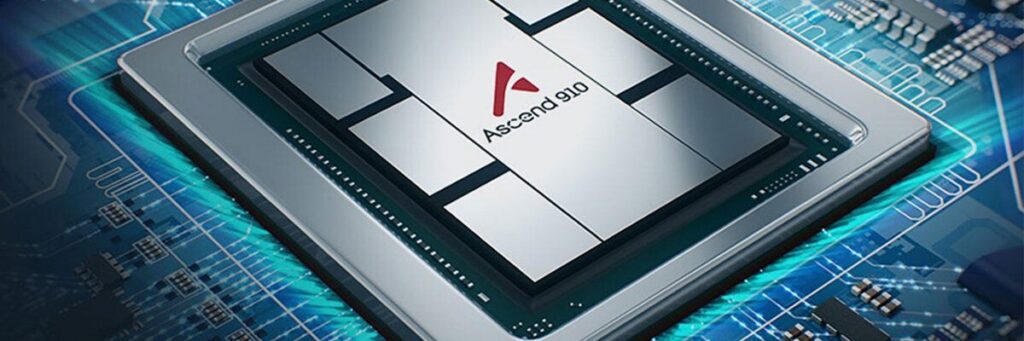
Huawei anticipates revenues from its AI processors of around $12 billion in 2026, compared to $7.5 billion the previous year. A spectacular increase that illustrates how much American restrictions have unintentionally created a captive market for the Chinese semiconductor industry.
Three strategies, one urgency
Cross-referencing the results of Alibaba, Tencent, and Huawei's ambitions paints a coherent picture: major Chinese tech companies no longer wait to validate their AI business model before investing massively. They invest first, even if it means sacrificing short-term profitability. Chinese venture capital investment in AI startups reached 287 billion yuan in 2025, with funding concentrated on generative AI, computer vision, and autonomous systems.
The competition has shifted from building models to deploying AI at the ecosystem level, for consumers. For market observers, the real question is no longer whether China can compete technologically: it is already doing so. The question is which of these three approaches, total vertical integration, monetization through the existing ecosystem, or hardware provision, will yield the fastest return on investment in a geopolitical context that remains profoundly uncertain. The next few quarters will provide the first concrete answers.




No Comment! Be the first one.