





The Apple smart glasses are now the sole priority for the Cupertino firm in the Vision domain. On June 3, 2026, analyst Ming-Chi Kuo revealed that John Ternus has canceled any successor to the Vision Pro and reduced the roadmap to two products.
This reshuffling is not a simple calendar update. It is a profound strategic shift that erases several years of development in one stroke and repositions Apple in a radically different segment. And the fact that it was decided by an executive who has not yet officially taken office makes it all the more significant.
Ternus, already in charge before September 1, 2026
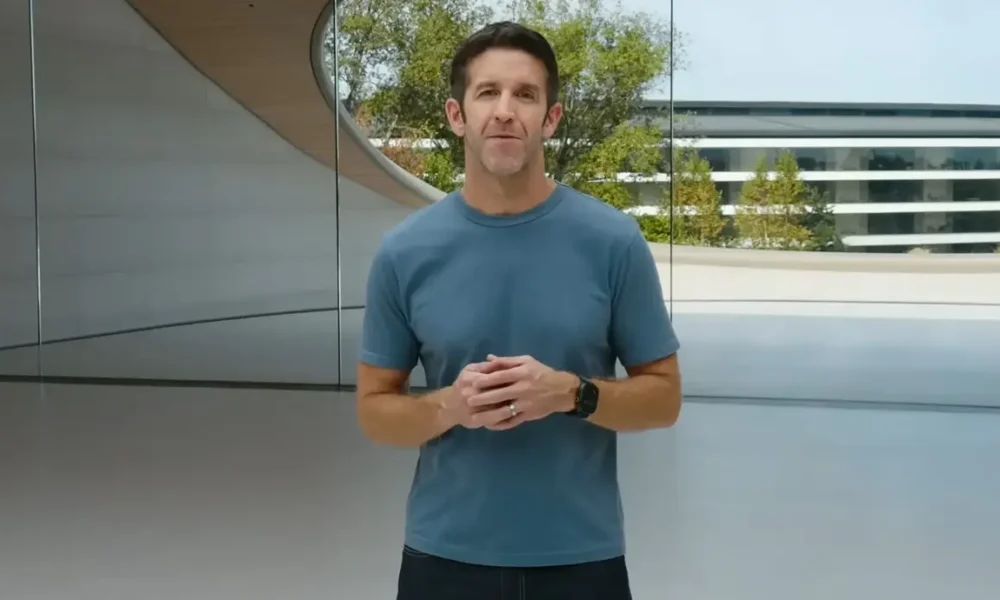
John Ternus officially takes over as CEO of Apple on September 1, 2026, at which point Tim Cook will move to executive chairman. However, according to information published by Ming-Chi Kuo, it is Ternus who approved this in-depth overhaul of the Vision roadmap, and has been for some time now.
"The major overhaul was approved by Apple's next CEO, John Ternus. This change happened some time ago. I'm just late updating the chart," Ming-Chi Kuo wrote in a post on X. ("The major overhaul was signed off by Apple’s next CEO, John Ternus. This shift actually happened a while back. I’m just late updating the chart.")
Ternus is no stranger to this matter. For the past two years, he has led the Vision Products Group (VPG), Apple's internal department responsible for developing headsets and augmented reality glasses. His decision to abandon successors to the Vision Pro is therefore not that of a newcomer: it is an arbitration based on direct operational knowledge of ongoing projects, their technical constraints, and their commercial potential.
A roadmap reduced to only two products
In June 2025, Ming-Chi Kuo had established a roadmap forecasting at least seven mixed reality wearable devices in development at Apple, including three Vision series products and four variants of smart glasses. Since then, the Vision Pro with M5 chip has arrived on the market. But according to the update published by Kuo on June 3, 2026, the rest of the program has undergone a radical transformation.
"The XR headset and smart glasses roadmap I put together about a year ago is no longer a useful reference. For now, only two smart glasses products remain visible in the roadmap," Kuo wrote in this post on X. ("The Apple XR headset and smart glasses roadmap I put together about a year ago is no longer a useful reference. For now, only two smart glasses products remain visible in the roadmap.")
These two products are as follows:
- AI glasses without a screen, direct competitors to Ray-Ban Meta, scheduled for release in 2027.
- AR/XR glasses equipped with a display based on optical waveguide technology, whose release has been postponed to 2029.
The first product clearly targets the general public. It is a wearable accessory for everyday use, with embedded artificial intelligence capabilities and a voice interface, following the model of what Meta offered with its Ray-Ban glasses. The second relies on a much more ambitious display technology, but also much more difficult to miniaturize. The optical waveguide technology, which allows projecting information directly into the wearer's field of vision, is still at a stage where large-scale production remains a major industrial challenge. This partly explains the shift of its schedule to 2029.
The Vision Pro line officially abandoned
The most direct consequence of this reshuffle is the halt of any successor to the Vision Pro. The $3,499 spatial reality headset will not have a follow-up in Apple's current plans according to Kuo, neither a more compact version nor a lower-priced Vision Air model.
Kuo stands by this direction and clearly justifies it. "I think removing the Vision Pro line was the right decision, as Apple is redirecting its resources towards smart glasses products with greater mass potential," he wrote on X. ("I think removing the Vision Pro line was the right call, as Apple shifts resources toward smart glasses with greater mass-market potential.")
The industrial logic behind this decision is hard to contest. The Vision Pro is a device reserved for a very limited audience due to its price and bulk. Meta, for its part, sells its Ray-Ban glasses in millions of units per year since their redesign in 2023. Apple has only sold a few hundred thousand Vision Pros since its launch, and the cost-benefit ratio of developing a successor versus the potential of a range of consumer glasses clearly justifies the shift.
A notable disagreement with Mark Gurman's information
Kuo's publication, however, directly conflicts with other recent information. On May 31, 2026, Mark Gurman of Bloomberg reported that Apple was still working on a thinner and lighter headset to succeed the Vision Pro, a device that some internal sources refer to as the Vision Air. Gurman did not anticipate a launch before 2028 or 2029, but confirmed the existence of such a project within the company.
This divergence is not necessarily irreconcilable. Two hypotheses coexist. Either Kuo's information is partially outdated at the time of its publication, which he himself acknowledges by admitting a delay in his update. Or the project for a successor to the Vision Pro still exists, but in such a preliminary stage of development that it leaves no trace in the supply chain radars, which are Kuo's main source. Gurman himself had previously indicated that Apple had prioritized smart glasses and had no active plans for a successor to the Vision Pro.
On the timeline for AI glasses, the two sources converge, however. Gurman had reported that these glasses, whose internal codename is reportedly N50, had been pushed back from a late 2026 announcement and early 2027 launch to a release at the end of 2027. This shift is perfectly consistent with the 2027 timeline mentioned by Kuo, which reinforces the credibility of both sources on this specific point.
WWDC 2026: one week to learn more
The next few days will be decisive for clarity. Apple's WWDC 2026 conference opens next week, and with it the presentation of visionOS 27. The software announcements for the Vision Pro M5 will send a strong signal about Apple's commitment to its spatial reality platform, even if no new hardware is expected in the short term.
The overhaul of the Vision roadmap by John Ternus reflects a simple conviction: consumers will not massively adopt a $3,500 virtual reality headset, but they might adopt affordable smart glasses integrating artificial intelligence into their daily lives. This is Apple's bet for the next decade, and WWDC 2026 should outline its first software contours.

No comments yet — start the discussion!