





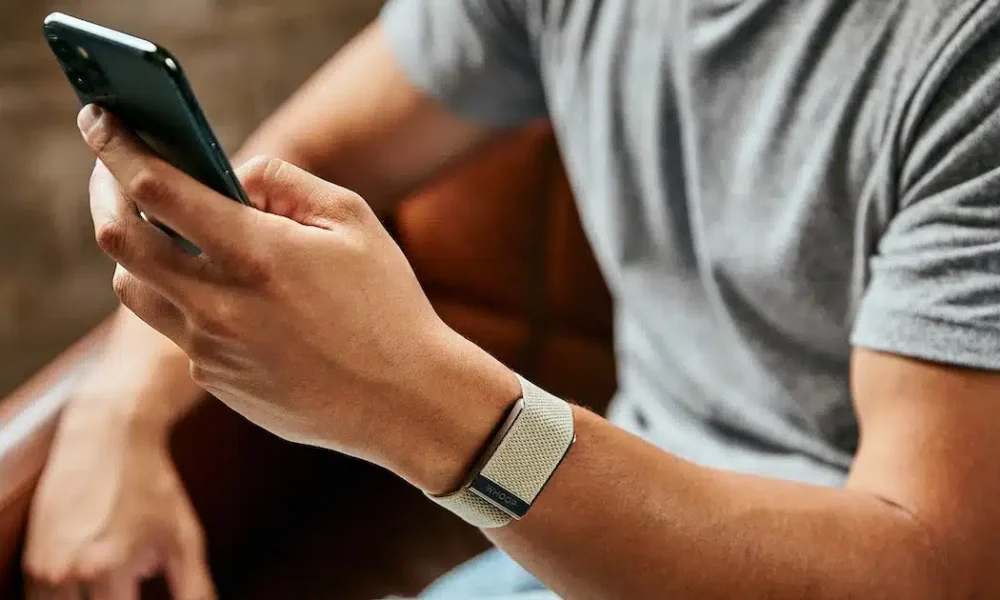
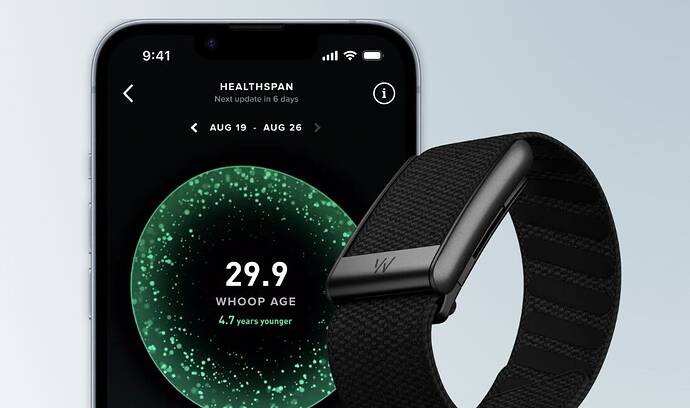
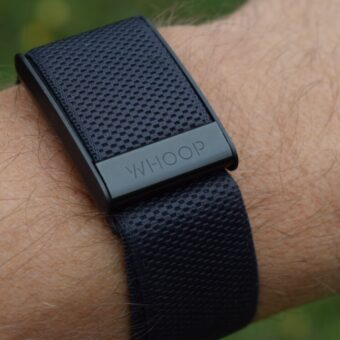
An open-source application app, dubbed Goose, allows the use of WHOOP 5.0 without a subscription. Developed in just 23 hours, it reignites the debate about the economic model imposed by WHOOP.
A challenge launched on June 1, 2026, met in 23 hours flat
On June 1, 2026, a developer using the pseudonym Bennett (@b_nnett on X) publicly issued a challenge: to reverse-engineer WHOOP 5.0 to make it work without a subscription, within 24 hours. Less than a day later, he published his project on GitHub under the name Goose. "23.5 hours later... there's an app and it's open source. It tracks activities & sleep. It has full sensor support: HR, SpO2, HRV, Temperature, Motion, etc.," Bennett wrote in an X post. (23.5 hours later... there’s an app and it’s open source. It tracks activities & sleep. It has full sensor support: HR, SpO2, HRV, Temperature, Motion, etc.)
What makes this project even more notable is the method used. Bennett indicated that he used Codex, OpenAI's AI tool, to write part of the code, while he himself handled project management and problem-solving. In less than a day, a solo developer equipped with an AI assistant thus produced a functional proof of concept, capable of capturing and displaying real data from a device sold with a mandatory subscription starting at $199 per year.
A local architecture, with no contact with WHOOP servers
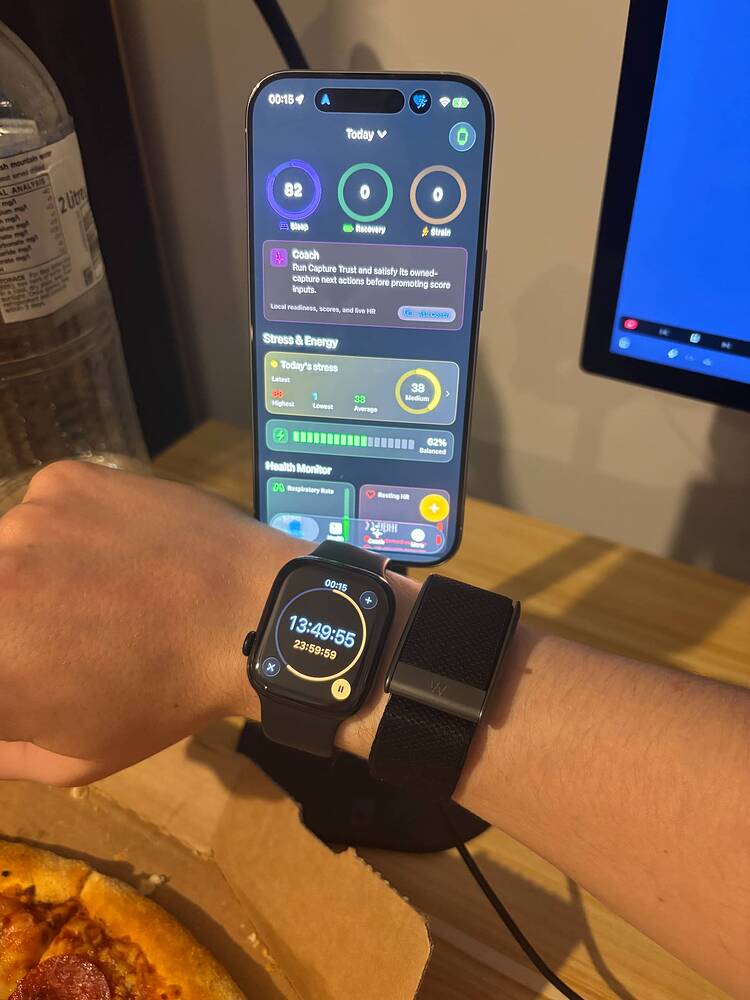
On a technical level, Goose relies on a deliberately local architecture. The iOS application, developed in SwiftUI, connects to the WHOOP 5.0 via the CoreBluetooth protocol to directly read the raw data emitted by the bracelet's sensors. This data then passes through a kernel written in Rust, which processes and transforms it into usable health metrics, including recovery, sleep, heart strain, stress, energy, and a coaching module. No data leaves the device. There is no cloud synchronization, nor communication with WHOOP servers.
The project's documentation on GitHub clearly states that Goose is an independent project, unaffiliated with WHOOP, and that the repository contains no code or APIs belonging to the company. The application solely utilizes the data exposed by the bracelet via Bluetooth. This positioning is legally significant: it is not about bypassing a paywall or intercepting encrypted communication, but about reading data that the hardware emits locally and accessibly.
A promising pre-alpha, but still reserved for developers
The project's GitHub documentation leaves no ambiguity about Goose's current state. The application exhibits significant slowdowns, acknowledged upfront by Bennett, and no specific work has yet been dedicated to performance. Developer contributions to optimize the code are explicitly requested. Furthermore, only the WHOOP 5.0 is supported. Previous generations of the wristband do not work with this version of the project.
Another major limitation: Goose is currently exclusively available on iOS. A port to Android is not yet planned, and compiling the application requires mastery of Xcode as well as the Rust kernel, which limits installation to technical profiles. For non-developer users, Bennett announces a first public beta on TestFlight public beta on TestFlight scheduled for June 13, 2026, a date that should considerably broaden the circle of potential testers and provide a better measure of the community's real interest.
The WHOOP model under increasing pressure
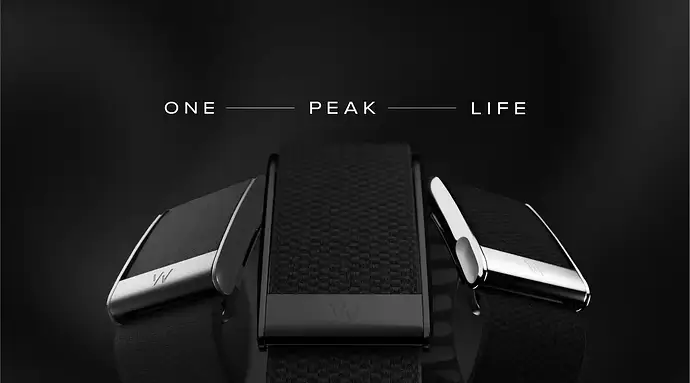
The emergence of Goose is part of a long-standing tension surrounding WHOOP's business model. According to information published on WHOOP's official website, the company offers three subscription tiers: One at $199 per year, Peak at $239 per year, and Life at $359 per year. The wristband is never sold separately: it is included in the subscription, but if the latter is canceled, the device stops working and historical data is locked after thirty days.
This model has already fueled controversy. When WHOOP 5.0 was launched, the company had initially announced a paid upgrade policy for existing subscribers, in direct contradiction to its past commitments. After strong community backlash, WHOOP revised its position, acknowledging that an article published on its own site incorrectly stated that a six-month subscription entitled users to a free upgrade. More recently, the launch of Google's Fitbit Air, offered without a mandatory subscription and at a significantly lower price, has highlighted WHOOP's growing isolation on this issue.
WHOOP is not the only company affected by this trend. A few days before Goose's release, a similar initiative emerged around the Oura Ring, allowing access to the connected ring's health data without going through its monthly subscription. These independent projects, increasingly frequent, reflect a structural frustration among users with a model where hardware has no value without an active subscription.
The immediate success of Bennett's post on X, which garnered over 2.2 million views in a few hours, measures the extent of this anticipation. Whether Goose becomes a usable tool for daily use or not, the project raises a fundamental question about the sustainability of the hardware-as-a-subscription model at a time when competitors are deliberately choosing an opposite direction. If the June 13, 2026 TestFlight beta gains traction with the open-source community, this prototype could quickly evolve into a credible alternative, further increasing pressure on WHOOP to rethink its model before other similar initiatives do it for them.

No Comment! Be the first one.