





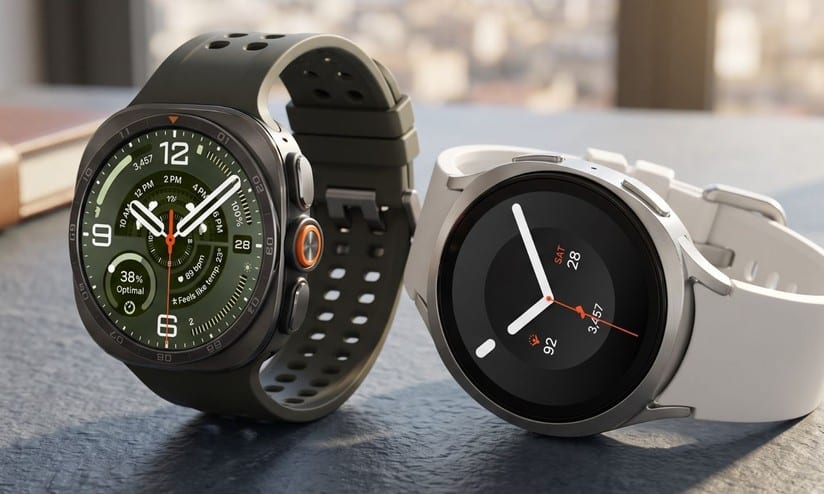
Samsung officially announces the Galaxy Watch 9 and Galaxy Watch Ultra 2 with a major technical change: its new smartwatches are based on Qualcomm's Snapdragon Wear Elite platform. Larger batteries, brighter screens, and new analyses in Samsung Health complete this evolution, but all promises will still need to be tested for battery life and accuracy.
Galaxy Watch 9 and Galaxy Watch Ultra 2: the essential new features
Presented on July 22, 2026, during the Galaxy Unpacked event in London, the two watches will be marketed in France starting August 7. Pre-orders are open until August 6 at midnight, according to Samsung France.
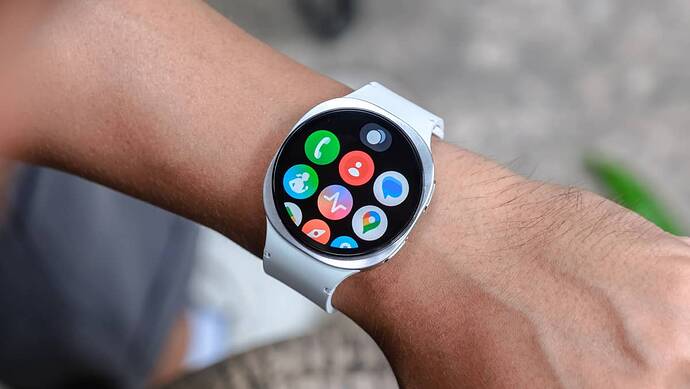
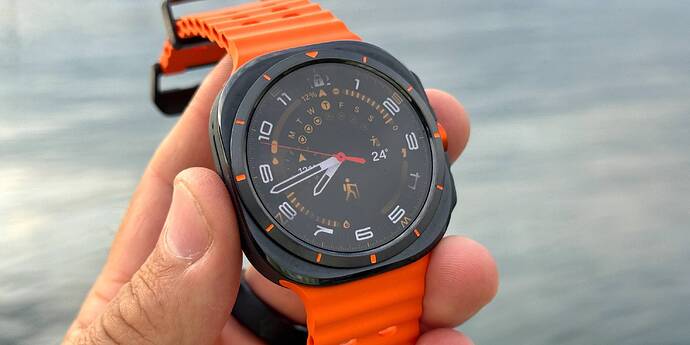
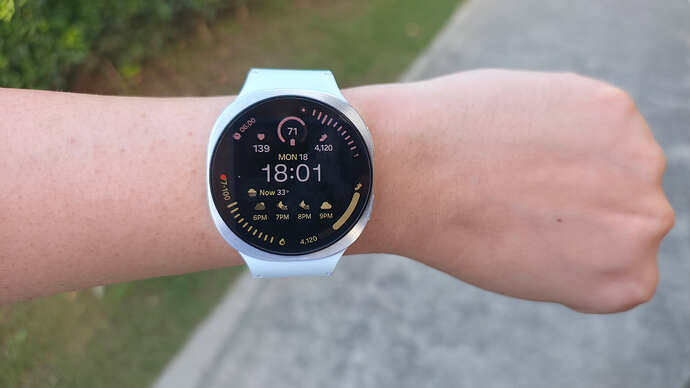
The Galaxy Watch 9 remains the generalist model of the range, with 40mm and 44mm cases. The Galaxy Watch Ultra 2 features a unique 47mm size, a titanium case, a significantly larger battery, and sports functions for trail running and diving.
| Feature | Galaxy Watch 9 | Galaxy Watch Ultra 2 |
|---|---|---|
| Sizes | 40 and 44 mm | 47 mm |
| Screen | 1.34 or 1.47 inches, up to 3,000 nits | 1.52 inches, up to 5,000 nits |
| Processor | Snapdragon Wear Elite, 3 nm | Snapdragon Wear Elite, 3 nm |
| RAM | 2 GB | 2 GB |
| Storage | 32 GB | 64 GB |
| Battery | 390 or 445 mAh | 800 mAh |
| Water resistance | 5 ATM, IP68 | 10 ATM, IP69K, EN13319 |
| System | Wear OS 7, One UI 9 Watch | Wear OS 7, One UI 9 Watch |
These features come from the technical sheet published by Samsung. Both models also integrate dual-frequency L1 and L5 GPS, Bluetooth 6.0, 2.4 and 5 GHz Wi-Fi, as well as NFC contactless payment.
Snapdragon Wear Elite: a significant, but still theoretical, breakthrough
For several generations, Samsung has used its own Exynos chips in the Galaxy Watch. With the Galaxy Watch 9 and Galaxy Watch Ultra 2, the manufacturer is returning to Qualcomm and adopting the Snapdragon Wear Elite, identified in the technical sheet under the reference SDW6100.
The chip is manufactured using a 3nm process and has five cores. Samsung attributes speed gains, processing power, and GPS accuracy to it. The Galaxy Watch Ultra 2 is presented as the first Galaxy Watch equipped with this platform.
This change could be more significant than the visual evolution of the watches, as their design remains very close to that of the previous generation. A more efficient processor can reduce slowdowns, speed up app launches, and limit energy consumption during background measurements.
However, it is important to distinguish technical specifications from observed results. Samsung has not yet published detailed comparative data to quantify performance or efficiency gains compared to the latest Exynos chips. Therefore, at the time of the announcement, no independent tests can confirm that the switch to Snapdragon will actually improve battery life.
Larger batteries without guaranteed battery life promise
The 40mm Galaxy Watch 9 receives a 390 mAh battery, a capacity announced as 20% higher than that of the previous model. The 44mm version goes up to 445 mAh.
The evolution is much more spectacular on the Galaxy Watch Ultra 2. Its battery reaches 800 mAh, compared to 590 mAh on the previous generation, a 35% increase in capacity. Samsung has simultaneously reduced the case thickness by 12% thanks to a reorganization of internal components.
However, a higher capacity does not automatically translate into a proportional increase in endurance. The screen, GPS, LTE connection, continuous monitoring, and the new processor all influence consumption. Actual battery life will need to be measured with the always-on display, sleep tracking, and sports functions activated.
Screens are also improving. The Watch 9 reaches an announced maximum brightness of 3,000 nits, while the Ultra 2 goes up to 5,000 nits. Samsung specifies that this latter value corresponds to a localized peak obtained under strong ambient light. It therefore does not necessarily represent the sustained brightness of the entire display.
Samsung Health focuses on scores and long-term analysis
Samsung is not profoundly renewing the BioActive sensor. The strategy is rather to combine its existing measurements to produce new indicators in Samsung Health.
The Vitality function notably analyzes data collected during sleep and attempts to identify a deviation from the user's usual level. It requires at least seven nights of data. The Heart Score should provide a simplified representation of cardiovascular health, while Cardio Load estimates exercise volume and recovery needs.
A Fitness Index notably combines body composition measurements, VO2 max, activity, and step count. Hearing Protection, for its part, monitors exposure to loud sound environments.
These functions will not necessarily be exclusive to the Galaxy Watch 9 and Ultra 2. Samsung indicates that Cardio Load and Fitness Index will work on Galaxy Watch 7 and later models equipped with One UI 9 Watch. This reduces the interest in changing watches for people already equipped with a recent model.
Several limitations should also be noted:
- features depend on the country, the associated phone, and the version of Samsung Health;
- some scores require several days, or even several weeks of regular measurements;
- the Heart Score requires a compatible Galaxy smartphone;
- the results provided are indicators of well-being and not medical diagnoses.
The detection of signs of sleep apnea notably requires a Galaxy smartphone running Android 12 or newer and two nights of recorded data over a ten-day period. Samsung explicitly states that it does not replace medical diagnosis or treatment. Detailed terms and conditions can be found in the official health feature restrictions.
The Ultra 2 specializes in trail running and diving
The Galaxy Watch Ultra 2 aims to differentiate itself more through its sports uses. Its new Trail mode tracks elevation gain, uphill progress, cumulative distances, and terrain impact. A hydration alert complements sweat estimation to suggest when and how much to drink.
For diving, the watch combines 10 ATM, IP69K, and EN13319 certifications. It can automatically record depth, immersion duration, and water temperature after activating the corresponding function in the settings.
A more complete application, developed with equipment manufacturer Mares, is expected to arrive later in 2026. It will notably add tracking of ascent and descent speeds as well as safety limits. This part of the experience is therefore not fully available at launch.
The certifications do not make the watch indestructible, however. Samsung reminds us that water resistance can decrease over time, that performance varies depending on conditions, and that rinsing with fresh water is necessary after exposure to seawater.
Prices of Galaxy Watch 9 and Ultra 2 in France
The prices observed in France at launch are as follows:
- Galaxy Watch 9 40 mm Bluetooth: 409 euros;
- Galaxy Watch 9 40 mm LTE: 459 euros;
- Galaxy Watch 9 44 mm Bluetooth: 439 euros;
- Galaxy Watch 9 44 mm LTE: 489 euros;
- Galaxy Watch Ultra 2 47 mm LTE: 749 euros.
These amounts are reported by the French sales pages and the specialized press. Samsung Spain officially confirms the same recommended prices for the European market in its commercial announcement of July 22nd.
Compared to the previous generation, the increase generally reaches 30 to 50 euros depending on the version. The Watch Ultra 2 thus costs 50 euros more than the launch price of the first Watch Ultra.
A generation primarily interesting for its potential efficiency
The Galaxy Watch 9 is more of an internal evolution than a redesign. Its switch to Snapdragon, its slightly larger battery, and its new Samsung Health tools are promising, but an owner of a Galaxy Watch 7 or 8 will not necessarily find enough new features to justify an immediate replacement.
The Galaxy Watch Ultra 2 brings a clearer hardware evolution. Its 800 mAh battery, brighter screen, refined casing, and diving functions give it a stronger identity. Its price of 749 euros and the delayed launch of the Mares application nevertheless invite us to wait for full tests.
The real challenge for this generation therefore lies not only in its technical specifications. It will be necessary to determine if the Snapdragon Wear Elite truly transforms the fluidity, GPS accuracy, and daily battery life of the Galaxy Watch 9 and Galaxy Watch Ultra 2.

No Comment! Be the first one.