







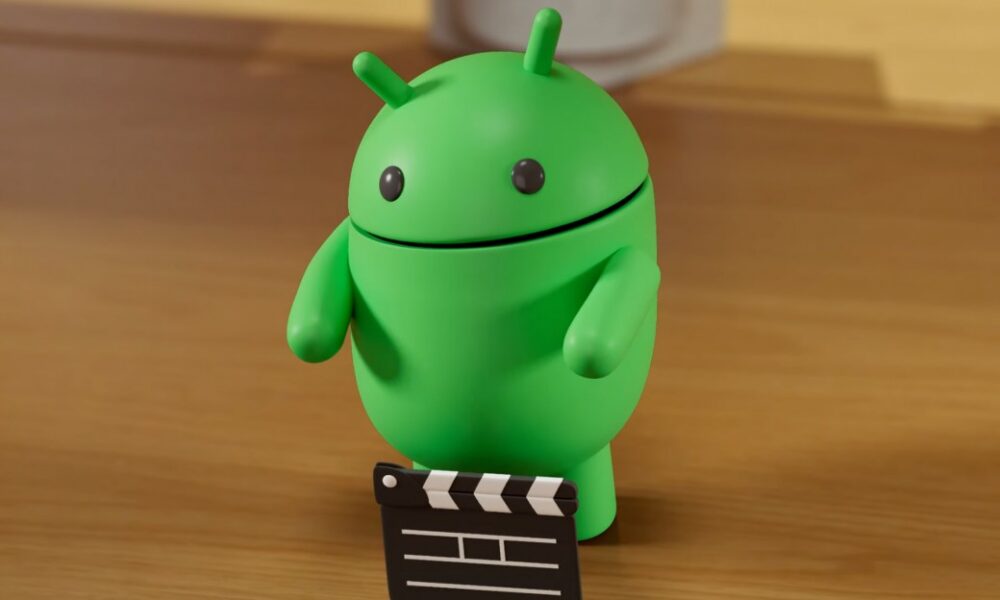
A massive leak ofAluminium OS reveals the Android desktop interface on May 12, 2026, the same day Google was supposed to unveil it at the Android Show. The 16 minutes of video say a lot about the project's ambitions and current shortcomings.
When a leaker beats Google to the punch on launch day
The timing is particularly embarrassing for the Mountain View company. Leaker Mystic Leaks published a major leak on his Telegram channel this morning about Aluminium OS, including detailed screenshots and a sixteen-minute hands-on video. The whole thing appeared just a few hours before The Android Show: I/O Edition, the online event Google has scheduled for May 12, 2026, at 7 PM (Paris time) to make its major seasonal Android announcements.
This is not the first time Aluminium OS has leaked before an official announcement, but it is by far the most substantial leak to date. The build presented runs on a MacBook Pro via the UTM emulator, a detail that reminds us that the project is not yet available on finalized consumer hardware. Mystic Leaks specifies in its message that this version represents an intermediate development state, making the analysis all the more relevant for understanding where Google really stands six months before the announced launch.
A familiar interface, because the foundation is Android
At first glance, Aluminium OS is not surprising. The setup wizard is a complete replica of the usual Android setup wizard on smartphones. Once installed, the home screen features an app bar at the bottom with a button to access the app drawer, the Google search bar, and familiar icons, including the Play Store and a folder grouping Google apps.
The quick settings panel is activated by swiping down from the battery indicator in the status bar. It appears in a compact format on the side of the screen, an adaptation more consistent with a large format than the full-width panel of a phone. Notifications work on the same principle, with a swipe from their dedicated icon in the status bar. The Settings app and the lock screen remain, according to the leak, very close to their equivalents on Android phones or tablets.
The virtual desktops functionality is integrated directly into the recent apps view, with the ability to create multiple distinct workspaces and switch between them with a few gestures. The leak also reveals the pre-installed presence of a "Link to iOS" app, indicating that Google plans for cross-platform integration including Apple devices in its ecosystem.
Desktop features identified in the video
Here are the elements specifically adapted for the large screen that the leak has allowed us to identify:
Organizable desktop folders
Virtual desktops accessible from the recent apps screen
Compact quick settings panel, sliding from the side
Independent notification panel, activated separately
Task manager optimized for the large screen
Link to iOS app for connection with iPhones
Apart from these targeted adaptations, the general interface remains that of Android, with few visible differences in third-party applications shown in the video.
The specter of Samsung DeX looms over the project
This is the most critical point of the leak. Mystic Leaks itself describes the current experience of Aluminium OS as an improved version of Samsung DeX rather than a true desktop operating system. This conclusion is based on a concrete and hard-to-ignore element: the Google applications visible in the video are web versions encapsulated in a window, not native applications optimized for keyboard and mouse input.
This is a problem that Google knows well. Previous attempts by Android on PC, particularly the integration via the ARC container in ChromeOS, have all stumbled on the same pitfall: mobile applications transferred to a large screen offer a degraded experience due to a lack of desktop interface optimization. The central question therefore remains unanswered. Will Aluminium OS solve this problem structurally, by reforming the application ecosystem in depth, or will it be content to dress up Android with a desktop interface without changing its foundations?
A launch confirmed for 2026, driven by AI and a coalition of partners
What Aluminium OS promises in the long run far exceeds what this development build shows. Sameer Samat, vice president of the Android ecosystem at Google, confirmed at MWC 2026 that the launch is still planned for 2026, with a window of 'later this year'. The project was officially highlighted at the Snapdragon Summit, demonstrating the strategic importance given to the project internally, particularly thanks to the partnership with Qualcomm.
The fact that devices with Snapdragon chips are among the first certified machines is therefore not surprising. According to available information, manufacturers such as HP, Lenovo, Acer, and ASUS will be among the launch partners. Samsung is also reportedly working on versions of its Galaxy Book line under Aluminium OS, targeting the entry-level, mid-range, and high-end segments.
Google has also been clear on an important strategic point: Aluminium OS is not replacing ChromeOS. Sameer Samat confirmed at MWC 2026 that Chrome OS will continue its development independently, with a maintained priority on the education and enterprise sectors, where its management capabilities remain, according to him, difficult to match. The two systems will coexist, with ChromeOS retaining its historical markets, while Aluminium OS will target the premium consumer segment, with Gemini integrated at the operating system level.
What the leak can't reveal about the final product
It is essential to remember that this build runs on an emulation environment, not on the final hardware intended for commercial launch. Performance optimizations, power management, and hardware acceleration by the Neural Processing Unit (NPU) for local Gemini functions could not be evaluated under these conditions. The version presented by Mystic Leaks represents an intermediate state of the project, not the final experience that the first buyers will receive.
Google tonight has a direct opportunity to reframe the perception left by this leak. The Android Show: I/O Edition was already anticipated as one of the most important Android events in recent years, with Android 17, Android XR glasses, and Gemini announcements also on the agenda. Google I/O 2026, scheduled for May 19-20, will likely complete the picture with announcements dedicated to developers and hardware partners. The real maturity ofAluminium OS will be measured by two concrete criteria: the quality of native applications optimized for the large screen on launch day, and Google's ability to build an ecosystem as fluid as what Apple offers between iPhone, iPad, and Mac. Tonight, we will at least know if Google is ready to publicly answer the question.


No comments yet — start the discussion!