







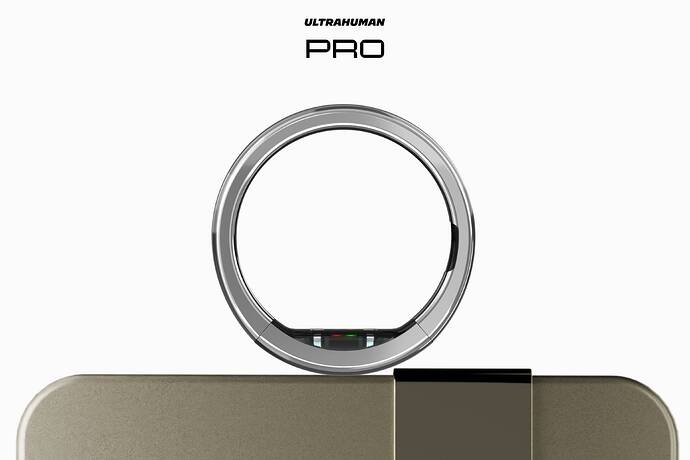
TheUltrahuman Ring Pro is official. Unveiled on February 27, 2026, this third-generation smart ring marks a strategic turning point for the Indian startup: to reconquer the American market after a legal battle that had almost excluded it for months.
A renaissance born from a legal constraint
The story of the Ring Pro paradoxically begins in a courtroom. In October 2025, the U.S. International Trade Commission (ITC) ruled in favor of Oura in a patent infringement dispute, prohibiting Ultrahuman from importing its smart rings into the United States. The decision hit hard: the American market represented about 45% of 700,000 daily active users of Ultrahuman's global sales, according to its co-founder and CEO Mohit Kumar, quoted by TechCrunch.
To circumvent Oura's patents, Ultrahuman completely redesigned its ring. The Ring Pro integrates a redesigned heart sensor architecture and a new dual-core processor, two elements that distinguish the product from its predecessor, the Ring Air, launched in July 2023. The device has been submitted to U.S. Customs and Border Protection for import authorization, but this validation is still pending. In parallel, Ultrahuman filed a separate patent infringement lawsuit against Oura with the Delhi High Court in August 2025, a procedure that is still ongoing.
What the Ring Pro brings concretely
On the technical level, the leap is significant. The battery life extends to 15 days, compared to 4 to 6 days for the Ring Air, which represents more than double the improvement. The onboard storage capacity reaches 250 days of health data, and the weight remains controlled, with an increase of only 5 to 6% compared to the previous model.
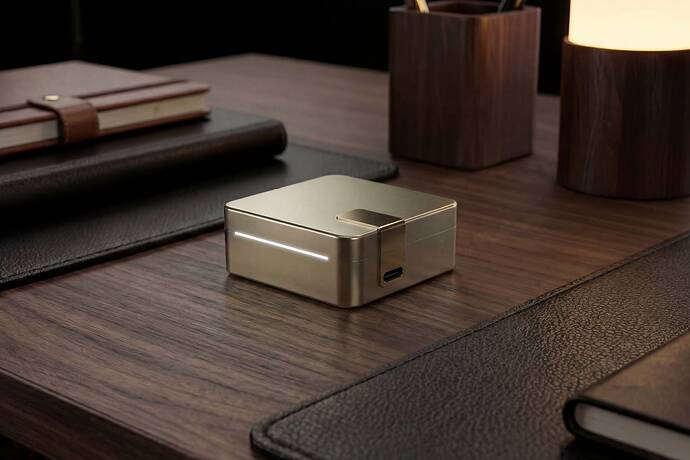
The price is set at $479, a deliberately premium positioning, up from the $349 of the Ring Air. Pre-orders are open now for all markets, with the exception of the United States, with deliveries expected starting in April 2026. Ultrahuman has also launched a Pro Charger, a standalone charging case offering up to 45 additional days of battery life, compatible with Qi wireless charging.
Jade, real-time AI as a differentiator
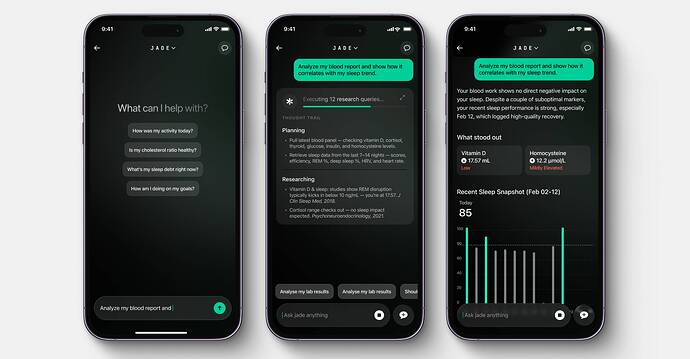
Beyond hardware, Ultrahuman is betting on artificial intelligence to stand out. The startup has presented Jade, a real-time "biointelligence" system that analyzes users' health data across all its devices and services to generate personalized recommendations.
"Most AI tools look at your data retrospectively. Jade is designed to react to your health in real-time and suggest concrete actions," said Mohit Kumar, CEO of Ultrahuman, according to TechCrunch. Jade will be accessible to all Ultrahuman users, including those with the older Ring Air, and will not require a subscription initially. This is a notable business gamble in a sector where subscriptions are an increasing part of revenue, already representing 16% of revenue of Ultrahuman's.
A company under pressure, but profitable
Despite legal turbulence, Ultrahuman's financial health remains solid. The startup reports an annual revenue of approximately $150 million and declared itself profitable after taxes for the fiscal year ending March 2025, with $64 million in operational revenue recorded. However, Kumar warns that margins will tighten due to costs related to litigation, customs duties, and redesign efforts.
Founded in 2019 in Bengaluru, Ultrahuman has raised approximately $55 million to date, with investors such as Alpha Wave Incubation, Blume Ventures, Steadview Capital, and Nexus Venture Partners. Priority markets remain the UK, Canada, Australia, and India, with the latter accounting for about 8-9% of global revenue after recent investments in local customer support.
A booming market, dominated by Oura
The market context favors Ultrahuman. Global smart ring shipments have increased by nearly 80% year-over-year in 2025, driven by demand for compact wearables with advanced sleep tracking and long battery life, according to Anshika Jain, senior analyst at Counterpoint Research. The global smart ring market was valued at $310.6 million in 2025 and is expected to reach $3.1 billion by 2035, with a compound annual growth rate of 26.4%.
Oura remains the undisputed leader, with more than two-thirds of the market, while Ultrahuman holds second place, with an estimated share of approximately 25% in the third quarter of 2025, according to IDC. Future dominant positions in the category will be defined by sensor accuracy, AI-driven analytics, and integration into coherent digital ecosystems, according to Jain.
With the Ring Pro, Ultrahuman is playing a technical and commercial card. If U.S. Customs and Border Protection validates the import of the new device, the startup will be able to access its main market again and test whether an unprecedented design can be enough to turn the page on a costly conflict. The next step to watch is therefore less about the product launch than about the response from U.S. customs.


No comments yet — start the discussion!