






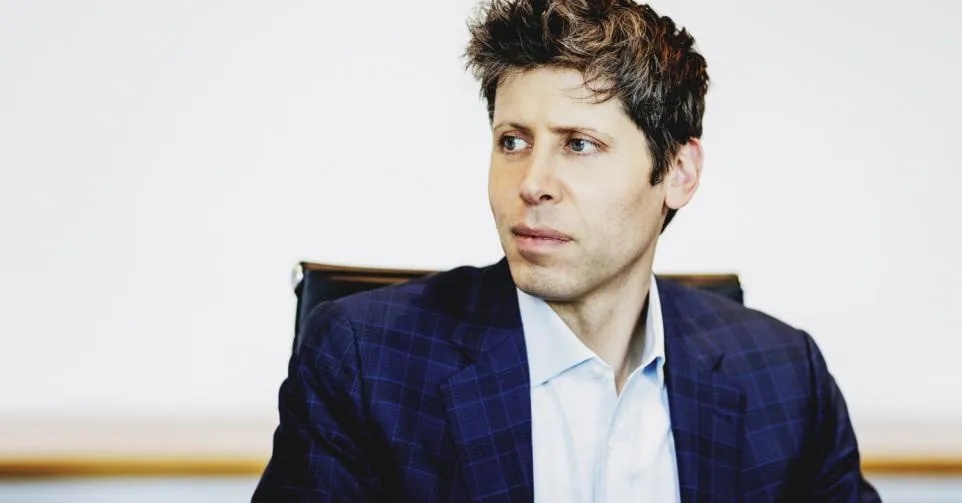
The CEO of OpenAI has triggered a wave of reactions this week. During an event organized by The Indian Express on the sidelines of the India AI Impact Summit 2026, Sam Altman chose to downplay the ecological footprint of artificial intelligence with an argument that is, to say the least, unexpected: training a human also costs a considerable amount of energy.
The human comparison argument
Faced with recurring criticism about the environmental cost of ChatGPT, Altman developed a two-step reasoning. He first deemed it "unfair" to compare the energy spent training an AI model to that consumed by a single human query. Then he took an additional step: "It also takes a lot of energy to train a human being. It takes 20 years of life and all the food consumed during that period before becoming intelligent."
His conclusion: if we measure the energy cost of a single ChatGPT response compared to what a human spends to accomplish the same task, AI has already caught up, or even surpassed, humans in terms of efficiency. The argument is rhetorically clever. It shifts the debate from the collective to the individual, and from infrastructure to the unit of service rendered. But this logic does not hold up for long under scrutiny of the overall figures.
What the data really reveals
The International Energy Agency (IEA) estimates that global electricity consumption by data centers will exceed 800 TWh in 2026, up from 460 TWh in 2022. In the most pessimistic scenarios, this figure could cross the 1,000 TWh threshold as early as the end of this year. To give a concrete measure, this is more than France's total electricity consumption in a year.
Thegenerative artificial intelligence already accounts for 10 to 15% of data center electricity consumption worldwide, a share that is expected to reach 20% by 2030 according to the French Institute of International Relations (Ifri). AI researcher Sasha Luccioni does not mince words: generative AI would consume 30 times more energy than a search engine, and Professor Jon Ippolito of the University of Maine estimates that a complex prompt uses up to 210 times more electricity than a classic Google search.
Water: a "totally false" controversy?
On the issue of water consumption, Altman was categorical. He described the figures circulating on the internet as "completely false" and "totally absurd," particularly the claim that a ChatGPT query requires 17 gallons of water (about 64 liters). He specified that this problem existed in the past, when data centers used evaporative cooling, but that it is now a thing of the past.
The reality is more nuanced. A 2023 study by the Universities of California and Texas estimated that GPT-3 consumed about half a liter of water to generate 10 to 50 responses, solely through evaporation for server cooling. This figure, already subject to debate, did not take into account the water indirectly consumed during electricity production. A report by Business Energy UK, on the other hand, calculated that ChatGPT as a whole would consume nearly 54 billion liters of water per year, or more than 102,000 liters per minute. The truth probably lies somewhere between Altman's optimism and the most alarmist estimates.
Transparency: the real blind spot
What Altman's statements obscure is the almost complete lack of verifiable data on the subject. There is currently no legal obligation for technology companies to publish their actual water and energy consumption figures. Independent researchers are trying to reconstruct this data through indirect methods, with the margins of error that this implies.
This structural opacity is precisely what fuels the extreme figures that Altman denounces. If OpenAI, Microsoft, and other hyperscalers published detailed and verified consumption reports, the debate would gain clarity and lose hysteria. The rise of data centers is already linked to a increase in electricity prices in several regions of the world, an economic signal that the operators themselves cannot ignore.
An implicit admission of an energy emergency
Altman nevertheless acknowledged what is perhaps the core of the problem: the total consumption related to AI on a global scale is a "legitimate concern." His solution is not to reduce usage, but to accelerate the transition to decarbonized energy. "We need to turn very quickly to nuclear, wind, and solar ," he declared.
This position is consistent with OpenAI's investments in the field: the company actively supports several next-generation reactor projects in the United States. It is also consistent with the IEA's projections, according to which the electricity demand of data centers could more than double by 2030 if the current trend continues. In this context, the argument of comparison with humans seems less like a solid defense and more like a way to buy time while the industry seeks its energy alternatives.
A rhetoric revealing an industry under pressure
The episode says something important about the state of the debate around AI in 2026. Sam Altman is currently one of the most scrutinized tech leaders in the world, and each of his public statements is analyzed as much for what it says as for what it omits. Comparing ChatGPT to a human is an effective formula for social media; it is not an answer to the climate challenge posed by the exponential growth of AI.
Researchers and regulators are increasingly calling for a energy transparency imposed on digital giants, similar to the carbon reporting obligations that are gradually being applied to large industrial companies. The real question is not whether a human consumes more energy than an AI query over their entire life. It is whether the industry willartificial intelligence be able to grow at this rate while respecting global climate commitments, without this remaining a mere communication topic.





No Comment! Be the first one.