





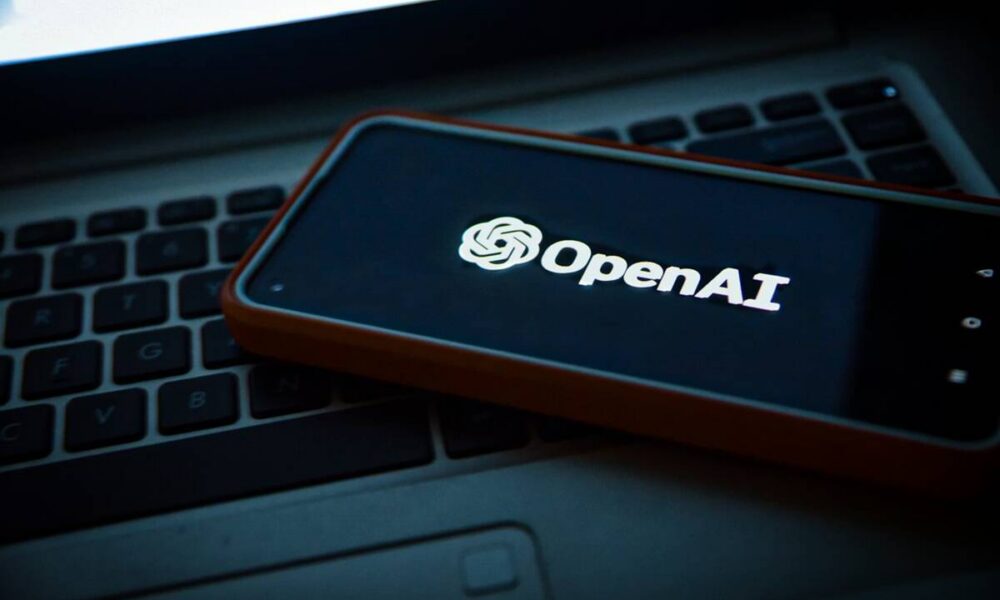
OpenAI would be preparing AI agent smartphone designed to eliminate traditional applications. Analyst Ming-Chi Kuo published this information in a post on X on April 27, 2026.
The project raises a fundamental question about the future of mobile: in a world where an agent can book a ticket, send an email, and manage a calendar without us ever opening an app, what are apps still good for? OpenAI's answer seems to be: not much.
Why OpenAI needs its own hardware
Since their creation, the iOS and Android ecosystems have functioned like toll booths. Apple and Google decide what data an app can access, what system functions it can use, and what interactions it can trigger. For a language model designed to act on behalf of the user, these restrictions are not mere technical constraints; they are a direct strategic hindrance.
By developing its own device, OpenAI would free itself from this dependency and could deploy its AI agents at all system levels, without waiting for the approval of a competing platform. Kuo specifies in his note that the smartphone would be designed to "continuously understand the user's context" (continuously understand users’ context). This continuous tracking is exactly what current operating systems make difficult for third-party applications.
A top-tier industrial chain
According to the analyst's note, Qualcomm and MediaTek would be jointly involved in the processor design, an unusual setup since the two companies are usually direct competitors. Luxshare, already known for assembling Apple's AirPods, would be considered the exclusive partner for system co-design and manufacturing.
This trio is not by chance. Qualcomm currently equips about 75% of Samsung's Galaxy S26 devices, while Luxshare brings proven industrial experience in large-scale consumer electronics. Several indications suggest that the Qualcomm/MediaTek partnership aims to cover both the premium and mid-range segments, to enable high volumes. Kuo projects annual production between 300 and 400 million units once the device is launched.
The release of the note had an immediate effect on the markets: Qualcomm's stock price rose by 13% in the hours following the dissemination of the information.
The end of applications: an idea gaining traction in the industry
OpenAI does not hold this vision alone. Carl Pei, CEO of Nothing, stated at the SXSW festival that applications would eventually disappear. Developers of vibe coding platforms are making the same prediction. The idea is based on a simple observation: an application imposes a rigid interface that the user must learn to navigate, whereas an agent understands an intention and executes it directly.
For OpenAI, this model offers an additional advantage: by controlling the device itself, the company gains access to much richer behavioral data than a simple mobile application can collect. It can observe movements, communication habits, daily routines, and feed its models with signals that current applications do not capture. Kuo specifically highlights this aspect in his note: the collection of continuous contextual data would be one of the project's central objectives.
To manage processing load, OpenAI is reportedly working on a combination of lightweight embedded models and cloud models, depending on the nature of the requests. Simple tasks would be processed directly on the device to preserve privacy and limit latency, while complex requests would be sent back to the company's servers.
2026, 2027, 2028: a three-stage roadmap
OpenAI is not starting from scratch in hardware. In May 2025, the company acquired io, the startup founded by Jony Ive, Apple's former design chief, clearly signaling its intention to enter the consumer device market. In January 2026 in Davos, Chris Lehane, OpenAI's Global Affairs Director, stated at an event organized by Axios that the company was "on track" to announce its first hardware product in the second half of the year.
This first device would not be a smartphone. According to several consistent reports, it would take the form of earbuds codenamed "Sweet Pea," running on a 2-nanometer processor and capable of processing AI tasks locally, without a screen. Sam Altman himself described the upcoming product as more "peaceful and calm" than an iPhone, in public statements in November 2025.
The OpenAI smartphone represents the next step. According to Kuo, final specifications and component suppliers would be finalized by the end of 2026 or early 2027, with mass production starting in 2028. This step-by-step progression follows classic industrial logic: launch a first device to test distribution and consumer relations, before moving on to a more complex and riskier product.
The challenge remains considerable. ChatGPT currently has nearly a billion weekly users, but OpenAI has never manufactured or sold a single physical device. Recent precedents in the autonomous AI device segment, notably the Humane Pin and the Rabbit R1, have both resulted in commercial failures. OpenAI declined to comment on Kuo's information at the time of publication of this article. The coming months, and particularly the expected announcement of its earbuds, will allow us to measure how far the company is truly prepared to go in hardware.





No comments yet — start the discussion!