




Barely a week after its launch, Seedance 2.0 is already causing a legal storm in Hollywood. On Friday, February 13, Disney sent a formal cease and desist letter to ByteDance, accusing the Chinese giant of turning its video generator into a "pirated library" of copyrighted characters. An offensive that reveals the gaping flaws in the current legal framework for generative AI systems.
Impressive technology at the heart of the controversy
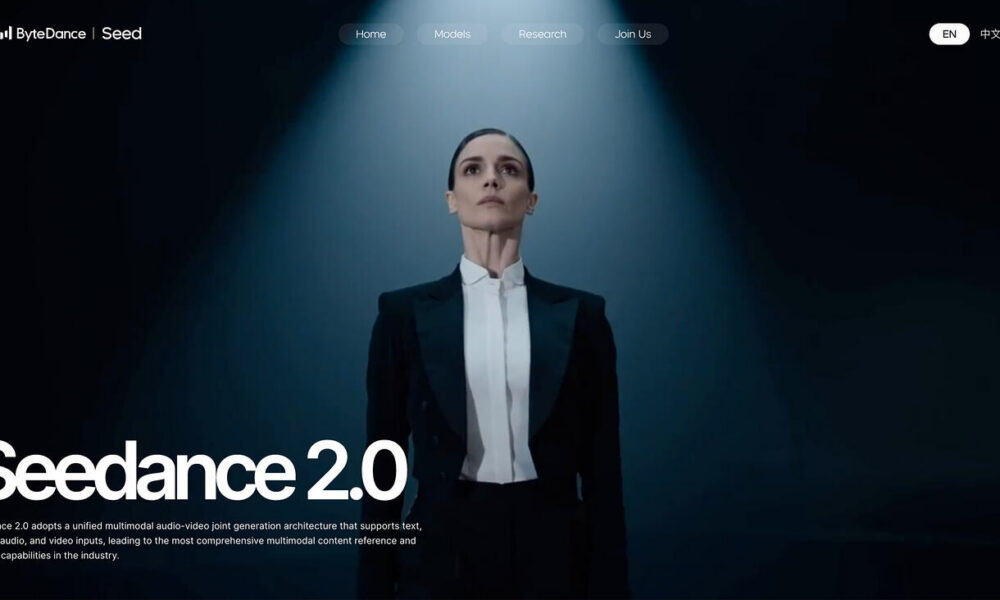
Launched on February 11, 2026, Seedance 2.0 represents a major technical advancement in artificial intelligence video generation. The model relies on a unified multimodal architecture capable of simultaneously integrating up to 9 images, 3 video clips, 3 audio tracks, and natural language instructions. This ability to merge multiple modalities allows it to create cinematic sequences of striking realism.
The system's performance quickly conquered Chinese social networks, notably thanks to a viral video showing Tom Cruise and Brad Pitt in a rooftop fight. ByteDance claims unprecedented motion stability and adherence to physical laws, particularly in complex interaction scenes like pair figure skating.
The accusation: a 'smash-and-grab' of Disney licenses
In its letter, transmitted by the law firm Jenner & Block, Disney does not mince words. David Singer, the lawyer representing the studio, calls ByteDance's approach a "virtual smash-and-grab" that is deliberate, widespread, and completely unacceptable..
The grievances are specific: Seedance allegedly reproduces, distributes, and creates derivative works featuring Spider-Man, Darth Vader, and other icons from the Star Wars and Marvel franchises. According to Disney, ByteDance pre-configured its tool with these characters as if they were public domain clip art, whereas they represent decades of creative investment.
The central criticism concerns the training of the AI model itself: Disney claims that its protected characters were used to feed the algorithms without authorization, a practice that raises fundamental legal questions about the use of copyrighted content to train generative systems..
A coordinated offensive from Hollywood
Disney is not alone in this battle. Paramount sent its own cease and desist letter on February 14, accusing ByteDance of blatant violations concerning South Park, Star Trek, SpongeBob SquarePants, The Godfather, Dora the Explorer, and Avatar: The Last Airbender. Paramount's lawyer, in their letter, emphasizes that the generated content bears a striking resemblance, both visually and audibly, to protected characters and narratives..
The Motion Picture Association (MPA), representing the entire American film industry, denounced as early as February 12 massive violations that occurred in just 24 hours after the launch of Seedance 2.0. The organization accuses ByteDance of deploying a service without sufficient safeguards against counterfeiting, deliberately ignoring laws protecting millions of jobs in the United States.
ByteDance's response: vague promises
Faced with legal pressure, ByteDance announced on Monday, February 15, that it would "strengthen current protections" to prevent unauthorized use of intellectual property and celebrity likenesses. However, the Chinese company provided no concrete details on the measures envisioned.
This promise comes as the U.S. Copyright Office recently published a report concluding that the compilation of training datasets including protected content violates the reproduction rights of rights holders. The report explicitly rejects the idea of systematic application of the "fair use" doctrine for training AI models, a position widely interpreted as favorable to rights holders.
A precedent that could set a legal standard
This is not the first time Disney has faced such an issue. In December 2025, the studio had already sent a cease and desist letter to Google concerning content generated by Gemini and the Nano Banana tool, forcing the tech giant to restrict the generation of Disney characters. Google quickly removed YouTube videos featuring Mickey, Star Wars, and other AI-generated franchises.
Paradoxically, Disney simultaneously signed a three-year licensing agreement with OpenAI in December, allowing the use of over 200 protected characters via Sora and ChatGPT, including costumes, accessories, and environments (but excluding actors' voices and likenesses). This double-edged strategy shows that Disney prioritizes commercial control of its intellectual property over an absolute opposition to generative AI.
The Seedance 2.0 case could set a crucial precedent in the AI and copyright debate. Courts are now faced with complex questions: does training on protected content constitute infringement? Do the generated outputs compete with the original works?. With dozens of similar lawsuits pending, according to the registry maintained by the Copyright Alliance, the Chinese and American tech industry awaits answers that will redefine the rules of the generative AI game.

No comments! Be the first one.