






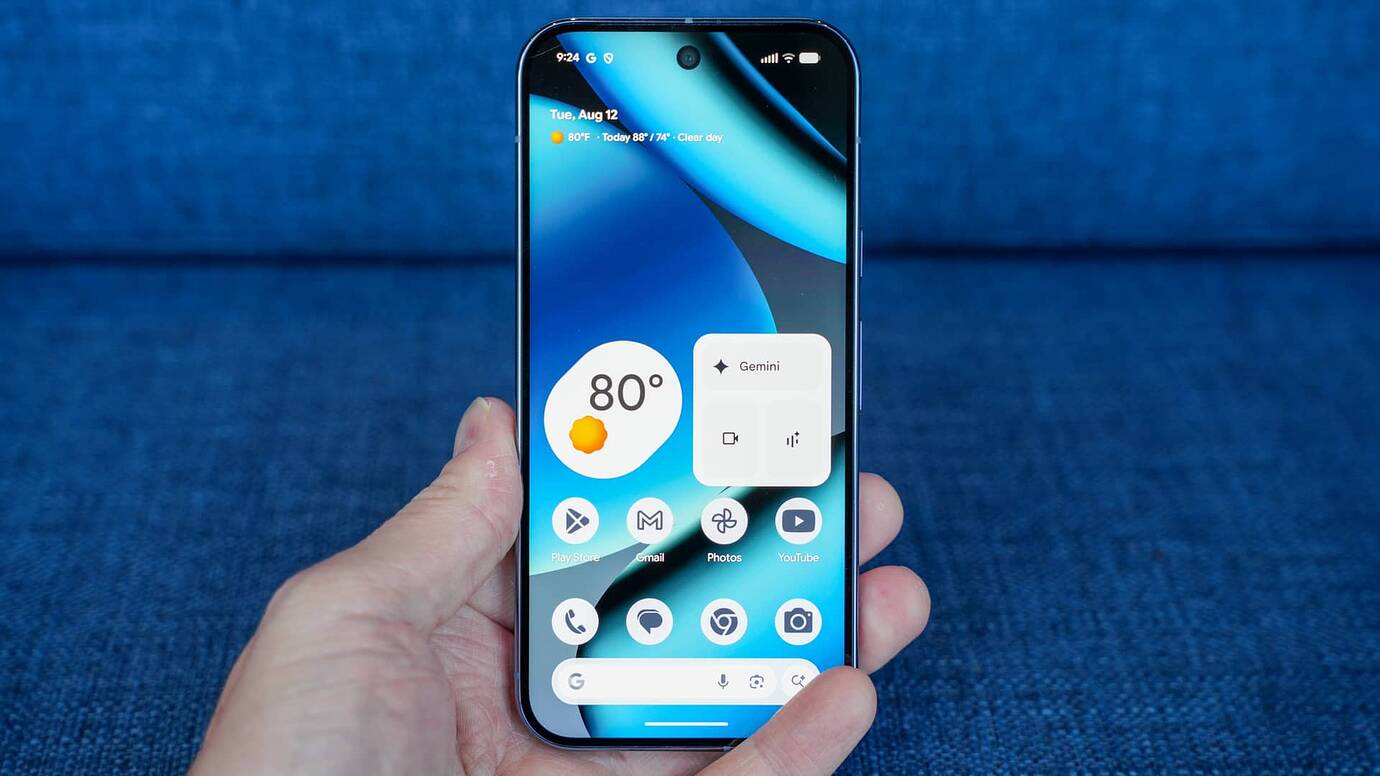
The Pixel search bar could soon become optional on the home screen. A teardown of Android 17 QPR1 Beta 2 reveals that Google is preparing a button to hide this element, imposed for years.
Years of frustration for millions of users
Since the launch of the Pixel Launcher, the Google search bar has been fixed to the bottom of the home screen. It's impossible to move it, impossible to delete it. For the majority of users, it perfectly fulfills its role. But for those who have adopted an alternative search engine, DuckDuckGo, Brave Search, or Ecosia for example, it occupies valuable space without any concrete utility. Others, simply attached to a clean home screen, experience it as a constraint imposed by Google on its own hardware.
The only viable solution so far has been to install a third-party launcher, such as Nova Launcher or Lawnchair. An effective workaround, but one that forces you to abandon the native Pixel Launcher and all its exclusive features. This compromise is clearly not satisfactory for a device sold as the purest expression of Android.
What the teardown of Android 17 QPR1 Beta 2 reveals
On May 7, 2026, the Android Authority team analyzed in detail the code of the Android 17 QPR1 Beta 2 version, released by Google under the reference CP31.260423.012.A1. In the new character strings of the Pixel Launcher, four entries stand out:
search_bar_customize: "Customize search bar"search_bar_settings: "Search bar settings"title_show_search_bar: "Show search bar"subtitle_show_search_bar: "At the bottom of your home screen"
These lines of code clearly indicate that a search bar customization toggle is under development. The interface would allow the bar to be displayed or hidden directly from the launcher's settings, without going through a third-party application. A mockup generated from these strings gives an idea of what this setting might look like in the final interface.
However, it is important to be precise about the nature of this discovery. A teardown analyzes code under development that is not yet active in the system. This functionality is not confirmed by Google and may never reach a stable public release.
Android 17 QPR1: an update designed for customization
This discovery is part of a broader trend observed since the beginning of the year. In February 2026, during the launch of Android 17 Beta 1, Google had already introduced the ability to hide the "At a Glance" widget on the home screen. This widget, which displays the weather, date, and reminders, was also previously impossible to remove from the Pixel Launcher.
Combined, these two options would offer Pixel owners an unprecedented level of home screen customization customization on this launcher. A user could theoretically end up with a home screen completely devoid of any system-imposed elements, a feature that alternative launchers have offered for years.
Android 17 QPR1 corresponds to the first quarterly platform update after the main deployment of Android 17. According to available information, this version is expected in September 2026, likely as part of a Pixel Drop event. Beta 2, primarily focused on bug fixes (F2FS file system corruption, gesture navigation issues, lock screen display), represents an intermediate step in this development cycle.
Compatible devices and next steps
Android 17 QPR1 Beta 2 is available for a wide range of Pixel devices, from the Pixel 6 to the Pixel 10 Pro Fold, including the Pixel Tablet and intermediate models like the Pixel 9a. Users enrolled in the Android Beta program receive the update directly via OTA. System images are also available for manual installation.
For users who wish to test these betas without risk, Google reminds them that returning to the stable channel is only possible before installing Beta 2. Beyond that, a complete data reset is required to revert to the stable version.
The search bar removal on a Pixel represents a symbolically strong change. It is the recognition that customization must take precedence, even when it goes against Google's direct commercial interest, whose search engine remains one of its revenue pillars. If this functionality is confirmed in upcoming betas or at Google I/O, scheduled in the coming weeks, it will constitute one of the company's most notable concessions to its advanced user community.


No Comment! Be the first one.