





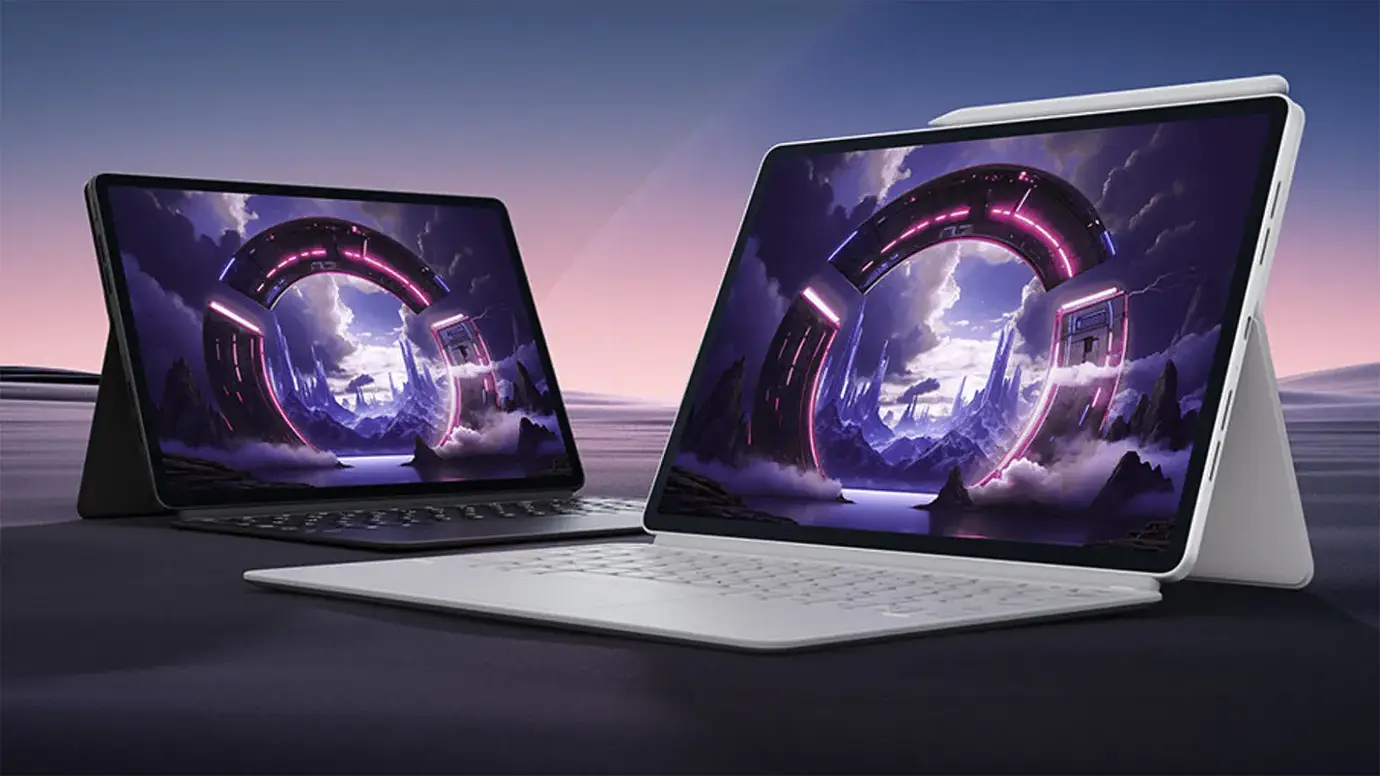
Lenovo officially unveiled the range on May 19, 2026 Lenovo Legion Y900, two Android gaming tablets equipped with 4K 144 Hz screens, massive batteries, and high-end processors. These two devices, available in 11.1 and 13 inches, immediately establish themselves as the most ambitious Android references of the year, provided you live in China.
A 4K screen that redefines Android tablet standards
The first thing that strikes you about the Y900 range is the display. Both models feature a resolution of 3840 x 2560 pixels, resulting in a density of 415 pixels per inch on the 11.1-inch model and 355 pixels per inch on the 13-inch model. For comparison, Apple's iPad Pro with its Liquid Retina XDR panel tops out at around 264 PPI. The IPS display runs at 144 Hz, offers a peak brightness of 1110 nits, and benefits from Dolby Vision certification.
Lenovo has also integrated a visual privacy software feature that darkens sensitive areas of the screen to obscure them from prying eyes, as well as compatibility with the second-generation Lenovo Pen Pro stylus, promising 8,192 pressure levels for note-taking or digital drawing.
Two distinct chips depending on the format
It's in terms of processors that the two models clearly differ. The Lenovo Legion Y900 11.1-inch model is equipped with a MediaTek Dimensity 9500S, a sub-flagship SoC that sits below the standard Dimensity 9500 but above the Dimensity 9400 from the previous generation. Lenovo highlights that this component achieves 3,109,111 points on AnTuTu, a respectable benchmark score for this segment. The chip is paired with up to 16GB of LPDDR5X RAM and up to 512GB of UFS 4.1 storage.
The 13-inch model opts for the Qualcomm Snapdragon 8 Gen 5, not the Elite version, thus offering top-tier performance for 2026. It features the same memory and storage configurations as its smaller sibling and adds a microSD slot allowing for storage expansion up to an additional 2TB, an option absent from the compact model. Both tablets run on Android 16.
Impressive batteries and high-end audio
Battery life is one of the most obvious strengths of the range. The 11.1-inch model has an 11,000 mAh battery, while the 13-inch model has a 12,700 mAh battery. Both devices support 68W fast charging.
On the audio front, the two models are not equal. The compact model has four side speakers, while the 13-inch model upgrades to six drivers, split into two tweeters and four woofers, with sound tuning by Harman Kardon. This six-speaker configuration makes the large Y900 a device capable of rivaling some premium laptops in terms of multimedia, whether for watching movies or gaming with maximum sound immersion.
A keyboard accessory that switches the tablet to desktop mode
Both tablets are compatible with a separately sold keyboard case, whose RGB backlit keys align with the Legion range's aesthetic. This accessory activates a desktop mode similar to Samsung DeX, allowing applications to be managed in resizable windows and providing an interface close to a classic operating system.
An RGB light ring called Legion Halo is integrated into the camera island on the back of both devices. On the photography side, the 13-inch model has two rear sensors (13 and 2 megapixels) as well as two front sensors (8 and 3 megapixels) for video calls. The 11.1-inch model, more focused on pure gaming, has a single 13-megapixel rear sensor.
Price in China and uncertainty about global availability
In China, the launch market for both models, the prices are positioned in the premium range. The Legion Y900 11.1-inch model is offered starting at 3,099 yuan (approximately 420 euros) for the 8GB/256GB version, with a promotional launch price of 2,699 yuan (approximately 365 euros). The 13-inch model starts at 3,799 yuan (approximately 515 euros) for the entry-level configuration and goes up to 4,699 yuan (approximately 635 euros) for the 16GB/512GB version.
Lenovo indicates that a global release is under consideration, without specifying a timeline or pricing for international markets. For now, no information has been communicated about a potential release in Europe or North America. The situation is all the more frustrating as the Legion Tab Gen 5, the compact equivalent of the range (8.8 inches), is indeed available internationally, which suggests a favorable precedent for the Y900 models.
These two tablets reflect a clear ambition from Lenovo: to make the series Legion Y900 a credible alternative to premium tablets from Samsung and Xiaomi, in a market where display quality and raw power have become as important as the software ecosystem. If the brand confirms a global rollout in the coming months, the Y900 range could well establish itself as the benchmark for Android gaming tablets in 2026. Android enthusiasts therefore have every reason to closely monitor Lenovo's upcoming announcements.

No comments! Be the first one.