




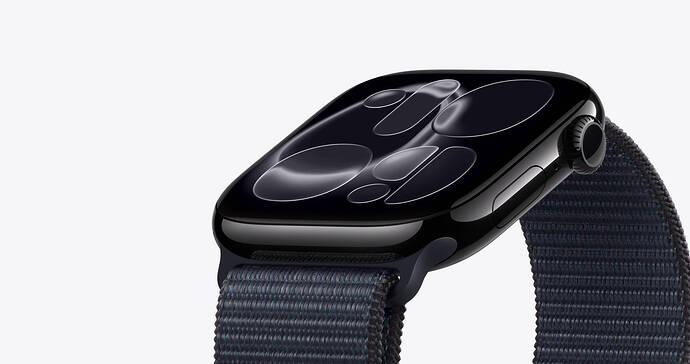
TheApple Watch Series 11 dominates the field comparison published by the Wall Street Journal on June 7, 2026, against the Oura Ring 5, the Fitbit Air, and the Whoop MG. Its accuracy in sleep tracking and physical activity surpasses its competitors in a test including a clinical study with Stanford Health Care.
A wearables market transformed in a few months
The connected health tracker sector experienced a sharp turning point between 2024 and 2025. According to an article by Nicole Nguyen published in the Wall Street Journal in May 2026, fitness tracker purchases increased by 88% in the United States during this period. Connected rings saw even more significant growth, with a jump of 195% in one year. Oura raised over $900 million, while Whoop completed a $575 million funding round in March 2026. Both companies are now valued at over $10 billion each.
In this context of market explosion, the question arose with renewed urgency: does the Apple Watch, the world's best-selling wearable, hold its ground in terms of accuracy against competitors entirely dedicated to passive health tracking?
Four devices, four pricing philosophies
Before examining the test results, the pricing structure deserves particular attention, as it significantly differentiates these four products beyond their functionalities alone.
TheApple Watch Series 11 is sold for $399, with no subscription required to access all its health data. The Oura Ring 5 is priced at the same $399, but requires a monthly subscription of $6, or $80 per year, to fully utilize its analyses. The Fitbit Air, launched in May 2026 by Google, is the cheapest of the group at $99, with an optional Google Health Premium subscription at $9.99 per month for in-depth reports. The Whoop MG is not sold separately: the device is included in an annual subscription starting at $199 per year, with no access to data without active payment.
The comparison table below summarizes the economic models involved:
| Device | Hardware price | Subscription |
|---|---|---|
| Apple Watch Series 11 | $399 | None |
| Oura Ring 5 | $399 | From $6/month (or $80/year) |
| Whoop MG | Included | From $199/year |
| Fitbit Air | $99 | Optional: $9.99/month |
This cost structure is not insignificant: over 24 months, a user with a monthly subscription for the Oura Ring 5 will have spent a total of $543, compared to $399 for an Apple Watch owner with the same health functionalities at no extra cost.
Sleep tracking: Apple Watch Series 11 closest to clinical results
Nicole Nguyen conducted her evaluation with a rigor unusual for a consumer test, by carrying out a clinical study of sleep tracking at Stanford Health Care’s Sleep Medicine Center. The objective was to compare the measurements of each device with those of polysomnography, the reference medical protocol for sleep analysis in a hospital setting.
The results are clear. The Apple Watch recorded identical sleep duration to the clinicians, to the minute, at 6 hours and 52 minutes. Its sleep cycle analysis also proved to be the most faithful to the laboratory data. "The Apple Watch recorded the same sleep duration, to the minute (six hours and 52 minutes), and its sleep phase analysis results aligned most with the lab data. The Fitbit Air came in second, followed by Oura," wrote Nicole Nguyen, technology columnist, in her article published by the Wall Street Journal. (The Apple Watch clocked the same sleep duration, down to the minute (six hours and 52 minutes) and its sleep staging aligned most with the lab results. The Fitbit Air was a close second, followed by Oura.)
This result deserves to be put into perspective. Several independent academic studies published between 2024 and 2025 had placed the Oura Ring at the top of the accuracy rankings for sleep staging, with accuracy rates reaching up to 79.5% according to certain measurement methods. The Wall Street Journal comparison adds an important nuance: in a real-world, individual scenario, the Apple Watch Series 11 outperformed the Oura Ring 5 on this metric, where most observers expected the opposite.
Physical activity: Only the Apple Watch withstands unexpected field conditions
The second part of the test focused on the accuracy of heart rate tracking during various physical activities. Nicole Nguyen subjected the four devices to two contrasting situations: a bike ride on rough terrain and a leisurely walk with a stroller. These two scenarios are revealing because they replicate the mechanical vibrations, spurious micro-movements, and intensity variations that challenge optical heart rate sensors.
The Apple Watch stood out in both cases. "During a bumpy outdoor bike ride and a chill walk with a stroller, only my Apple Watch remained relatively accurate. The Apple Watch excelled across every activity. The Whoop could match it, provided I wore the sensor on my bicep. During periods of high activity, the Fitbit Air and Oura faltered," described Nicole Nguyen in her article published by the Wall Street Journal. (During a bumpy outdoor bike ride and a chill walk with a stroller, only my Apple Watch remained relatively accurate. The Apple Watch excelled across every activity. The Whoop could match it, provided I wore the sensor on my bicep. During periods of high activity, the Fitbit Air and Oura faltered.)
The nuance provided by Whoop is significant: wearing the sensor on the bicep, rather than the wrist, does improve its accuracy during exertion, but it imposes a placement constraint that the Apple Watch does not require. For standard daily use, the Apple Watch remains the option that combines accuracy and simplicity without any special adjustments.
The discreet advantage: complete data, without a subscription
One element that clearly emerges from the Wall Street Journal comparison deserves to be highlighted independently. The Apple Watch Series 11 is the only device in this test to provide accurate and complete results without any recurring additional costs. All measured data, whether it concerns sleep duration and phases, heart rate, or activity tracking, is accessible upon purchase, without a monthly or annual subscription.
For the three competitors, access to in-depth analysis is conditional on regular payment. Whoop, in particular, is entirely locked behind its annual subscription : without active payment, the device simply stops functioning. This economic reality transforms the Apple Watch's positioning into a major competitive advantage, often overlooked in comparisons that focus solely on sensors.
In a market segment where screenless trackers rely on discretion and comfort, Apple Watch responds with a different proposition: clinical accuracy, expanded versatility, and no hidden costs. The Wall Street Journal comparison, published on June 7, 2026, is to date the most rigorous evaluation available to guide a purchase in this category. For users who are still undecided, the Apple Watch Series 11 is currently available at $299 on Amazon, which is 25% off its official price of $399.

No comments! Be the first one.