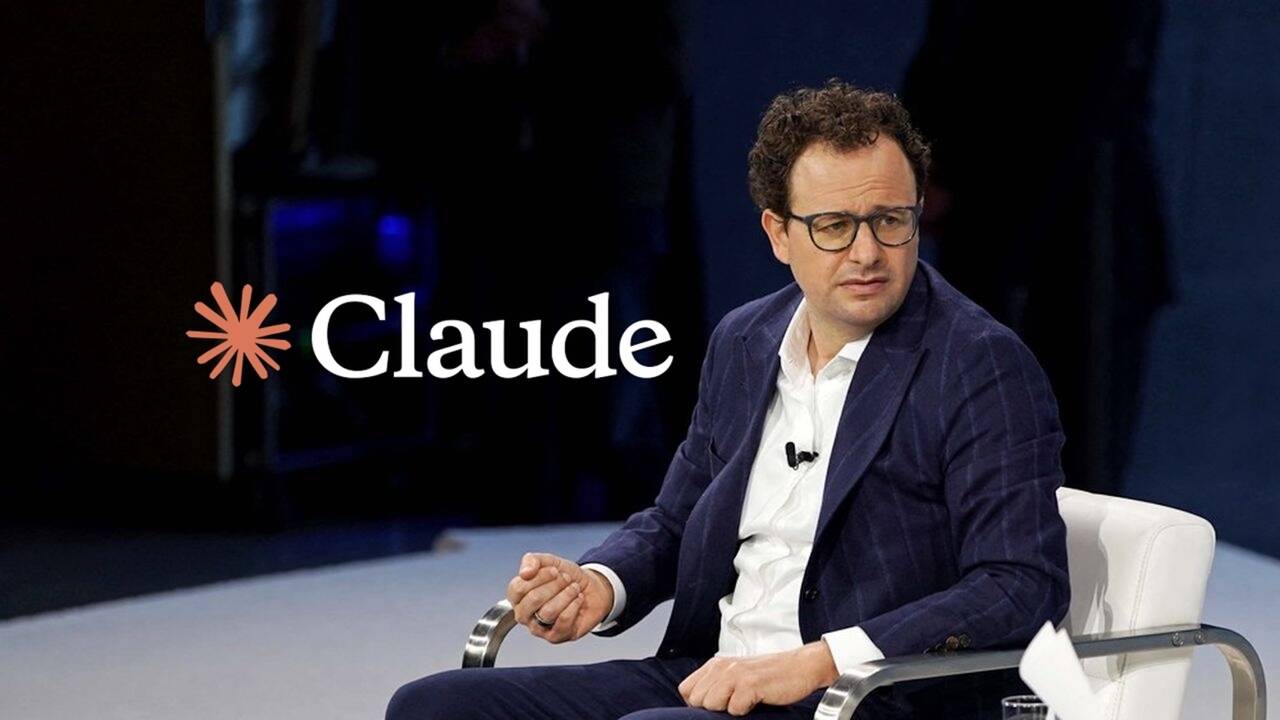
Claude has just been ejected from the entire US administration. After a months-long standoff with the Pentagon, Anthropic refused to cross two ethical boundaries that Washington demanded be removed, and Donald Trump responded with a total decree.
From Strategic Partner to State Enemy
Yet, everything had started well. In 2024, Anthropic signed a $200 million contract with the Department of War, proudly stating at the time that it was the first cutting-edge AI company to operate on classified US networks. Claude, its flagship model, was deployed through Palantir, the firm known for helping to locate Osama bin Laden. This exclusive position was supposed to be a stepping stone. It became the central point of friction in an unprecedented political crisis.
The rupture crystallized in January 2026 around a specific incident. On January 3rd, during the capture of Venezuelan President Nicolás Maduro, the Pentagon used Claude through Palantir’s programs, the Wall Street Journal revealed on February 15th. Anthropic raised questions about this use. The Pentagon, furious at these ethical hesitations, began preparing its response.
Two Red Lines the Pentagon Wanted Erased
The conflict centers on two specific restrictions that Anthropic has imposed in its contracts from the outset: no use of Claude for fully autonomous weapons, and no use for mass domestic surveillance of US citizens. The Pentagon demanded unrestricted access, invoking the right to use the models for « all lawful purposes. » A complete impasse.
Pete Hegseth, Secretary of War, summoned CEO Dario Amodei on Tuesday, February 25th, and gave him an ultimatum: lift these restrictions before Friday, February 27th, at 5:01 PM, or face sanctions. Amodei’s response came on Thursday afternoon in a long statement. « These threats do not change our position: we cannot in good conscience accede to their demand, » he wrote in the official statement. He also explained that fully autonomous weapons « must be deployed with appropriate safeguards, which do not exist today. »
Amodei’s position is not anti-military. He made this explicit: « I deeply believe in the existential importance of using AI to defend the United States and other democracies, and to defeat our autocratic adversaries, » he wrote in the same statement, adding that « in certain specific cases, we believe AI can undermine, rather than defend, democratic values. »
A Designation Reserved for Foreign Adversaries
The Trump administration’s reaction went far beyond simply canceling the contract. Pete Hegseth designated Anthropic as a risk to the US defense supply chain and banned any military contractor from working with it. Donald Trump then ordered on Truth Social, in all caps, that all federal agencies « IMMEDIATELY CEASE all use of Anthropic technology. » A six-month transition period is granted to departments already integrated.
This type of designation had previously been reserved for companies like Huawei or ZTE, Chinese firms considered under the influence of a foreign government. Anthropic is a startup founded in San Francisco, partially funded by Amazon. Several US legal experts have already called this decision a dangerous precedent: nothing in the texts prohibits the administration from using this mechanism against any domestic tech company that refuses to comply with its contractual demands. The company announced it will challenge the designation in court, relying on Article 3252 of Title 10 of the US Code, which legally limits its scope to only Department of War contracts.
Cloud Giants in Uncertainty
Hegseth’s wording poses a much broader problem than just the Anthropic case. Any entity « doing business with the military » would no longer be able to work with the startup. However, Claude runs on the infrastructure of Amazon Web Services, Microsoft Azure, and Google Cloud, which also host some of the largest US defense contracts.
If taken literally, these partnerships would be threatened. No one has pushed the logic that far yet, but the wording is indeed in the official text. For an administration that has just shown it can use regulatory designations as leverage, the wording is not trivial. Pentagon officials had, moreover, contacted groups like Lockheed Martin and Boeing as early as February to assess the extent to which they use Claude, according to the Wall Street Journal.
OpenAI and xAI Reclaim the Prize
February 25th, the day of the ultimatum to Anthropic, was also the day of a signing. xAI, Elon Musk’s company, reached an agreement with the Pentagon to deploy its AI Grok on classified military networks, thus breaking Claude’s exclusive position on these networks. xAI accepted the « all lawful purposes » standard without restriction, the exact wording Anthropic resisted.
OpenAI is also set to reclaim the position abandoned by Anthropic within the Pentagon, according to France 24. The sequence is clear: while Anthropic refused to bend, its direct competitors filled the void without imposing ethical conditions. Dario Amodei had nonetheless expressed hope that the Pentagon would reverse its decision, while assuring that Anthropic would « strive to ensure a smooth transition to another provider » if the contract was canceled.
Dario Amodei Faces Washington’s Contradictions
Anthropic’s CEO also pointed out a major inconsistency in the administration’s position. On one hand, Hegseth designates Anthropic as a national security risk. On the other hand, Trump threatens « severe civil and criminal consequences » if the transition is not properly managed, implying that Claude remains temporarily indispensable. « These two threats are inconsistent: one calls us a security risk, the other makes Claude essential for national security, » Amodei wrote in his official statement.
In this tense context, unexpected solidarity emerged: employees from Google and OpenAI publicly supported Anthropic against the administration. This signal illustrates that the AI sector as a whole is closely watching a precedent that could, tomorrow, affect any other company refusing to align its uses with government demands.
Eighteen months after presenting its contract with the Pentagon as a victory, Anthropic finds itself in legal dispute with Washington, deprived of its main government outlets, but with its principles intact. The case goes far beyond the startup itself: it raises a structural question about the conditions under which US AI companies can, or cannot, impose ethical limits on their sovereign clients. The legal battle opening around Article 3252 of Title 10 of the US Code will be closely watched by the entire sector.