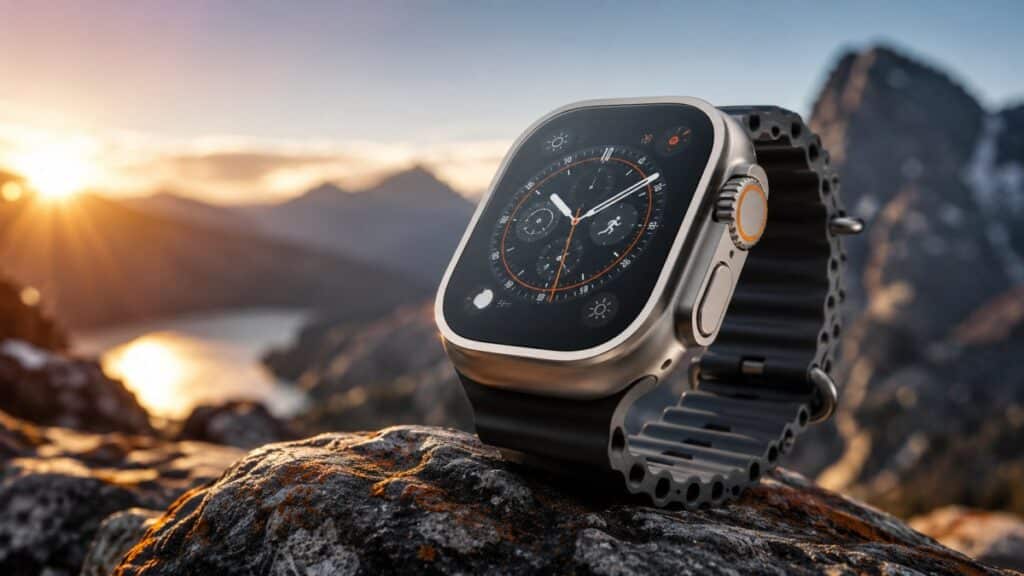
The Apple Watch Ultra 4 could mark a turning point in the history of Apple’s smartwatches. According to a DigiTimes report published on May 18, 2026, the next high-end version of the watch combines a complete redesign with a new blood pressure monitoring function subject to FDA review.
Cardiovascular health, Apple’s new strategic focus
What stands out first from the DigiTimes report is the stated ambition in the field of health. The Apple Watch Ultra 4 would integrate a function capable of alerting the user in case of abnormally high blood pressure. According to information relayed by MacRumors, the system would rely on the optical heart rate sensor located on the back of the case to analyze, beat by beat, the response of blood vessels to each pulse. As soon as an unusual pattern is detected, the watch would send a notification to the user.
This device is currently under review by the FDA, the American authority responsible for approving medical equipment. Apple is following the same rigorous process here as it did for the electrocardiogram (ECG) before its commercialization. Obtaining regulatory approval therefore remains an indispensable prerequisite for any mass-market launch.
The question raised by several analysts is how this new function really differs from the Hypertension Notifications functionality already available since September 2025 with watchOS 26. The latter also uses the optical sensor to study vascular responses over rolling 30-day periods. According to DigiTimes, previous Apple Watch models already had hardware capability related to blood pressure measurement. The novelty announced for the Ultra 4 could therefore represent a more clinically advanced implementation, more focused on validated medical use, rather than a purely hardware advancement.
It is important to emphasize: the Apple Watch Ultra 4 would not offer absolute numerical measurements (systolic and diastolic) like a traditional medical blood pressure monitor. The wording used in the report refers to notifications in case of detected anomalies, which places this function on the side of preventive monitoring rather than clinical diagnosis.
A complete redesign to revive a stagnant line
The other central piece of information in the DigiTimes report concerns the watch’s appearance. Supply chain sources describe a « complete redesign » accompanied by a « significant upgrade of detection functions, » according to the terms used in the document. This is not the first time DigiTimes has addressed the subject: an earlier version of the report, published last year, already mentioned a redesign of the exterior, specifically mentioning a ring arrangement of eight sensors on the back of the case.
According to market observers cited by DigiTimes, this renewal could allow Apple to increase its Apple Watch shipments by 20 to 30% compared to 2025 volumes. The current Ultra model, with its 49mm titanium case and flat screen, has not evolved substantially for several generations. A thorough overhaul would represent a strong commercial argument for reviving upgrade purchases, especially among users of the first Apple Watch Ultra.
Previous reports have also mentioned other potential evolutions for the Ultra 4: battery life extended to approximately 48 hours compared to 42 hours on the current model, as well as a potentially doubled number of sensors compared to the previous generation. This information, from sources not confirmed by Apple, should however be treated with caution.
TASC, exclusive supplier at the heart of the deployment
On the industrial front, the DigiTimes report highlights a little-known player to the general public: Taiwan-Asia Semiconductor, known as TASC. This Taiwanese company would be Apple’s exclusive supplier for the sensor components of the new Apple Watch. According to DigiTimes, large-volume orders are expected as early as July 2026, which would indicate that production is planned to start in the coming weeks.
This supply chain information is a concrete signal. In the Apple products sector, large-scale orders from suppliers generally precede the official announcement of the finished product by a few months. This remains consistent with a launch expected in the fall of 2026, during the annual iPhone event, where the Apple Watch Series 12 is also expected to be unveiled, alongside the iPhone 18 Pro range.
What the Ultra 4 probably still won’t do
It would be inaccurate to present the Apple Watch Ultra 4 as a total medical revolution. Non-invasive blood glucose monitoring, which Apple has reportedly been working on for several years according to unconfirmed reports, would not be on the agenda for this model. This technological leap, whose regulatory validation is much more complex, would remain dependent on further advancements and independent validation by health authorities. The Ultra 4 would therefore fit into a step-by-step progression, consistent with Apple’s strategy of introducing health functions gradually, having them validated before activating them.
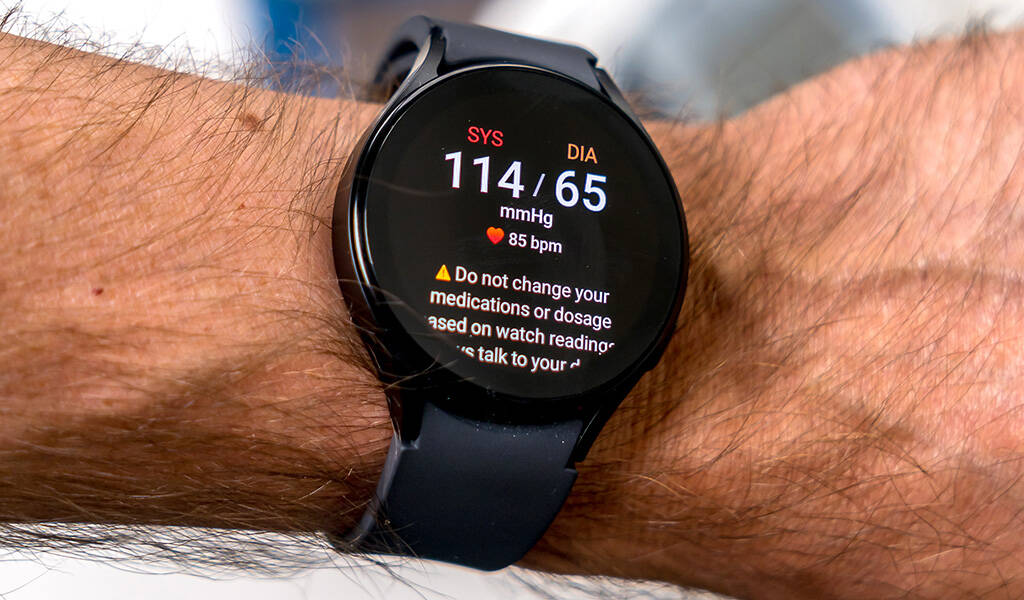
For comparison, Samsung already offers a blood pressure monitoring feature on its Galaxy Watches in certain regions, although its availability remains limited by local regulations. If Apple crosses this threshold with the Ultra 4 after FDA approval, the brand would close a gap that its competitors have occupied for several years in the high-end smartwatch segment.
The Apple Watch Ultra 4 remains, for the time being, a product not confirmed by Apple. All information presented in this article comes from supply chain reports and has not been officially announced. WWDC 2026, scheduled for this summer, could provide additional details on watchOS 26 and associated health functions, before a hardware announcement expected in September or October 2026. For users awaiting a watch capable of truly monitoring their cardiovascular health, this autumn appointment promises to be decisive.